“I Lost an Arm, Not My Purpose” — Mary Shares Her Story of Resilience
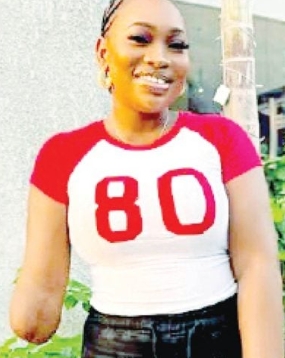
popularly known as Mummymix, is an arteriovenous malformation (AVM) survivor who turned a life-altering medical experience into a powerful platform for advocacy and impact. Now a mother of three and an award-winning lifestyle content creator, she is redefining strength, femininity and disability in Nigeria. In this interview, she speaks about resilience, motherhood and thriving beyond limitation.
“I Had to Relearn Everything”
On January 16, 2019, Mary became a below-elbow amputee on her right arm — a moment she describes as one of the most painful and life-altering experiences of her life.

“Losing my arm was not just physical — it was emotional, mental and spiritual,” she says. “There is a kind of grief that comes with losing a part of your body. It is silent but heavy.”

The early days were filled with adjustment. She had to relearn basic tasks: bathing, dressing, cooking, carrying her children and even tying her scarf. Simple routines suddenly required strategy, patience and resilience.
“There were days I felt frustrated. Days I questioned myself. But with time, I realised I had two choices — to remain trapped in what happened or to build a new version of myself. I chose to redefine myself.”

Today, she confidently cooks, cleans, creates content, manages her home and builds her brand — doing things differently, but powerfully.
Motherhood as an Anchor
As a mother to Leon, Lewis and baby Lawrence, Mary says motherhood became her greatest source of strength.
“Motherhood alone is a full-time job. Adding content creation requires intentional balance,” she explains. “But motherhood also became my anchor.”
In the beginning, she worried about how her children would perceive her. Those fears quickly dissolved.
“They didn’t see a disabled mother. They saw their mum. Children respond to love, not limitation.”
She describes balance not as perfection, but as prioritization. Some days she is “80 per cent mum and 20 per cent creator.” Other days, she creates content while her children play nearby. She plans ahead, batch-creates when she has strength and rests when needed.
“I give myself grace,” she adds.
Choosing Acceptance
Mary says the most difficult part of her journey was acceptance.
“I cried. I grieved. I prayed. I asked difficult questions,” she recalls. “There is a moment when you realise life will never return to what it was. That moment is heavy.”
But a powerful realisation shifted her perspective:
“I lost an arm — not my value. I lost a limb — not my purpose.”
That mindset helped her focus on what remained, rather than what was missing.
The Power of Family Support
Her family, especially her father, played a crucial role in her healing.
“It wasn’t just my adjustment — it was a family transition,” she says. “They supported me without making me feel incapable.”
Their balance of practical help and encouragement allowed her to rediscover her independence while knowing she was not alone.
Challenging Misconceptions
Mary says one of the biggest misconceptions about amputees is that they cannot live independently or pursue ambitious dreams.
“Disability does not erase ambition. It does not cancel intelligence. It does not remove beauty or femininity,” she says. “What often limits people with disabilities is not the condition itself, but society’s perception.”
Through her platform, she seeks visibility — not pity.
“Representation matters. When people see someone living confidently with an amputation, it challenges stereotypes.”
She hopes young girls, mothers and anyone facing hardship will see her story as proof that thriving after trauma is possible.
Redefining Femininity and Self-Worth
For Mary, femininity is not about physical perfection.
“Femininity is strength. It is resilience. It is showing up fully, even when life has taken something from you.”
She believes self-worth is internal and not reduced by scars, stretch marks or missing limbs.
“Once I embraced that, my confidence returned.”
A Call for Greater Inclusion
Mary believes Nigeria still has significant work to do regarding accessibility and inclusivity for persons with disabilities. She advocates for improved public infrastructure, workplace inclusion and more positive media representation.
“Society must move from sympathy to structured support. From staring to understanding,” she says. “Disability is not inability.”
A Message to Others Facing Life-Altering Change
To anyone navigating a similar journey, Mary offers heartfelt advice:
“First, allow yourself to grieve. Healing does not mean pretending to be strong every day.
Second, take life one day at a time. Don’t rush acceptance.
Third, love yourself deeply.”
And most importantly:
“You are still here. That means your story is not over. Scars are not the end. Sometimes, they are the beginning of your strongest chapter.”