Ibadan Horror Killing: Police Officer Tells Court How Head, Legs of Victim Were Sold for N60,000 and N120,000


The trial of Adekunle Mohammed continued before the Oyo State High Court in Ibadan, with chilling testimony from the Investigating Police Officer detailing how the suspect allegedly sold human body parts for specific sums.
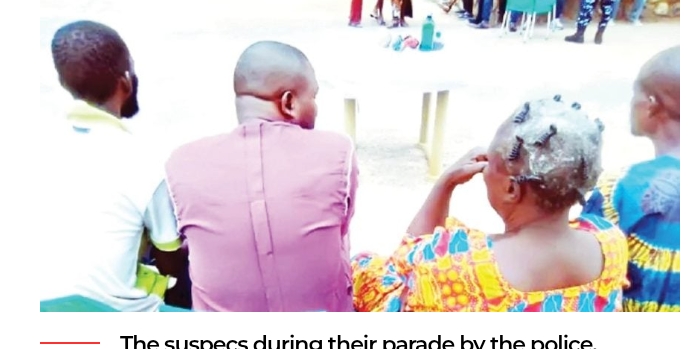
Adekunle Mohammed, 39, of Olorisa Oko in Moniya, Ibadan, is standing trial alongside four others over alleged ritual killings that shocked residents of the area in August 2024.

The prosecution witness, ASP Oladunjoye Segun, told the court that Mohammed allegedly sold two human legs for N60,000 and a victim’s head and hands for N120,000.
Arrest and Discovery
According to the police, Mohammed was arrested on August 8, 2024, after residents complained of a persistent foul odour coming from a well he had dug in front of his house. The matter was first reported to the Amotekun Corps, who accompanied residents to lodge a complaint at the Moniya Divisional Police Headquarters.
Detectives of the Oyo State Police Command subsequently searched Mohammed’s residence alongside Amotekun personnel and community members. Recovered items reportedly included knives, animal horns containing charms, a white cloth with charms, an iron rod, an Android phone, and a plastic bottle containing a substance suspected to be human blood. The items were later tendered as exhibits in court.
The search extended to a well within the compound, where hired workers descended and recovered three mutilated and decomposed human bodies. One of the victims was later identified by relatives through clothing found on the remains.
Alleged Confessions
Testifying before Justice Ladiran Akintola, ASP Segun said Mohammed allegedly confessed during interrogation to participating in the killing of seven persons since February 2024, directly taking part in five of the murders.
He further told the court that Mohammed claimed he killed victims in collaboration with accomplices said to be at large and then dismembered the bodies before selling the parts.
Other defendants standing trial with Mohammed are Muniru Salaudeen, Rashidat Akanji (also known as Iya Ewe), Ismail Olalekan (also known as Silapa), and Sanmi Obaleye.
According to the IPO, the second defendant, Salaudeen, allegedly admitted buying human parts from Mohammed and reselling two human legs to the fifth defendant, Obaleye, for N60,000.
The court heard that Mohammed allegedly lured 29-year-old Adekola Sodiq to his house on May 22, 2024, where he and others killed and dismembered him. He reportedly sold Sodiq’s head and two hands to the fourth defendant for N120,000.
The IPO also testified that on August 11, 2024, Mohammed allegedly lured 17-year-old Malik Kareem to his house around 11 p.m., where he was killed and dismembered. According to the police, Mohammed said he sold Kareem’s head and two legs to the second defendant.
ASP Segun stated that Mohammed allegedly removed heads, hands, legs, hearts, and other body parts from victims, while the remaining bodies were dumped in the well to avoid detection.
Evidence and Objections
The police said photographs were taken of the recovered bodies. One of the deceased, Malik Kareem, was reportedly identified at the scene by a relative, Alhaji Mojeed, who recognised the clothing on the decomposed remains. The court was told that the defendant also identified Kareem when shown a photograph taken while he was alive.
During proceedings, the prosecution sought to tender photographs of the recovered bodies along with a Certificate of Compliance. Defence counsel for several of the defendants objected, arguing that the requirements of the Evidence Act and the Administration of Criminal Justice Law (ACJL) had not been met.
Despite objections from some defence lawyers, the court admitted two photographs relating to Adekola Sodiq and Malik Kareem in evidence and marked them as exhibits.
The matter was adjourned after the Investigating Police Officer, who had earlier complained of ill health, was unable to continue his testimony.
The trial is expected to resume on the next adjourned date.