‘Your Warships Will Go To The Bottom Of The Sea’ — Iran’s Supreme Leader Khamenei Warns Trump

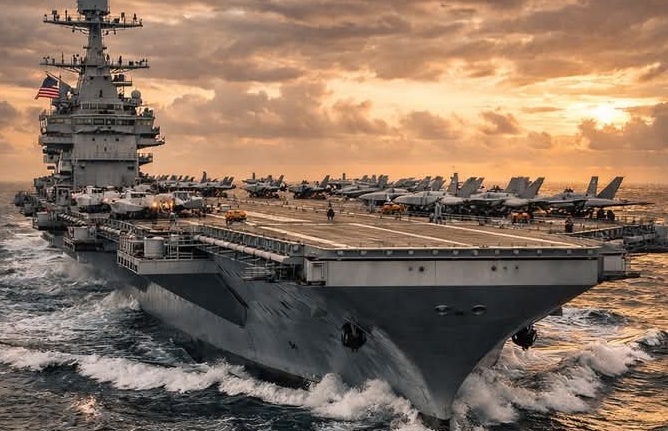
Iran’s Supreme Leader, Ayatollah Ali Khamenei, delivered a forceful warning to the United States on Tuesday, saying that American warships deployed in the Persian Gulf “could be sunk to the bottom of the sea” if tensions escalate further between the two countries.

Khamenei’s remarks came as the second round of indirect nuclear negotiations between Iranian and U.S. officials resumed in Geneva, under the mediation of Oman, aimed at finding common ground on Iran’s controversial nuclear program.

Addressing a gathering in Tehran, the Supreme Leader challenged U.S. claims of military superiority, saying that even the “strongest army in the world may be struck so hard that it cannot recover,” in what analysts described as one of his sharpest public rebukes to Washington in recent months.
“They keep saying they’ve sent a [warship] toward Iran. A warship is a dangerous machine,” Khamenei said. “But more dangerous than that warship is the weapon that can send it to the bottom of the sea.”
He also echoed a longstanding theme of defiance toward U.S. policy, referencing past U.S. leaders’ inability to remove Iran’s Islamic Republic, and asserting that current American efforts would be no more successful.
Context of Rising Tensions
The warnings come amid heightened military activity and diplomatic strain:
U.S. naval forces, including aircraft carriers and support vessels, have been positioned in and around the Persian Gulf as a show of strength amid renewed pressure on Tehran.
Iran’s elite Islamic Revolutionary Guard Corps (IRGC) has conducted military drills and live-fire missile tests near the Strait of Hormuz — a critical maritime choke point through which an estimated 20% of the world’s oil supply passes — underscoring Tehran’s capability to project force in the region.
The Strait of Hormuz disruptions have drawn international concern over potential impacts on global energy markets and shipping security.
Despite the combative rhetoric, the Geneva talks reflect ongoing efforts to revive diplomatic channels and possibly ease some of the sanctions that have weighed heavily on Iran’s economy. Officials on both sides have framed the negotiations as constructive, even as fundamental disagreements remain unresolved.
International Reactions and Risks
Foreign governments and defence analysts have warned that such sharp rhetoric — particularly involving threats against naval vessels — could risk misunderstanding or escalation, especially given the strategic importance of the region. Any direct conflict would have far-reaching implications for regional stability and global energy supplies.
For now, the United States has reaffirmed its commitment to securing the region, while Iranian leaders insist they will not back down on core issues, including their nuclear program and defensive capabilities.