CNN Highlights Mounting Crisis as Sudanese Refugees Strain Resources in Chad

has spotlighted the growing humanitarian crisis facing Sudanese refugees in Chad, as conflict in Sudan continues to drive hundreds of thousands across the border.

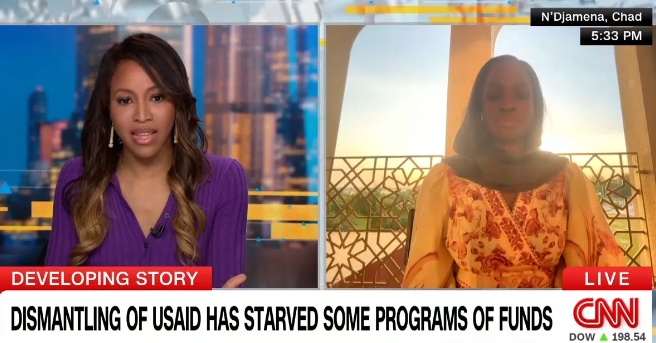
Speaking with CNN’s Zain Asher, Lady Mary Dinah, Founder and CEO of the , detailed the immense pressure the refugee influx is placing on eastern Chad and outlined her foundation’s intervention efforts.

Over 900,000 Refugees Enter Chad
According to Dinah, more than 900,000 Sudanese refugees have crossed into Chad through its eastern border since the war began three years ago.
She warned that the influx is stretching already limited resources to breaking point.
“Over 900,000 Sudanese refugees have come into Chad through the eastern border of Chad since the war began three years ago. And that is putting a lot of strain on already limited resources,” she said.
Dinah explained that access to water, food, education and healthcare has become increasingly difficult. In some affected communities, there is only one community health worker for every 5,000 residents — far below the recommended ratio of one per 1,000 people.
She added that many refugees must walk for up to an hour to reach medical facilities, only to face the possibility of not being treated due to overwhelming demand.
Women and Children Face Heightened Risks
Dinah also highlighted the unique vulnerabilities faced by women and children, particularly the use of sexual and gender-based violence as a weapon of war.
“Sexual and gender-based violence is something that is used as a weapon of war, which really shouldn’t be. These are atrocities that should never be committed,” she said.
She stressed the urgent need for micronutrient supplements and fortified food products — some of which her foundation distributes along the eastern border of Chad — to combat malnutrition among displaced women and children.
Beyond immediate survival needs, Dinah pointed to long-term concerns around education and gender inequality. She noted that cultural norms and limited school capacity often result in boys being prioritized over girls for education, reducing future economic opportunities for young women.
USAID Cuts and Strategic Interests
Addressing funding concerns following U.S. aid cuts, Dinah argued that supporting refugee welfare aligns with American strategic and economic interests.
“When I think about the priorities of the U.S., it’s in their interest to ensure that the welfare of refugees and displaced persons around the world is kept to limit the burden of migrants on the United States,” she said.
She noted that some of the fortified nutrition products distributed by her foundation are manufactured in the United States, including partnerships in Rhode Island and Georgia, supporting American farmers and manufacturers.
Dinah added that the Mary Dinah Foundation’s emphasis on local leadership, rapid scaling, and female-led operations may have contributed to its continued support amid funding reductions.
The ongoing conflict in Sudan continues to fuel one of the region’s largest displacement crises, with neighboring Chad bearing a significant share of the humanitarian burden.