2027: WOMAN FOR PRESIDENT IN NIGERIA :AS IN NAMIBIA AND LIBERIA
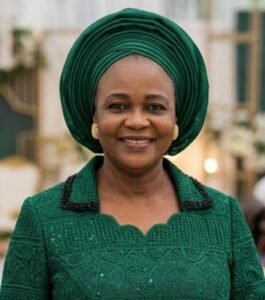
By Professor Funmilayo Adesanya-Davies
2019 Former Presidential Candidate | Current Aspirant, 2027

Nigeria stands today at a defining crossroads in her democratic journey.
The cries of her people are unmistakable—yearning for justice, equity, security, and transformational leadership. Yet, in the midst of this national search for direction, one critical question persists: Why has Nigeria not yet entrusted her highest office to a woman?

Across Africa, history has already provided us with compelling answers. In Liberia, Africa witnessed the emergence of Ellen Johnson Sirleaf, the first elected female president on the continent. Her administration restored global confidence in Liberia, strengthened institutions, and stabilized a nation that had endured years of civil unrest.

More recently, Namibia has also demonstrated progressive political inclusion by elevating women into top leadership roles, affirming that competence, vision, and integrity—not gender—are the true qualifications for governance.
These examples are not isolated successes; they are powerful signals that Africa is evolving, and that women are not only ready but exceptionally capable of leading nations toward peace, prosperity, and sustainable development.
Nigeria, often referred to as the “Giant of Africa,” cannot afford to lag behind in this crucial dimension of leadership. Nigerian women have consistently proven their capacity across all sectors—academia, business, governance, diplomacy, and grassroots mobilization. From the markets to the ministries, from classrooms to corporate boardrooms, women have been the silent architects of resilience and progress.
Yet, despite their undeniable contributions, women remain grossly underrepresented in Nigeria’s highest political offices. This imbalance is not merely unjust—it is a strategic disadvantage. A nation that sidelines over half of its population in decision-making processes undermines its own potential for growth and stability.
The call for a woman president in 2027 is not a sentimental appeal; it is a national imperative.
Women bring a unique leadership perspective—one that emphasizes collaboration, compassion, inclusiveness, and long-term societal wellbeing. Evidence across the world shows that women leaders often prioritize education, healthcare, family welfare, and peacebuilding—areas that Nigeria desperately needs to strengthen.
Moreover, women leaders have demonstrated remarkable discipline in resource management and transparency, qualities essential for tackling corruption and restoring public trust in governance.
The 2027 general elections present Nigeria with a historic opportunity to correct decades of political imbalance. It is time to move beyond rhetoric and take deliberate action. Political parties must go beyond tokenism and create genuine pathways for female candidates to emerge and thrive. The electorate must also rise above ingrained biases and embrace competence over convention.
As a 2019 presidential candidate and a current aspirant for 2027, I stand not merely as an individual seeking office, but as a symbol of possibility—a voice for millions of Nigerian women and youths who believe in a better, more inclusive future.
This movement is not about replacing men; it is about partnering for progress. It is about redefining leadership in a way that reflects the diversity, strength, and aspirations of our nation.
Nigeria must ask herself: if Liberia could, if Namibia can, why not Nigeria?
The time has come for bold decisions. The time has come for inclusive leadership. The time has come for a Nigerian woman to rise to the highest office in the land.
2027 must mark the beginning of a new chapter—one where leadership is defined not by gender, but by vision, competence, and the courage to transform a nation.
Women for President is not just an idea—it is Nigeria’s next logical step forward.