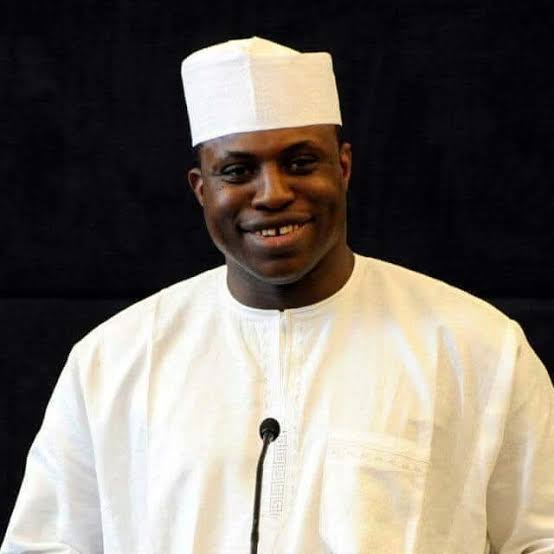
Too Young, Too Powerful: The Hidden Cost of Early Success in Nigerian Politics –By Faleye Oluwatosin

There is something both poetic—and dangerous—about early greatness.

In a country like Nigeria, where power is layered, negotiated, and fiercely guarded, rising too fast can be less of a blessing… and more of a silent curse.
At the dawn of the Fourth Republic, a new breed of politicians emerged—young, brilliant, and audacious. They were symbols of a generational shift. Fresh faces in an old system. Hope wrapped in human form.

They did not wait their turn.
They became the turn.
But as time would reveal, politics is not a sprint.
It is a long-distance endurance race—one that tests not just brilliance, but survival.
THE BURDEN OF ARRIVING TOO SOON
Many of these young stars did not fall because they lacked capacity.
They fell because they arrived before they were fully armoured.
In Nigerian politics, elevation is one thing—retention is another. The same system that lifts you can, without warning, withdraw its oxygen. And when that happens, only those with deep roots—not just bright lights—remain standing.
Which raises a troubling question:
Is early political success a blessing… or a beautifully packaged burden?
DIMEJI BANKOLE: THE SYMBOL OF EARLY ALTITUDE
No story captures this paradox better than .
At just 37, he became Speaker of the House of Representatives—one of the most powerful legislative offices in the country. It was historic. Electric. Unprecedented.
He wasn’t just leading.
He was representing possibility.
For millions of young Nigerians, Bankole became proof that the gates of power were no longer locked by age.
But politics is not about how fast you rise.
It is about how long you can survive at the top.
And survival, in Nigeria’s political terrain, requires more than brilliance. It demands alliances, timing, structure—and sometimes, silence.
Bankole’s trajectory forces us to confront uncomfortable truths:
- What happens when visibility outpaces preparation?
- What happens when symbolism overshadows strategy?
- What happens when the system celebrates you before it fully accepts you?
THE ONES WHO LEARNED TO BREATHE AT HIGH ALTITUDE
Not every early riser fades.
Some adapt. Some evolve. Some rebuild.
Take —a man who also rose early within the legislative space but mastered the art of patience, alliances, and timing. Today, his political longevity tells a different story: one of calculated endurance.
Then there is , who became Speaker in his 30s and went on to reinvent himself multiple times—as governor, minister, and national power player. His journey proves that early rise is not fatal—if reinvention follows.
Even , who gained national prominence relatively early, has remained relevant by constantly repositioning himself within Nigeria’s shifting political currents.
These men did not just rise.
They adapted to the altitude.
WHEN SPEED BECOMES A LIABILITY
But for others, the story is different.
They rose quickly—too quickly—and the system caught up with them.
Figures like and experienced intense bursts of national visibility, only to struggle with long-term political consolidation.
Their journeys highlight a critical lesson:
Visibility is not structure.
Fame is not power.
And proximity to influence is not the same as owning it.
Even newer entrants like reflect a modern twist to this dilemma—where popularity accelerates political entry, but does not guarantee depth or durability.
THE POLITICS OF TIMING
In Nigerian politics, timing is not just important.
It is everything.
The system rewards those who understand when to move, when to wait, and when to retreat. Like the iroko tree, power respects patience.
Climb too fast, and you may miss the very footholds that sustain you.
Because rising is easy—
remaining is the real test.
THE HARD TRUTH NIGERIANS MUST FACE
We often celebrate young politicians for breaking barriers.
But we rarely ask if they are truly prepared for the battles ahead.
We applaud the arrival.
We ignore the sustainability.
And when they fade, we call it failure—without acknowledging the structural fragility that made their fall almost inevitable.
FINAL THOUGHT: WHO WAS READY FOR THE HEIGHT?
Perhaps the real question is not who rose early.
It is who was prepared to stay.
Because greatness is not defined by how fast you rise—
but by how long you can breathe where the air is thin.
In Nigerian politics, early success is not a guarantee of longevity.
Sometimes… it is simply an early test of survival.
And those who rise before their time often spend the rest of it trying to return.
FOR DISCUSSION
Who else fits this story?
Which Nigerian politicians rose too early—and paid the price?