The Imperative of Zoning: Why the 2027 Presidential Candidate Should Come from the South
A Special Press Release to:
The All Progressives (APC) Congress
The African Democratic Congress (ADC)

and

The People’s Democratic Party (PDP), as the dominant political forces in 2027 Presidential Election
By
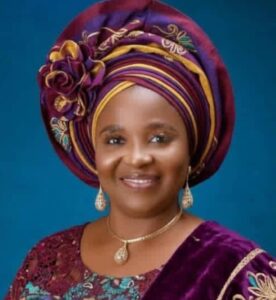
Prof. Funmilayo Adesanya-Davies

According to Professor Funmilayo Adesanya-Davies, a former Presidential Candidate in 2019 election, a Renowned academic and Public Commentator, Nigeria stands once again at a critical juncture in its democratic journey. As the countdown to the 2027 general elections gradually begins, the question of zoning—long embedded in the nation’s political architecture—has resurfaced with renewed urgency.
The imperative of zoning, and why the 2027 Presidential Candidate should come from the South is not merely a political strategy; but a moral, constitutional, and unifying necessity for a country as diverse and delicate as Nigeria. Zoning, as practiced within major political parties such as the All Progressives Congress (APC) and the People’s Democratic Party (PDP), has historically served as a mechanism for balancing power among the various geopolitical zones of the federation. It is rooted in the principles of fairness, equity, justice, and national cohesion—principles that are indispensable to the survival of Nigeria’s fragile unity.
Understanding Zoning in Nigeria’s Political Context:
Zoning is an informal but powerful political arrangement designed to rotate key leadership positions among Nigeria’s six geopolitical zones: North-West, North-East, North-Central, South-West, South-East, and South-South. While not explicitly enshrined in the Constitution, it has become a guiding principle for maintaining inclusivity and preventing domination by any single region or group.
Since the return to democratic governance in 1999, Nigeria has witnessed a delicate alternation of presidential power between the North and the South. This unwritten agreement has helped to calm tensions, foster a sense of belonging, and reduce the perception of marginalization among different regions.
The Current Political Reality:
As of today, Nigeria’s presidency is held by a leader from the Southern region, following a period of Northern leadership. However, the question before us is not just about incumbency, but about continuity of justice and equity within the broader democratic framework for eight years.
The argument for sustaining the presidency in the South in 2027 is grounded in several compelling realities:
1. Preservation of National Unity:
Nigeria is a nation of over 250 ethnic groups and multiple religious identities. The delicate balance of power is essential to prevent feelings of exclusion or domination. Zoning ensures that no region feels perpetually sidelined.
If the presidency were to shift abruptly away from the South in 2027, it could disrupt this balance and rekindle regional agitations, particularly in areas that already feel politically marginalized.
2. Moral Obligation and Political Trust:
Political agreements, even when unwritten, carry moral weight. The understanding that power rotates between North and South is a form of social contract. Breaching this arrangement undermines trust in the political system and sets a dangerous precedent. For democracy to thrive, there must be consistency, credibility, and respect for established norms.
3. Equity and Justice as Democratic Pillars:
Equity demands that all regions have fair access to leadership opportunities. Justice requires that no group monopolizes power at the expense of others. Zoning is a practical expression of these ideals in Nigeria’s unique context.
Allowing the South to retain the presidency in 2027 would reinforce the nation’s commitment to fairness and inclusiveness.
4. Strengthening Democratic Stability:
Frequent disruptions to established political norms can lead to instability. Zoning provides predictability and reduces the intensity of political competition, which in turn minimizes electoral violence and tensions.
A stable democracy is built on respect for both written laws and unwritten conventions that promote peace.
Addressing Counterarguments:
Some critics argue that zoning undermines meritocracy by prioritizing geography over competence. While this concern is valid, it is important to note that zoning does not exclude merit—it simply ensures that merit is drawn from all regions.
Nigeria is blessed with capable, competent, and visionary leaders across every geopolitical zone. The South is not lacking in individuals who possess the experience, integrity, and leadership capacity required to govern effectively. The real challenge is not the absence of merit, but the need to balance merit with inclusivity.
The Southern Advantage: A Reservoir of Leadership
The Southern region of Nigeria has consistently demonstrated its capacity for leadership, innovation, and economic contribution. From commerce to education, technology to governance, the South remains a vital engine of national development. Moreover, the South represents a diverse tapestry of cultures and perspectives can enrich national leadership and promote inclusive governance.
A Call to Political Parties and Stakeholders:
Political parties, civil society organizations, traditional institutions, and the electorate must rise above narrow interests and embrace the larger vision of a united Nigeria.
The All Progressives (APC) Congress the The African Democratic Congress (ADC) and the People’s Democratic Party (PDP), as the dominant political forces, bear a special responsibility to uphold the principle of zoning in their candidate selection processes.
Failure to do so could deepen divisions and erode public confidence in the democratic system.
The Way Forward:
To ensure a peaceful and credible 2027 election, the following steps are essential:
Affirm Commitment to Zoning: Political parties should publicly declare their adherence to zoning principles, for instance, Presidential Candidate should come from the South in 2027 election.
Promote Inclusive Dialogue: Engage stakeholders across all regions in constructive discussions about power rotation.
Encourage Merit within Zones: Select candidates based on competence, integrity, and vision within the agreed zone.
Strengthen Institutions: Build electoral and governance institutions that reinforce fairness and accountability.
Conclusion
The imperative of zoning is not merely a political convenience; it is a national necessity. In a country as diverse as Nigeria, unity cannot be taken for granted—it must be carefully nurtured through deliberate and inclusive policies.
As we look toward 2027, the call for a Southern presidential candidate is not a sectional demand, but a patriotic appeal rooted in justice, equity, and the collective good of the nation. Nigeria must continue on the path of fairness, respecting both its diversity and its shared destiny. Only then can we build a nation where every citizen, regardless of region, feels seen, heard, and valued.
The future of Nigeria depends not just on who leads, but on how leadership is chosen.
Let justice guide us. Let equity prevail. Welcome to Continuity, welcome back to President Ahmed Bola Tinubu!
Signed:
Professor Funmilayo Adesanya-Davies
Former Presidential Candidate
Renowned academic and Public Commentator.