744 Repentant Terrorists Graduate From Nigeria’s De-radicalisation Programme
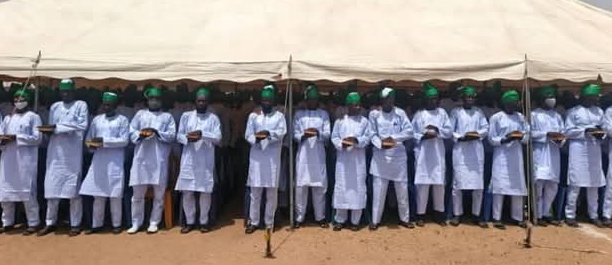
No fewer than 744 former extremists have completed rehabilitation under Nigeria’s Operation Safe Corridor, a federal government initiative aimed at deradicalising and reintegrating repentant insurgents into society.

The programme, which targets defectors from terrorist groups including Boko Haram, combines psychological counselling, religious reorientation and vocational training to prepare participants for life after insurgency.

Officials said the latest batch underwent months of intensive rehabilitation at a specialised facility, where they were trained in various skills such as tailoring, carpentry, welding and agriculture, alongside civic education designed to promote peaceful coexistence.
Operation Safe Corridor was established as part of Nigeria’s broader counterinsurgency strategy in the North-East, offering an alternative pathway for fighters who surrender voluntarily rather than face immediate prosecution.
According to authorities, the initiative is intended to encourage defections, weaken insurgent ranks and support long-term peacebuilding efforts in conflict-affected communities.

However, the programme continues to generate mixed reactions across the country. While government officials maintain that rehabilitation is crucial to ending insurgency, some Nigerians have raised concerns over security risks and the possibility of recidivism among former fighters.
There are also lingering questions about justice for victims of insurgent attacks, with critics arguing that rehabilitation alone may not adequately address the scale of atrocities committed during the conflict.
Despite the concerns, the government insists that graduates are closely monitored after reintegration and that community engagement remains a key part of the process.
Operation Safe Corridor reflects a growing global approach to counterterrorism that blends military action with rehabilitation, as authorities seek more sustainable solutions to violent extremism.