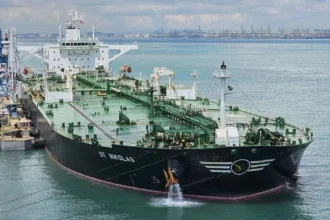
BREAKING: Oil Prices Plunge as Iran Reopens Strait of Hormuz to Global Shipping


Global oil prices dropped sharply on Friday after Iran announced it would fully reopen the Strait of Hormuz to all commercial shipping for the duration of the ongoing ceasefire.

According to a report by The Wall Street Journal, the development eased fears of supply disruptions in one of the world’s most critical energy transit routes, triggering a swift reaction across international markets.
The Strait of Hormuz, a narrow but vital channel linking the Persian Gulf to global markets, is responsible for transporting roughly a fifth of the world’s oil supply. Any restriction to its flow typically sends crude prices surging due to concerns over supply shortages.

However, Iran’s latest move signals a temporary de-escalation in tensions, raising optimism that oil shipments will resume at normal levels. Traders responded quickly, with benchmark crude prices falling by more than 10 percent in early trading.
Brent crude dipped below the $90 per barrel mark, while U.S. West Texas Intermediate (WTI) also recorded significant losses, reflecting renewed confidence in global supply stability.
Market analysts say the decision to reopen the waterway reduces immediate geopolitical risk, a key factor that has driven volatility in oil prices in recent weeks.
“The reopening of the Strait removes a major risk premium that had been priced into the market,” analysts noted, adding that investors are now cautiously optimistic about sustained stability.
Despite the positive market reaction, experts warn that the situation remains fragile. The reopening is tied to a ceasefire arrangement, and any breakdown in negotiations or renewed hostilities could quickly reverse the gains and push oil prices higher again.
Global financial markets also reacted positively, with major stock indices climbing on the back of easing energy concerns and improved investor sentiment.
The development is being closely monitored by governments and industry players worldwide, as the stability of the Strait of Hormuz remains crucial to global energy security.
For now, the reopening offers temporary relief to oil-importing nations and signals a possible path toward stabilizing energy markets—provided the ceasefire holds.