Court Orders UNICAL to Pay ₦55m Damages to Students Admitted Into Unaccredited Engineering Programmes.
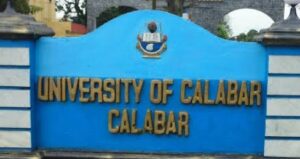
The Federal High Court sitting in Calabar has ordered the University of Calabar (UNICAL) to pay a total of ₦55 million in damages to eight engineering students who were admitted into programmes that lacked proper accreditation.


Justice R. O. Dugbo-Oghoghorie, presiding over suit No. FHC/CA/CS/117/21, described the university’s actions as “illegal, fraudulent, reckless, and deceitful.” The case was filed by Idiong Ekpedeme Godwin and seven others—collectively known as the “UNICAL 8”—against UNICAL, its former Vice Chancellor Professor Florence Obi, and four other defendants.

The court held that no tertiary institution should operate academic programmes without prior approval from the National Universities Commission (NUC). It emphasized that universities owe a “duty of care” to prospective students to disclose the true accreditation status of their courses.
The plaintiffs presented evidence showing that full accreditation for the engineering programmes was only granted in the 2024/2025 academic session, several years after the students were expected to have completed their studies and graduated.
The judgment stemmed from events in 2021, when over 200 engineering students were demoted, some from final year (400 level) and others from third year (300 level) to second year (200 level), following an NUC verification exercise that revealed the programmes lacked proper accreditation and authorization. Certain engineering departments were reportedly scrapped entirely during the process, exacerbating the students’ academic setbacks.
The court awarded ₦50 million in general damages and ₦5.247 million in special damages to the eight plaintiffs, citing the psychological trauma, academic stagnation, and other hardships they endured as a result of the university’s negligence and failure to disclose critical information.
While the court declined to grant an order halting the operation of the Faculty of Engineering, acknowledging that accreditation has since been secured, it stressed the importance of institutional accountability and transparency in admissions processes.
Reacting to the judgment, Mr. Eyo Eyo, the Public Relations Officer of the University of Calabar, stated that the institution “shall issue a formal response” in due course.
The ruling concludes a five-year legal battle that began in 2021, when affected students first challenged the university over the unaccredited programmes and resulting demotions. The decision has reignited discussions on regulatory compliance, student rights, and the responsibilities of university managements in Nigeria’s higher education system.