Amid renewed xenophobic unrest in South Africa, the Nigerian Consulate, in collaboration with the Nigerian Citizens Association in South Africa (NICASA), has commenced arrangements for the voluntary evacuation of Nigerians willing to return home permanently.

The initiative, which includes a free repatriation flight, comes as escalating violence and targeted attacks on foreign nationals continue to trigger fear and uncertainty across several cities.

President of NICASA, Frank Onyekwelu, disclosed that the worsening situation has forced many Nigerians to shut down their businesses and seek safer alternatives.
He noted that although there is no structured relief system for affected Nigerians, the consulate’s intervention has provided a critical exit option.

“The Nigerian Consulate, in conjunction with NICASA, has offered a free repatriation flight to any Nigerian who wishes to leave South Africa permanently, and the process is ongoing as we have recorded many Nigerians signalling interest to return home,” Onyekwelu said.
Fear, Losses as Violence Spreads
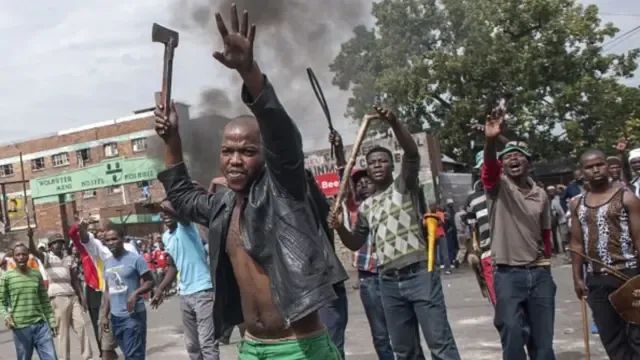
Nigerians residing in major cities including Johannesburg, Pretoria, Durban, East London and parts of KwaZulu-Natal have recounted harrowing experiences as anti-foreigner protests intensified.
The protests, which have reportedly been driven by groups such as Operation Dudula and other local movements, have resulted in looting, harassment, destruction of property and physical assaults on foreign nationals.
Victims say they have been forced indoors, living in constant fear of attacks.
A Nigerian trader in Johannesburg narrated how protesters stormed markets, targeting foreign-owned shops.
“We are living in fear. No one dares open their shop. Once they see that your shop is open, they attack, loot your goods and assault anyone they identify as a foreigner,” she said.
Another business owner described the unrest as “organised violence disguised as protest,” alleging that attackers use demonstrations as a cover for looting.
Casualties, Rising Tensions
The Nigerian Consulate General in Johannesburg confirmed the deaths of two Nigerians in separate incidents linked to the unrest.
According to Consul-General Ninikanwa Okey-Uche, one of the victims, Amaramiro Emmanuel, died from injuries allegedly sustained after being beaten by personnel of the South African National Defence Force.
The second victim, Ekpenyong Andrew, was reportedly apprehended in Pretoria and later found dead at a local mortuary.
The incidents have heightened tensions within the Nigerian community, with many now reconsidering their stay in the country.
In a separate development, an Ethiopian national was shot dead in downtown Johannesburg in what authorities suspect to be a targeted killing, further raising concerns over the safety of foreign nationals.
Businesses Crippled, Livelihoods at Risk
Many Nigerian entrepreneurs say the attacks have dealt a severe blow to their means of livelihood, with hundreds of shops reportedly looted or destroyed.
A restaurant operator in Braamfontein, Yemisi Adewale, recounted narrowly escaping an attack while sourcing goods.
“This is not a genuine protest. They are using it to loot and destroy our businesses. We have shut down operations for safety. If this continues, many of us may be forced out of business,” she said.
Affected traders insist that Nigerians and other African nationals, particularly Ghanaians, have been primary targets.
Mixed Reactions from Diaspora Leaders
However, some Nigerian community leaders have offered a more nuanced perspective, suggesting that the unrest is localised rather than nationwide.
President of Ohanaeze Ndigbo in South Africa, ABC Okokoh, stated that the violence is largely concentrated in informal settlements and trading hubs.
“It is not the whole of South Africa that is affected. Some areas remain calm, but those in affected locations are staying indoors,” he said.
Similarly, President of the Association of Yorubas in Diaspora in South Africa, Olusola Agbeniyi, maintained that security agencies have been present at protest sites, helping to limit casualties.
Diplomatic Engagement Ongoing
Reacting to the development, the Nigerians in Diaspora Commission (NiDCOM) said the situation had been escalated to the federal government.
The commission’s spokesperson, Abdur-Rahman Balogun, disclosed that the Minister of Foreign Affairs, Bianca Odumegwu-Ojukwu, is currently engaging with South African authorities to address the crisis.
Meanwhile, the South African Police Service has condemned acts of intimidation against foreign nationals, describing them as unlawful and contrary to democratic values.
Despite assurances, fear continues to grip many Nigerians, with growing numbers now opting to return home as uncertainty lingers over their safety and future in South Africa.