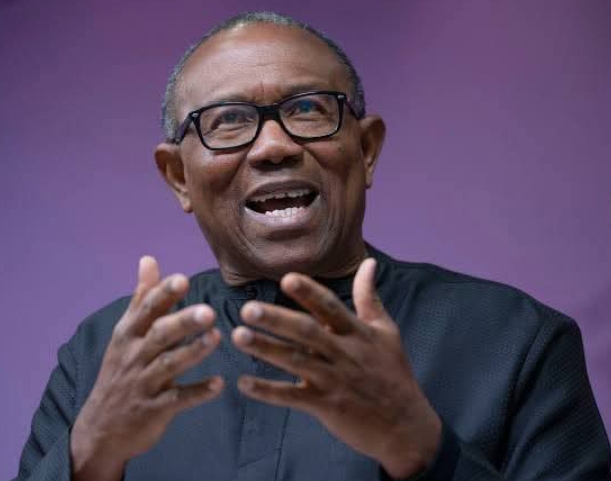
Former presidential candidate of the Labour Party, Peter Obi, has opened up on the reasons behind his decision to leave the African Democratic Congress (ADC), citing a worsening political environment marked by division, external interference, and internal crises.

In a personally reflective statement shared on Sunday morning, Obi expressed deep concern over what he described as a “toxic” system that continues to frustrate sincere efforts toward nation-building and good governance.

According to him, his decision to exit the ADC was not driven by any personal grievances against party leaders, including former Senate President David Mark and former Vice President Atiku Abubakar, whom he described as respected figures he still holds in high regard.
“I will continue to respect them,” Obi stated, dismissing speculations that his departure was due to internal disagreements with party leadership.

Instead, he pointed to what he called the infiltration of destabilising forces into political parties, alleging that the same issues that plagued his time in the Labour Party—such as unnecessary crises, court cases, and internal divisions—are beginning to manifest within the ADC.
“The same Nigerian state and its agents that created unnecessary crises and hostility within the Labour Party now appear to be finding their way into the ADC,” he said.
Obi lamented that Nigeria’s political space is increasingly defined by intimidation, suspicion, and a culture that discourages integrity and service, rather than rewarding them.
He further decried a societal shift where values such as humility, respect, and compassion are often misinterpreted as weakness, while principled leadership is subjected to criticism and doubt.
“We live in a society where humility is mistaken for weakness, respect is seen as a lack of courage, and compassion is treated as foolishness,” he noted.
Reflecting on his personal journey, Obi said he has consistently upheld a leadership philosophy rooted in service, equity, and the upliftment of others, stressing that he has never used his position or resources to oppress or intimidate anyone.
“I have never looked down on anyone except to uplift them,” he said.
The former Anambra State governor also spoke candidly about the emotional and psychological toll of public service, highlighting the “silent pains” and private struggles faced by individuals working under difficult conditions.
He added that even within political circles, individuals who are expected to provide support sometimes contribute to the pressure through criticism and lack of solidarity.
Obi revealed that despite stepping away to allow peace within the party, he continues to face attacks and misrepresentation of his intentions.
“When you choose to leave so that others can have peace, you are still maligned and your character is questioned,” he said.
While addressing speculations about his political ambition, Obi made it clear that he is not driven by a quest for power or high office.
“I am not desperate to be President, Vice President, or Senate President,” he stated.
Instead, he said his primary concern remains the welfare of ordinary Nigerians, particularly in areas of security, poverty, and social welfare.
“I am desperate to see a society that can console a mother whose child has been kidnapped or killed… a Nigeria where people do not go to bed hungry,” he added.
Despite his concerns, Obi maintained a tone of optimism, expressing firm belief in the possibility of a better Nigeria built on justice, competence, and compassion.
“A new Nigeria is possible,” he concluded.
His statement comes amid ongoing political realignments and internal challenges within major parties, raising fresh questions about the stability of Nigeria’s political landscape ahead of future elections.