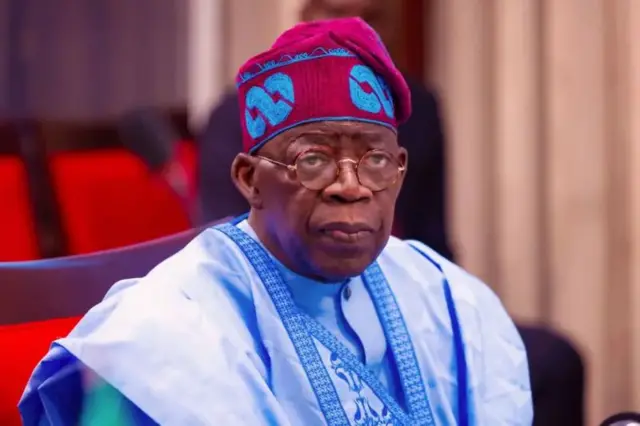
In a country where millions of young people struggle daily to access quality education due to financial hardship, the student loan initiative introduced by the administration of Bola Ahmed Tinubu stands out as one of the boldest education reforms in recent years.

For decades, many brilliant Nigerian students have watched their academic dreams fade because their parents could not afford rising tuition fees and other educational expenses. Public universities may be cheaper than private institutions, but the harsh economic realities facing many families have continued to make higher education difficult to attain. The student loan policy, therefore, arrives as a timely intervention capable of changing countless lives.

The establishment of the Nigerian Education Loan Fund (NELFUND) signals a strong commitment by the Federal Government to ensure that no willing student is denied education because of poverty. By providing interest-free loans to eligible students, the policy offers hope to young Nigerians who previously had limited options after securing admission into tertiary institutions.
One of the strongest aspects of the scheme is its potential to promote equal opportunities. Education remains one of the most powerful tools for social mobility and national development. When students from low-income families are supported to complete their studies, the nation benefits from a more educated, productive, and innovative workforce. This policy can help reduce inequality and give children from disadvantaged backgrounds a fair chance to compete with their peers.

Beyond easing tuition burdens, the loan initiative also has the potential to reduce dropout rates in universities and other tertiary institutions. Many students are forced to suspend their education or abandon school entirely because of their inability to pay fees. With access to structured financial support, students can focus more on academics and skill development rather than constantly battling financial pressure.
Critics have raised concerns about transparency, repayment structures, and implementation challenges. These concerns are valid and should not be ignored. However, every major reform comes with initial hurdles. What is important is for the government to strengthen monitoring mechanisms, ensure transparency in disbursement, and prevent political interference in the process. Proper management will determine whether the policy becomes a lasting success or another abandoned initiative.
There is also a need for continuous public enlightenment so students fully understand the application process, repayment terms, and eligibility requirements. Institutions must collaborate effectively with the government to ensure deserving students benefit without unnecessary bureaucracy.
Importantly, the student loan policy should not be seen merely as financial assistance, but as an investment in Nigeria’s future. Nations that prioritise education often record faster economic growth, lower crime rates, and stronger institutions. By helping students remain in school, the government is indirectly investing in national stability and development.
President Tinubu deserves commendation for taking a practical step toward addressing the educational financing crisis in Nigeria. While more reforms are still needed in the education sector, including improved infrastructure, better welfare for lecturers, and enhanced learning facilities, the student loan policy represents a major step in the right direction.
If properly sustained and transparently managed, this initiative could become a defining legacy of the Tinubu administration and a turning point for millions of Nigerian students seeking a brighter future through education.