Newsmediang Editorial
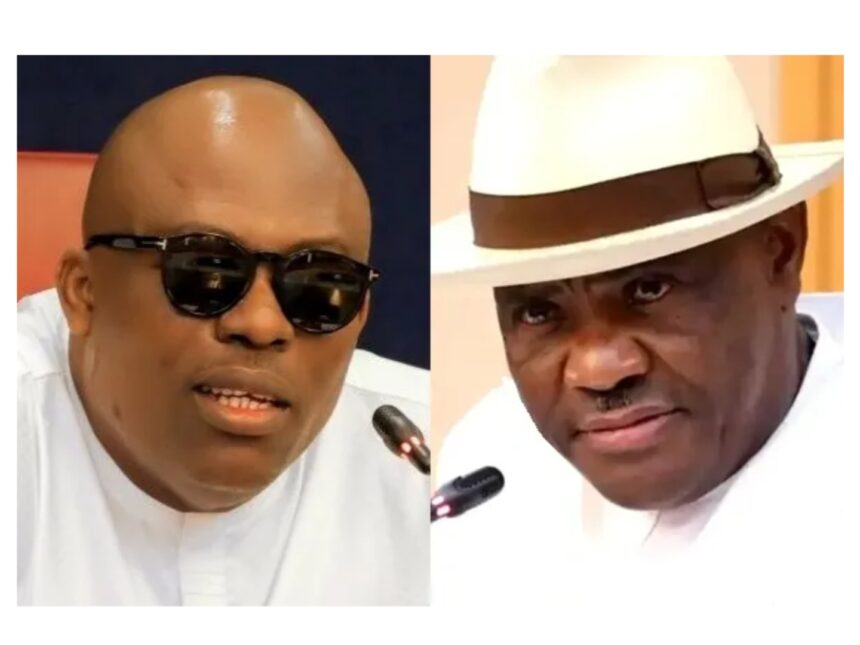
Wike Vs Fubara: Politics is often cruel, loyalty shifts, institutions bend, power changes equations; Was Fubara Really the Loser?

I had a deep thought before arriving at this conclusion: in the prolonged political war between Nyesom Wike and Siminalayi Fubara, many have rushed to label one man weak and the other powerful. But after reflecting on the sequence of events, it becomes difficult to dismiss what Fubara endured or reduce the conflict to mere political incompetence.

Only Fubara truly knows what he saw and what he suffered under the powers aligned against him.
If anyone takes their mind back to how the crisis started, it began like a seemingly ordinary disagreement between a political godfather and his successor. Reports and political observers pointed to differences over control, influence, Rivers State’s internal political structure, and Fubara’s decision to bring closer individuals Wike allegedly viewed as political adversaries — figures such as Uche Secondus, Celestine Omehia, Peter Odili and others.

What looked like a manageable disagreement suddenly transformed into a political earthquake.
The offence appeared unforgivable. Fubara faced impeachment threats from lawmakers loyal to his predecessor. State institutions became battlegrounds. Political pressure intensified from multiple directions. A governor elected by the people suddenly found himself struggling to exercise powers legitimately attached to his office.
He reportedly faced resistance in presenting the state budget. Communication channels between his office and the Assembly collapsed. Political isolation became severe, creating the impression that a sitting governor had been effectively cancelled and disconnected from core democratic processes.
Many governors across Nigeria, including in the Southeast, have had disagreements with political benefactors. Such clashes are not new in Nigerian politics. Yet many never escalated to the level witnessed in Rivers State. Governors have aligned with individuals their predecessors disliked without triggering full-scale institutional warfare.
But Fubara’s experience appeared different.
He saw political hell.
Democratic institutions under his watch were disrupted, and governance itself appeared overshadowed by power struggles. Even after political realignments and shifting alliances, many believe he still faced enormous obstacles.
Some now call him weak. But weakness may not be the correct interpretation.
There are situations larger than an individual leader — circumstances capable of overwhelming even the strongest political actor. Fubara may not have lacked courage; he may simply have encountered a political machine far greater than himself and perhaps greater than anyone sincerely interested in governing peacefully.
Politics is often cruel. Loyalty shifts. Institutions bend. Power changes equations.
As for those celebrating winners and mocking losers, history has a habit of delivering different verdicts years later.
Fubara may not be weak. He may simply be a man who walked through a storm that most people only watched from a distance.