Trump Abandons His Son’s Wedding as Washington Braces for Another Iran War Gamble
The signals are everywhere.

The Trump administration is reportedly preparing for a fresh round of strikes against Iran, and even though CBS News says no final decision has officially been made, Washington is already moving like war preparations are underway.

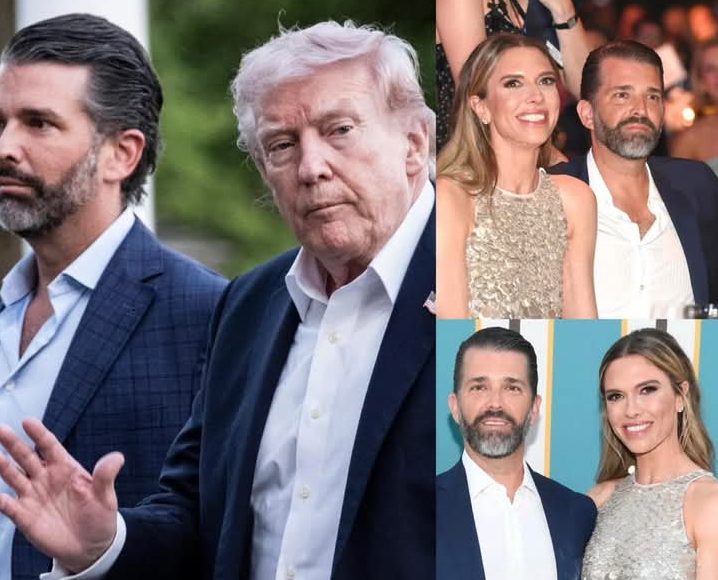
Trump abruptly canceled attendance at his own son Don Jr.’s wedding this weekend, citing only “circumstances pertaining to Government.” He also scrapped Memorial Day plans in New Jersey and returned directly to the White House.
At the same time, members of the military and intelligence community reportedly canceled their own holiday plans in anticipation of possible military action.

Now the atmosphere in Washington is becoming impossible to ignore.
President Trump just rushed back to Washington after canceling his weekend plans in New Jersey.
Intelligence officials have also canceled their Memorial Day plans and are on standby.
When the President and the entire intel community suddenly drop their holiday plans to bunker down in DC, you know something serious is brewing.
The weekend just got a lot less relaxing
Then came the latest pressure campaign.
According to reports, the newest U.S. proposal delivered to Iran on Wednesday carried a direct warning: reject this “final offer” and strikes resume. Iran’s response is reportedly expected through Asim Munir and Pakistani channels.
And suddenly people in Washington started paying attention.
Because presidents do not casually skip their son’s wedding.
Trump was literally on his way to Bedminster for Don Jr.’s wedding before turning around mid-trip and heading straight back to Washington.
His exact words on Truth Social were carefully crafted but loaded with implication:
“Circumstances pertaining to Government, and my love for the United States of America, do not allow me to do so. I feel it is important for me to remain in Washington, D.C., at the White House during this important period of time.”
No explanation.
No briefing.
No details from the White House.
Just silence.
And people familiar with Trump’s pattern immediately noticed something important: some of his biggest geopolitical decisions have followed this exact playbook.
The Jerusalem embassy move came after years of previous presidents avoided doing it.
The assassination of Qasem Soleimani happened after earlier administrations reportedly chose not to act on similar intelligence.
The first operational use of the MOAB bomb came quietly after the weapon sat unused for over a decade.
In each case, there were no dramatic announcements beforehand. Just sudden schedule changes, silence, and then the world waking up to a new geopolitical reality.
That is why many people are now reading heavily into the phrase “important period of time.”
Because the situation surrounding Iran remains extremely fragile.
The Strait of Hormuz crisis is unresolved.
The ceasefire environment remains unstable.
Military assets are already positioned across the region.
And Washington appears to be signaling that rejection of its latest proposal could trigger another escalation cycle.
But the deeper issue remains the same.
Trump wants Iran to capitulate without offering meaningful concessions in return. That is not how negotiations work between regional powers locked in a decades-long strategic confrontation.
There was already a framework before all of this: the Joint Comprehensive Plan of Action. Trump tore it apart under pressure from Netanyahu and hardline anti-Iran factions, then replaced diplomacy with maximum pressure, sanctions, assassinations, and military escalation.
Now the same crisis that diplomacy previously contained has exploded into open regional instability.
Trump helped create the crisis, then chose war as the solution to the crisis he escalated.
The core dispute remains unchanged.
Washington and Israel continue demanding zero uranium enrichment, while Iran has repeatedly declared that demand a non-negotiable red line tied to sovereignty and national security.
Meanwhile, the Strait of Hormuz was functioning before the war. Now global shipping lanes are unstable, oil markets are nervous, military deployments are expanding, and the world economy is once again hostage to Middle East escalation.
Iran has not fully closed Hormuz, but reports suggest restrictions and selective passage dynamics are already emerging depending on strategic alignments and wartime calculations.
And this is the reality Washington keeps running into: bombing does not automatically produce political surrender.
Airstrikes can damage infrastructure.
They can delay programs.
They can increase pressure.
But eventually, both sides still have to sit down and negotiate some form of settlement.
The problem is Trump still appears to want an agreement entirely on American and Israeli terms, while Iran is signaling it will absorb pressure rather than surrender core strategic demands.
That is why this crisis keeps escalating in cycles.
Because military force can reshape leverage, but it cannot erase geography, ideology, nationalism, or the political reality that both sides still believe time is on their side.