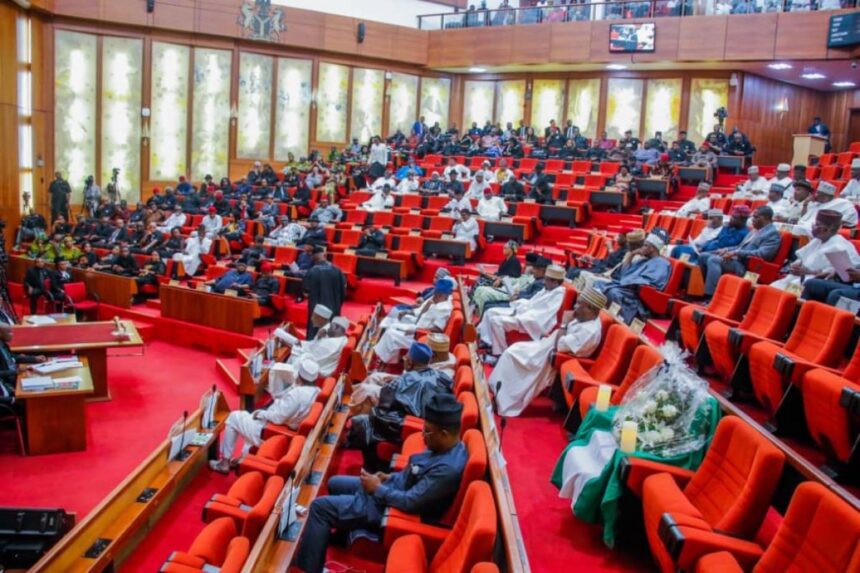
Breaking: Senate Passes State Police Bill, Empowers Governors to Appoint Commissioners


The Nigerian Senate has passed the State Police Bill, paving the way for the establishment of state-controlled police forces and empowering state governors to appoint commissioners of police.

The landmark legislation is regarded as one of the most significant security reforms in Nigeria’s democratic history, as it seeks to decentralise policing and address persistent security challenges across the country.
Under the provisions of the bill, each state would be permitted to establish and manage its own police force, while governors would have the authority to appoint commissioners of police for their respective states, subject to procedures outlined in the legislation.
Supporters of the bill argue that the creation of state police will improve local intelligence gathering, enhance response to security threats, and enable states to tackle issues such as banditry, kidnapping, communal clashes, and other crimes more effectively.
For years, advocates of state policing have maintained that Nigeria’s centralised policing structure is overstretched and unable to adequately address the country’s diverse security challenges.
However, the proposal has also generated concerns among critics who fear that state police forces could be abused by state governments for political purposes or used to intimidate opposition figures.
The passage of the bill by the Senate marks a major step toward restructuring Nigeria’s security framework, though further legislative processes and constitutional requirements may still need to be completed before state police become operational across the federation.
The development is expected to reignite national debates on security reforms and the balance of powers between the federal and state governments in Nigeria.