
Courses Offered by Nursing Students in Nigerian Universities (Year 1–5)

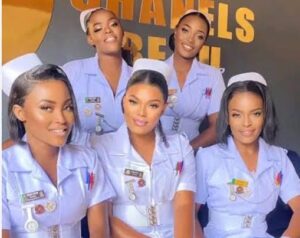
The Bachelor of Nursing Science (BNSc) programme in Nigerian universities is a five-year professional degree that combines classroom learning with extensive clinical postings and practical training.

Year 1 (100 Level)

Students are introduced to the basic sciences and general university courses, including:
Physics
Chemistry
Biology
Mathematics
Computer Science
Biostatistics
Communication Skills
General Studies Programmes (GSP)
Year 2 (200 Level)
At this stage, students begin studying foundational nursing and medical sciences courses, such as:
Anatomy
Physiology
Biochemistry
Microbiology
Foundations of Nursing Science
Nursing Ethics
Nutrition
Perspectives of Nursing
Primary Health Care (PHC)
Year 3 (300 Level)
The curriculum becomes more clinically oriented with courses including:
Anatomy
Physiology
Biochemistry
Pathology
Pharmacology
Medical-Surgical Nursing
Community Health Nursing
Maternal and Child Health Nursing
Epidemiology
Nursing Research
Applied Medical Sociology
Mental Health Nursing
Human Behaviour in Health and Disease
Year 4 (400 Level)
Students focus on advanced nursing practice, leadership, and education through courses such as:
Maternal and Child Health Nursing
Mental Health Nursing
Reproductive Health
Nursing Education
Nursing Administration
Management in Nursing Education
Family Health Nursing
Expectant Family Care Project
Public Health Nursing
Nursing Research
Leadership in Nursing
Professional Ethics
Curriculum of Education
Teaching Practice/Micro-Teaching
Year 5 (500 Level)
The final year exposes students to specialised areas of nursing practice, including:
Intensive Care Nursing
Anaesthetic Nursing
Radiology Nursing
Geriatric Nursing
Dermatology Nursing
ENT Nursing
Perioperative Nursing
Nursing Seminar
Nursing Project
Clinical Postings and Practical Training
A unique feature of nursing education in Nigerian universities is the mandatory clinical postings and practical sessions.
Clinical postings are compulsory from 200 Level to 500 Level.
Students undertake postings during semester breaks after each academic session.
In some levels, particularly 300, 400, and 500 Levels, postings run concurrently with lectures.
A typical schedule may involve two days of classroom lectures and three days of hospital or community postings per week.
These clinical experiences expose students to real-life patient care and help them develop the practical competencies required to become professional registered nurses in Nigeria.
SN Mukhtar Auwal Sara