STATE POLICE: A New Beginning or the Same Old Problems?

The debate over state policing has once again taken centre stage in Nigeria’s public discourse. Since the issue resurfaced in the mainstream media, many Nigerians at home and abroad have called for informed opinions on what could become one of the country’s most significant security reforms.

President Bola Ahmed Tinubu has inaugurated the Presidential Committee on the implementation of State Policing, signalling the Federal Government’s determination to advance discussions on decentralising policing as part of broader security sector reforms.

For many Nigerians, state police represent a long-overdue solution to worsening insecurity and a necessary feature of true federalism. Others see it as the logical evolution of Nigeria’s federal structure.
Yet beyond the excitement lies a fundamental question: Are we fixing the real problems in Nigeria’s policing system, or merely creating another institution that may inherit the same weaknesses?
Building on a Weak Foundation?
Imagine a man whose vehicle constantly breaks down. Instead of identifying the fault, he abandons it and buys another one. If the original problems were poor maintenance, incompetent repairs or reckless usage, the new vehicle will almost certainly develop similar faults.
That analogy reflects the present debate on state policing.
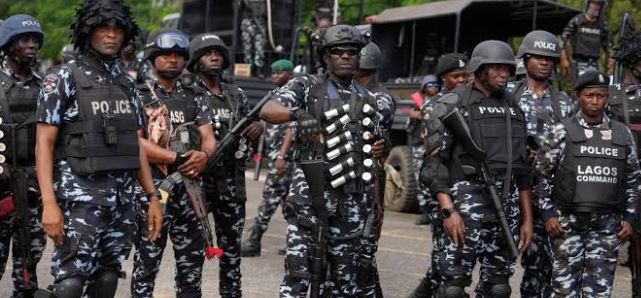
For decades, the Nigeria Police Force has battled inadequate funding, poor welfare, obsolete equipment, manpower shortages, insufficient training, weak supervision and declining public confidence. These institutional challenges have persisted despite policing remaining exclusively under the Federal Government.
If the Federal Government has struggled to adequately fund and manage one national police institution, an important question naturally follows: Are many state governments financially and institutionally prepared to establish, equip, train and sustain independent police services?
This concern should not be interpreted as opposition to state policing. Rather, it is a call for careful planning and honest reflection.
The Welfare Question
One question deserves urgent attention:
How many state governments have consistently demonstrated commitment to improving police welfare under the current arrangement?
Across Nigeria, police stations require urgent rehabilitation. Operational logistics remain inadequate. Housing deficits persist. Police pensions continue to generate widespread concern, with many serving and retired officers advocating an exit from the Contributory Pension Scheme, arguing that it no longer guarantees a dignified retirement.
These are not merely welfare issues—they are institutional deficiencies that directly affect professionalism, morale, operational efficiency and public trust.
Laws Alone Cannot Reform Institutions
The Nigeria Police Act, 2020 represented a significant milestone in police reform. It promised a modern police service anchored on accountability, professionalism, respect for human rights and improved welfare.
The legislation recognised an important truth: professional policing cannot thrive without dignity and accountability.
However, legislation alone cannot transform institutions.
Many officers continue to work under extremely difficult conditions. Operational equipment remains insufficient. Thousands still live in ageing barracks that reflect decades of neglect. Training opportunities remain inconsistent. Promotion processes often attract criticism, while available resources fall far short of operational demands.
Yet society expects world-class policing.
Questions That Demand Honest Answers
As the debate progresses, Nigerians deserve clear answers to several critical questions:
Does the Nigeria Police Force receive its full budgetary allocation?
Are appropriated funds utilised transparently and efficiently?
Are accountability mechanisms functioning without political interference?
Are disciplinary processes credible and independent?
Is police training keeping pace with evolving security threats?
How many officers have access to decent housing and modern working conditions?
One reality remains undeniable:
Dignity without accountability breeds impunity, while accountability without dignity breeds resentment. Sustainable police reform requires both.
Imagining the Police Nigeria Deserves
Imagine police colleges equipped with world-class facilities instead of dilapidated institutions.
Imagine officers receiving competitive salaries and prompt remuneration, allowing them to focus on public service rather than personal survival.
Imagine decent housing integrated within communities instead of deteriorating barracks isolated from the citizens officers are sworn to protect.
Imagine technology-driven policing, digital crime reporting, transparent investigations, merit-based promotions, independent oversight and continuous professional development.
Imagine citizens feeling reassured—not anxious—whenever they encounter a police patrol.
Imagine children seeing police officers as symbols of honour, integrity and public service.
That is the vision every meaningful reform should pursue.
Reform Before Expansion
State policing could strengthen Nigeria’s federal structure if properly designed and responsibly implemented.
However, creating additional policing institutions without first addressing the structural deficiencies affecting the existing police system risks reproducing the same problems at another level of government.
The national conversation, therefore, should extend beyond whether Nigeria needs state police.
The more important question is whether the country is prepared to build policing institutions founded on professionalism, adequate funding, transparent leadership, officer welfare, accountability and public trust.
Whether policing remains federal, becomes state-controlled or evolves into a hybrid system, one principle remains constant:
No policing system can rise above the quality of the institutions, leadership and political commitment that sustain it.
If Nigeria genuinely seeks a modern police service free from corruption, abuse and inefficiency, institutional reform must precede structural expansion.
Only then can any policing model—federal, state or community-based—deliver the security, justice and public confidence that Nigerians deserve.
Legal Media