
“I Left Nigeria Over 10 Years Ago, I’m Disappointed By What I Met” — Netherlands-Based Nigerian

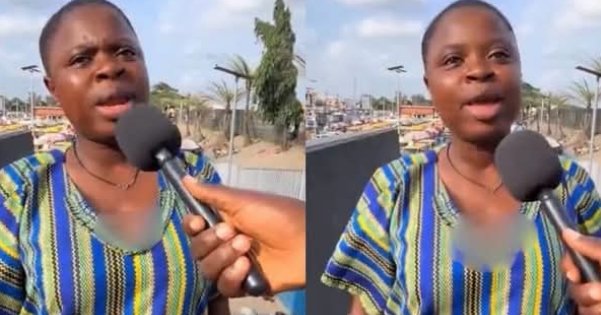
A Nigerian woman based in the Netherlands has expressed disappointment over what she described as the slow pace of development in Nigeria after returning to the country for the first time in more than a decade.
The woman, who said she has lived in the Netherlands for over 10 years and is married to a Dutch citizen, said she returned to Nigeria to see how the country and its systems had evolved since she left.

According to her, she was disappointed by what she encountered, insisting that many things appeared largely unchanged.
“I’ve been in Netherlands for more than ten years, and I’m a citizen of Netherlands, married to a citizen there.
“Since I left, I’ve not been to Nigeria, so I decided to come here and see how the system is. To be honest, I’m disappointed because it’s not what I was expecting.
“Nigeria has not changed from the way I left it. Only this bridge, if you might ask me, because I’m conversant with Ojodu Berger, so I will say only this bridge is what has changed.”
She contrasted Nigeria’s infrastructure and social welfare systems with what she experiences in the Netherlands, particularly in the areas of roads, education, healthcare and social support.
The woman said roads in the Netherlands are regularly maintained, adding that the government provides support to residents who cannot afford certain necessities.
“Where I’m coming from, the roads are being renovated every six months.
“We don’t have the poor, we don’t have the extremely rich people in Netherlands. Everybody is doing good.
“What you cannot afford, the system comes in and helps you. So, if you are working and I’m not working, the system takes your tax and uses it to give me what I cannot afford for myself,” she said.
She also highlighted what she described as greater equality in access to education, saying children from different social backgrounds attend schools within their communities.
“Your children and my children will go to the same school. You cannot say because you are the governor, your children have to go to Oxford University. No. Every street you are living, you register your children there,” she said.
On healthcare, she said residents are generally covered by insurance and receive medical services through a structured system based on their place of residence.
“The same thing applies to hospitals. You cannot be living in Ojodu Berger and go to Ikeja to register your child in the hospital. You register where it is nearby you and everyone is insured,” she said.
She further described the emergency response system in the Netherlands, noting that accident victims receive immediate attention regardless of their social or financial status.
“If there is an accident, it doesn’t matter who you are. They come, pick you up and start treatment from the ambulance, and then they take you to the hospital.
“You are covered with insurance. That’s how the system works,” she added.
Her comments have sparked conversations about the differences between Nigeria and European countries in infrastructure maintenance, social welfare, education, healthcare and emergency response.
While her observations reflect her personal experience living in the Netherlands, they have also renewed discussions about the need for stronger public services, social protection and equal access to basic amenities in Nigeria.