Tinubu: Prof Adesanya-Davies Applauds 6 Bold Reforms, Demands Regionalisation of Nigeria

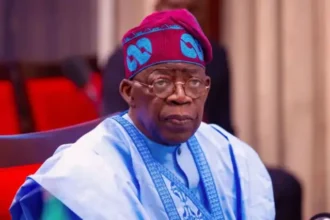
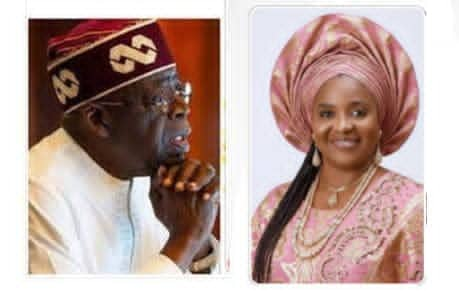
Professor Funmilayo Adesanya-Davies has commended President Bola Ahmed Tinubu for what she described as six “bold and daring” reforms since the administration assumed office, urging the President to make the restructuring of Nigeria through regionalisation his next major reform agenda.

Adesanya-Davies, a Professor of Applied Linguistics and Communication Arts at Ignatius Ajuru University of Education, Port Harcourt, former presidential candidate and UN-POLAC Peace Consul, made the call in an open letter to President Tinubu dated September 1, 2026.

According to her, the Tinubu administration has taken decisions that previous governments allegedly avoided for decades, arguing that the reforms have begun to reposition the country despite the difficulties associated with their implementation.
She listed the removal of fuel subsidy and forex unification, tax and revenue reforms, human capital investment through NELFUND, direct allocation to local governments, workers’ welfare measures and cost-of-governance cuts, as well as enhanced international security cooperation among the major reforms deserving commendation.
Six Reforms Commended
Adesanya-Davies said the removal of fuel subsidy and unification of the foreign exchange market represented an economic reset capable of reducing fiscal leakages and freeing resources for infrastructure, education, CNG initiatives and social investment.
She also cited the administration’s tax reform agenda and National Single Window initiative as measures capable of broadening the tax base, improving efficiency and reducing corruption, particularly around the nation’s ports.
On education, she commended the establishment of the Nigeria Education Loan Fund, NELFUND, and the reintegration of Junior Secondary School and Senior Secondary School into a seamless six-year cycle.
She argued that the measures could improve access to tertiary education, reduce school dropout and strengthen curriculum continuity.
The professor further applauded the direct allocation of funds to the 774 local governments, following the Supreme Court judgment on local government financial autonomy.
According to her, greater financial independence for local councils could improve accountability and service delivery in areas such as primary education, healthcare and rural infrastructure.
She also praised the ₦70,000 minimum wage, the Presidential CNG Initiative and measures aimed at reducing the cost of governance, describing them as evidence that economic reforms could be combined with workers’ welfare.
On security, she commended Nigeria’s deepening cooperation with the United States and Israel in intelligence sharing, training and technology, saying stronger partnerships could improve the country’s response to terrorism, banditry and kidnapping.
‘Regionalise Nigeria as Next Bold Step’
Having commended the reforms, Adesanya-Davies urged President Tinubu to pursue what she described as the “next bold step” — restructuring Nigeria through regionalisation.
She argued that the country’s current highly centralised system had placed excessive responsibilities on the Federal Government, while states and local governments remained heavily dependent on Abuja.
“Nigeria has run a highly centralized system for too long. The center is overloaded. States and LGs wait for Abuja. Regions with different resources and challenges are forced into one-size-fits-all policies. This slows growth and fuels frustration,” she said.
She proposed that Nigeria’s six geopolitical zones be recognised as federating units, with substantial powers devolved to them.
Under her proposal, the regions would have greater control over areas including agriculture, education, healthcare, internal security and infrastructure, while the Federal Government would retain responsibilities such as defence, foreign affairs, currency and inter-regional commerce.
Regional Competition Will Drive Development – Don
Adesanya-Davies argued that regionalisation would allow each part of the country to develop policies around its comparative advantages.
She cited agriculture and solid minerals in parts of the country and said regions such as the North-East could develop education and security strategies specifically suited to their circumstances.
According to her, competition among regions would encourage innovation, productivity and accountability.
She also linked regionalisation to fiscal federalism, arguing that regions should be empowered to generate revenue, retain a larger proportion of their earnings and remit an agreed share to the Federal Government.
‘Regional Policing Will Improve Security’
The professor further argued that greater regional control could improve Nigeria’s security architecture.
She proposed regional police structures operating alongside federal security agencies, saying communities and regions closest to security challenges should have greater capacity to respond to them.
“Those closest to the problem will have the power to solve it,” she said.
She stressed that regionalisation should not be interpreted as an attempt to divide Nigeria.
“Regionalization is not separation. It is organized cooperation.”
Calls for National Dialogue, Constitutional Amendment
Adesanya-Davies called on President Tinubu to convene a National Dialogue on Regionalisation as a first step towards building consensus around the proposed restructuring.
She also urged the President to support a constitutional amendment process that would formally recognise the six geopolitical zones as federating units with clearly defined constitutional responsibilities.
According to her, such a move would help consolidate the economic, educational, security and governance reforms already introduced by the administration.
“History will not remember leaders only for policies. History remembers leaders who had the courage to change structures. You have shown that courage in the economy. Show it now in governance structure,” she told the President.
She added: “The Nigerian child deserves a system designed around learning, productivity, and opportunity — not around bureaucracy and centralization. Regionalization will deliver that.”
Adesanya-Davies said she and other professors across Nigeria were ready to contribute to research, civic education and stakeholder engagement aimed at ensuring that any restructuring process was peaceful, inclusive and successful.
She appealed to President Tinubu to provide the political leadership required to take the proposed restructuring debate to the next level.
“May God grant you wisdom, strength, and the courage to finish what you have started, Your Excellency Sir,” she concluded.
About Prof. Funmilayo Adesanya-Davies
Professor Funmilayo Adesanya-Davies is a Professor of Applied Linguistics and Communication Arts at Ignatius Ajuru University of Education, Port Harcourt. She is also identified as a former presidential candidate and UN-POLAC Peace Consul.