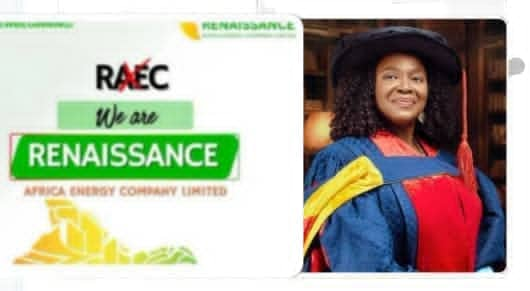
2026: SHELL/SPDC/ RENAISSANCE AFRICA Energy Company Limited (RAECL) & SNCPFA
Suit

“₦15billion Civil Action at the Rivers State High Court in Port Harcourt” – Prof Funmilayo Adesanya-Davies

Port Harcourt, Rivers State — August 26, 2026
Professor Funmilayo Adesanya-Davies has issued a strong warning to Shell Petroleum Development Company of Nigeria Limited (SPDC) now RENAISSANCE and relevant retirement authorities like SNCPFA, urging them to treat her concerns about access to healthcare and medical benefits with the utmost seriousness.
“SHELL/SPDC,/RENAISSANCE AFRICA Energy Company Limited (RAECL)/SNCPFA, don’t kill me like Chinazam
Okoli. Your ₦50 billion suit is still before the court, at the Rivers State High Court in Port Harcourt.

” Prof. Adesanya-Davies said, referring to the widely reported litigation arising from the medical treatment of Chinazam Okoli, a child who suffered catastrophic injury following an appendectomy at a Shell hospital in Port Harcourt.
THE CHINAZAM CASE: A WARNING THAT MUST NOT BE IGNORED:
The Chinazam case involves Mr. Emeka Okoli and Mrs. Stella Emeka-Okoli, both reportedly employees of SPDC, and their minor son, Chinazam, against SPDC, Shell PLC in the United Kingdom, Dr. Alexander Dimoko and Dr. Dafe Akpoduado.
According to the family’s allegations, Chinazam was admitted to the Shell Hospital in Port Harcourt in September 2016 for what was intended to be a routine appendectomy. The family alleges that clinical and surgical mismanagement resulted in oxygen deprivation to the child’s brain, causing severe and irreversible hypoxic brain injury.
The alleged consequences were devastating: the child became severely incapacitated and permanently dependent on a wheelchair.
The family subsequently instituted a ₦50 billion civil action at the Rivers State High Court in Port Harcourt.
“THE COURT MUST HEAR THE SUBSTANCE”:
The litigation has also involved preliminary legal objections by Shell’s legal representatives, including arguments concerning limitation periods and the proper identification of the corporate defendant.
As understood from the legal history supplied to the public, the High Court rejected those objections and allowed the substantive dispute to proceed toward determination on its merits.
For Prof. Adesanya-Davies, the significance goes beyond one courtroom.
She says the case demonstrates why patients, retirees, spouses and beneficiaries who depend upon employer-linked healthcare arrangements must not be placed in situations where their access to essential medical care is uncertain.
“I am not Chinazam. I am an adult woman who has depended on this healthcare system for decades. I am asking that my life and medical welfare not be placed at risk through administrative decisions that could leave me without access to necessary care.”
A PLEA FOR LIFE, NOT CONFRONTATION:
Prof. Adesanya-Davies stressed that her intervention should not be interpreted as an attempt to prejudge the Chinazam litigation or to accuse any individual of medical negligence.
Rather, she my genotype is SC know to SPDC in 35 years and said the case serves as a powerful reminder that medical decisions and healthcare access can have consequences measured in human lives, not merely paperwork.
She therefore called on SPDC, Shell-related pension and healthcare administrators, and all relevant stakeholders to exercise compassion, transparency and due process in handling disputes involving medical benefits.
“Please, don’t let my situation become another story of a person whose health deteriorated because access to medical support became a subject of administrative or contractual dispute.”
“I WANT A SOLUTION, NOT A TRAGEDY”:
Prof. Adesanya-Davies maintained that her central concern is simple: preservation of life and uninterrupted access to appropriate healthcare while the underlying disputes are resolved through lawful channels.
She urged all parties to distinguish between a disagreement over benefits and the fundamental need to protect human life.
“A pension dispute can be resolved. A contractual dispute can be resolved. A legal dispute can be resolved. But when a life is lost, no court judgment can bring that life back.”
She therefore appealed to Shell/SPDC and all relevant institutions to engage constructively, review the circumstances surrounding her healthcare status and ensure that no administrative action exposes her to avoidable medical danger.
CONCLUSION
Prof. Adesanya-Davies said the Chinazam case should remain a reminder to corporate organisations, hospitals and healthcare administrators that the dignity and safety of patients must remain paramount.
«“I am asking for protection, due process and humane treatment. I do not want to become another tragic headline. SHELL/SPDC/Renaissance Africa Energy Company Limited (RAECL), please don’t kill me like Chinazam. Let us resolve this matter while there is still time.”»
Signed:
Ms..Joy Wellington
For Prof. Funmilayo Adesanya-Davies
Professor of Applied Linguistics
Port Harcourt, Rivers State, Nigeria
Reference
Adesanya-Davies Demands Transparency Over Removal From Retirement Healthcare Scheme
“Show Me the Rule That Authorised My Removal” — Adesanya-Davies Challenges Pension Administrators