Media practitioners have been urged to embrace Artificial Intelligence (AI) as a tool for improving journalism while ensuring that technology does not replace professional judgment, ethics and human responsibility.

The President of The Press Society, Comrade Elias Abayomi Adagunduro, gave the warning on Thursday, September 3, 2026, at the maiden Sensitisation Workshop for Media Practitioners organised by The Press Society at the Lagos Chamber of Commerce and Industry.

The workshop, themed “Balancing Creativity and Ethics in the Media in the Era of Artificial Intelligence,” brought together journalists, media professionals, student journalists, AI experts and other stakeholders to examine the opportunities and ethical challenges posed by the rapid adoption of AI in journalism.
Adagunduro said AI had significantly changed the media landscape, with technology now capable of generating news stories, headlines, images, videos and synthetic voices, while also analysing huge volumes of information within seconds.

However, he stressed that the ability of AI to generate content did not absolve journalists and media organisations of responsibility for what they publish.
He urged media practitioners, particularly those working in community and online media, to independently verify AI-generated information, identify deepfakes and manipulated content, protect privacy and uphold the principles of accuracy, fairness and human dignity.
“Technology can generate words, but it cannot take responsibility for the consequences of those words,” Adagunduro said.
He maintained that while AI could assist journalists in producing content more efficiently, credible journalism remained anchored on public trust, professional responsibility and accountability.
The Press Society president urged journalists to deploy AI responsibly while remaining committed to serving their communities with truth, courage and accountability.
AI Has Not Changed Journalists’ Ethical Responsibilities — Otufodunrin
Speaking on “Ethics, Credibility and Public Trust in the AI Era,” the Executive Director of the Media Career Development Network, Mr Lekan Otufodunrin, said the emergence of AI had changed how journalism was produced but had not altered the ethical responsibilities of journalists.
Otufodunrin said technology could assist journalists in their work, but ethical judgment must remain fundamentally human.
According to him, the rise of AI had not abolished established journalism ethics but had made strict adherence to them even more important.
He raised concerns over accuracy, fairness, accountability and transparency, particularly the difficulty of determining whether AI-generated information was factual or simply presented convincingly.
He also questioned the possibility of AI-assisted reporting introducing bias into news stories and asked who would ultimately bear responsibility when false information generated by AI was disseminated to the public by a journalist.
Otufodunrin identified plagiarism, copyright, editorial independence and the public interest as other critical issues journalists must consider when using AI.
He stressed that journalism was built on a high degree of public trust and urged media organisations to uphold professional and ethical standards while placing the public interest at the centre of their work.
The media development expert referenced the Nigerian Journalists’ Code of Ethics, which requires journalists to ascertain the truth of events and ensure that reports are factual, accurate, balanced and fair.
He noted that journalists were also expected to clearly distinguish facts from conjecture and comment, adding that these principles remained essential despite the transformation of news gathering, production and distribution by AI.
Adebayo Warns of Rise in Deepfakes
Another speaker, award-winning Nigerian investigative and multimedia journalist, Bukola Adebayo, warned that automated digital tools had contributed to the growing sophistication of fabricated content online.
Adebayo noted that Nigerian newsrooms were increasingly using AI platforms such as ChatGPT and Claude for tasks including drafting, transcription and research.
However, she said the growing adoption of AI had occurred alongside an increase in sophisticated deepfakes targeting prominent Nigerians and other public figures.
According to her, the trend poses a serious threat to the credibility of traditional media, particularly when fabricated content is mistaken for genuine information and subsequently amplified by news platforms.
She urged journalists to exercise caution when using automated tools and to ensure that every piece of AI-assisted information undergoes proper editorial scrutiny before publication.
Adebayo cited a manipulated video featuring Nobel laureate, Professor Wole Soyinka, which was circulated on social media to promote an unverified hypertension medication.
She said the incident demonstrated how AI-generated and manipulated content could deceive members of the public while also damaging the reputation of individuals falsely associated with fabricated claims.
She noted that the challenge was not limited to Nigeria, as sophisticated digital manipulation had increasingly become a global threat to public information and media credibility.
Media Houses Urged to Develop AI Policies
Adebayo called on media organisations to train journalists in responsible AI use and develop clear institutional policies governing the deployment of automated tools in news production.
She said such policies should empower journalists to work independently in verifying AI-assisted information through proofreading, fact-checking and other editorial checks.
According to her, responsible use of AI, combined with strong editorial oversight, would help media organisations protect public trust and maintain their credibility in an increasingly digital information environment.
The Press Society Honours Organisations, Individuals
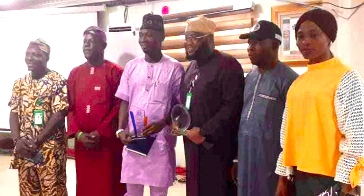
Highlights of the workshop also included the presentation of certificates to participating media professionals and awards of recognition to individuals and organisations for their contributions to the media and society.
The Press Society Initiative recognised the Nigerian Communications Commission (NCC), NACCIMA, Odi-Olowo/Ojuwoye LCDA, Lagos Chapter of the Child Protection Network, Nigerian Customs Service, Conference 57, Vissionspring and Igbogbo-Baiyeku LCDA.
The recognition also extended to individuals who have distinguished themselves through public service and community development.
The organisers said the awards formed part of activities marking the maiden sensitisation workshop.
The event attracted media professionals, journalists, student journalists, AI and media experts, stakeholders, organisational leaders and other distinguished personalities, underscoring the growing need for the Nigerian media industry to develop responsible frameworks for the use of AI without compromising the core values of journalism.