Chain Reactions Africa Releases 4th Youth Trends Report, Says “37m Young Voters Could Decide Nigeria’s Political Future”


By NewsMediaNG


Chain Reactions Africa, one of Africa’s leading public relations and communications consulting firms, has urged Nigerian political leaders and government institutions to pay closer attention to the evolving behaviours, expectations and aspirations of young Nigerians ahead of the 2027 general elections.
The firm said the electoral decisions of young Nigerians could have significant implications for the 2027 elections and shape the country’s direction over the next four years.
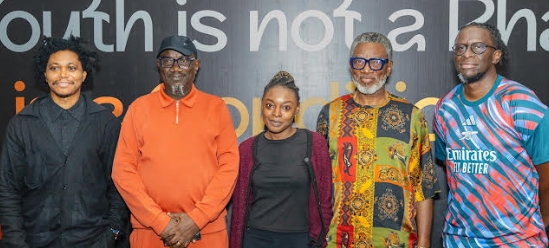
Chain Reactions Africa made the call on Wednesday, September 30, 2026, during the public presentation of its fourth periodic youth trends and culture intelligence report, “Youth Futures 2026: A Culture Intelligence Report on African Youth,” held at the Sheraton Hotel, Ikeja, Lagos.
The event brought together young Nigerians, creatives, culture-shapers, marketing professionals, government representatives and thought leaders to examine emerging trends shaping Africa’s youth population.
The report is the product of research and analysis by strategists, trend spotters, cultural anthropologists and industry experts working across brands, business and youth culture in Africa.
According to the firm, the report combines cultural intelligence, strategic analysis and real-world industry experience to examine the forces and decisions shaping the next generation.
Speaking at the event, Israel Opayemi, Managing Director and Chief Strategist, Chain Reactions Africa, urged political leaders and government institutions at all levels to study the report and develop a deeper understanding of the realities confronting young Nigerians.
Opayemi said young Nigerians could no longer be treated as a constituency to be courted only during election periods, stressing that their lived experiences were increasingly determining how power, leadership and institutions are judged.
“Young people are not simply the audience of the future; they are already living through the future that the rest of society is only beginning to understand.
“Their choices around work, migration, identity, technology, relationships, and meaning are not isolated youth behaviours. They are signals of where society itself is heading.”
He said the report provides an opportunity to understand these signals rather than speak on behalf of young people.
Opayemi also drew attention to the size of Nigeria’s youth electorate ahead of the 2027 elections.
He referenced data from the Independent National Electoral Commission (INEC), which showed that Nigerians aged 18 to 34 accounted for 37,060,399 of the 93,469,008 registered voters in the 2023 general election, representing approximately 39.65 per cent of registered voters.
He said the figure demonstrated the potential significance of youth participation in the 2027 elections, particularly if a substantial proportion of young voters turn out to vote.
‘Young Nigerians Have Not Given Up on Governance’
Opayemi said one of the report’s major findings was that young Nigerians had not abandoned the idea of governance but had become increasingly sceptical of institutions they believed had repeatedly failed to meet their expectations.
“Young Nigerians have not given up on governance; they have given up on the specific institutions that have consistently failed them,” he said.
According to him, the report found that self-trust and peer trust remain relatively strong among young Nigerians, followed by community trust, while institutional trust occupies the weakest position.
He said institutions would therefore have to demonstrate their value through measurable actions rather than simply demand public confidence.
“Nigerian youths now trust based on proofs,” Opayemi said, adding that institutions must demonstrate that they can deliver on their promises and accept accountability when they fail.
Culture Moving Faster Than Government
Opayemi also warned of what he described as a widening gap between the speed at which youth culture evolves and the pace at which institutions respond.
“Culture now moves in hours and days, brands respond in weeks and months, and government policy in months and years,” he said.
He argued that businesses and government should incorporate cultural intelligence into decision-making and policy development instead of relying on reports after emerging trends had already produced consequences.
He also cited the #EndSARS protests as a significant event that, in his view, changed how a generation of young Nigerians relates to the Nigerian state.
According to him, the experience left many young Nigerians with an evidence-based framework for assessing government behaviour, adding that scepticism could only be addressed through demonstrable changes in governance.
Trust Can Still Be Rebuilt
Also speaking during the presentation, Franklin Ozekhome, Executive Vice President, Strategy and Innovation at Chain Reactions Africa, said the report also contained evidence that trust between young Nigerians and institutions could be rebuilt.
Ozekhome cited the digitalisation of tax processes by the Federal Inland Revenue Service (FIRS), visible infrastructure delivered by some state governments and government agencies resolving public complaints as examples of actions capable of rebuilding institutional confidence.
“Legitimacy is now a function of demonstrated competence and accountability,” he said.
He identified four areas where he said the gap between youth realities and policy responses was particularly consequential: youth employment policies designed around formal jobs that many young Nigerians may never hold; mental health infrastructure; digital rights and online safety; and policies affecting the creative economy.
Ozekhome said young Nigerians were not merely participants in the economy but were actively influencing industries, communities and the movement of culture.
“The decisions young people make today will influence the decade ahead,” he said.
Four Paradoxes of Youth and Authority
Ozekhome described the relationship between young Nigerians and traditional centres of authority through four paradoxes: “Intimacy Without Trust, Visibility Without Safety, Belief Without Institutions and Mobility Without Arrival.”
He said belief was increasingly being formed outside traditional institutions such as churches, governments and formal organisations, while increased mobility did not necessarily translate into economic or social progress.
Ozekhome also cautioned political actors against attempting to replicate youth culture merely through aesthetics and messaging.
He said the same digital infrastructure that helped power movements such as #EndSARS could also facilitate coordinated disinformation.
“The tools of power are not exclusively in good hands,” he warned.
‘Youth Are Not a Single Bloc’
Ozekhome further cautioned political leaders and businesses against treating Nigerian youth as a homogeneous group.
“Lagos is not Nigeria. Life’s condition, not age, is the variable that matters most,” he said.
He noted that young people in Kano, Enugu, Port Harcourt and Ibadan could have different experiences, priorities and decision-making frameworks.
He therefore argued that campaigns based primarily on visibility would not necessarily translate into public trust or belief.
The report’s message to political leaders and other institutions was ultimately centred on a need for deeper engagement with the realities of young Nigerians: listen before messaging, demonstrate delivery before asking for trust, and recognise young Nigerians as active participants in shaping the country’s future.
For Chain Reactions Africa, understanding the evolving behaviour and expectations of Nigeria’s youth is increasingly important for anyone seeking to understand the country’s political, economic and cultural trajectory.