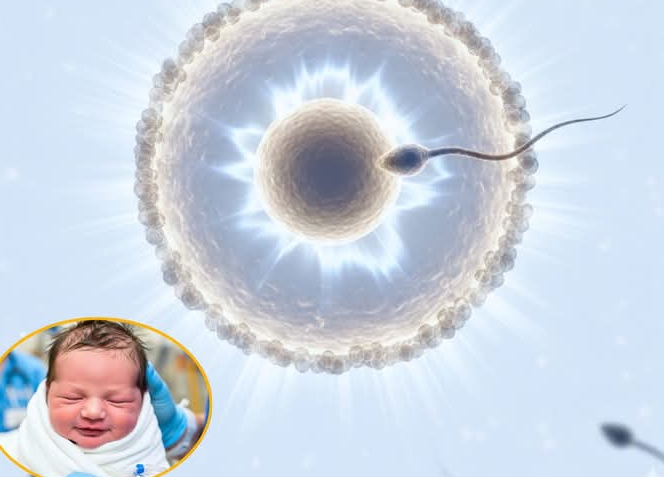
Scientists have uncovered a remarkable biological phenomenon associated with fertilisation, in which an egg releases a burst of zinc ions that researchers can visualise using specialised imaging techniques.


The phenomenon, widely known as the “zinc spark,” has attracted scientific interest because it provides insight into the complex processes that occur when an egg is activated and begins the transition towards embryonic development.

Although often described as a tiny flash of light marking the beginning of life, the zinc spark is not a literal flash visible to the naked eye. Instead, scientists use fluorescent imaging techniques to observe the release of zinc from the egg.
Research has shown that this process is closely associated with egg activation, a series of biological changes that prepare the egg for early development following fertilisation.
How the Zinc Spark Works
During fertilisation, calcium signals help trigger changes inside the egg. These changes include the release of zinc ions, which play an important role in regulating the egg’s readiness for subsequent development.
Scientists can detect the released zinc using fluorescent probes, which produce signals that make the process visible under specialised microscopes.
The phenomenon offers researchers a valuable opportunity to study events that would otherwise remain hidden inside microscopic cells.
Beyond its scientific appeal, the zinc spark may help researchers better understand egg quality and the biological mechanisms involved in successful fertilisation and early embryo development.
Potential Implications for IVF
The discovery has also generated interest in reproductive medicine, particularly in vitro fertilisation (IVF), where eggs are fertilised under laboratory conditions.
Researchers have investigated whether the characteristics of zinc sparks could provide information about an egg’s developmental potential.
Some studies, particularly those involving animal models, have reported associations between zinc-spark characteristics and subsequent embryo development.
However, further research is needed to establish how reliably these observations can predict outcomes in human IVF treatment.
The phenomenon should therefore not be regarded as an established standalone test for identifying the eggs most likely to produce a successful pregnancy.
A Window Into Early Development
The zinc spark is part of a wider network of biological processes that help coordinate the transition from an unfertilised egg to an activated egg capable of beginning embryonic development.
Fertilisation involves the interaction of genetic material from sperm and egg, alongside a series of tightly regulated cellular events. Understanding these processes could help scientists improve their knowledge of reproductive biology and the earliest stages of development.
While the image of a microscopic spark offers a striking way to communicate the science, researchers continue to investigate its precise biological significance and potential applications in fertility treatment.
The discovery demonstrates how advanced imaging technologies are allowing scientists to observe some of the smallest and most consequential events in human reproductive biology.
#ScienceFacts #HumanBiology #LifeBegins #ReproductiveHealth #NatureMysteries