From Grace to Poverty: The ‘Sin’ of Police PRO Alozie Ogugbuaja Who Dared to Speak the Truth
How a fearless police spokesman reportedly fell from prominence into hardship after criticising Nigeria’s security establishment

By NewsMediang

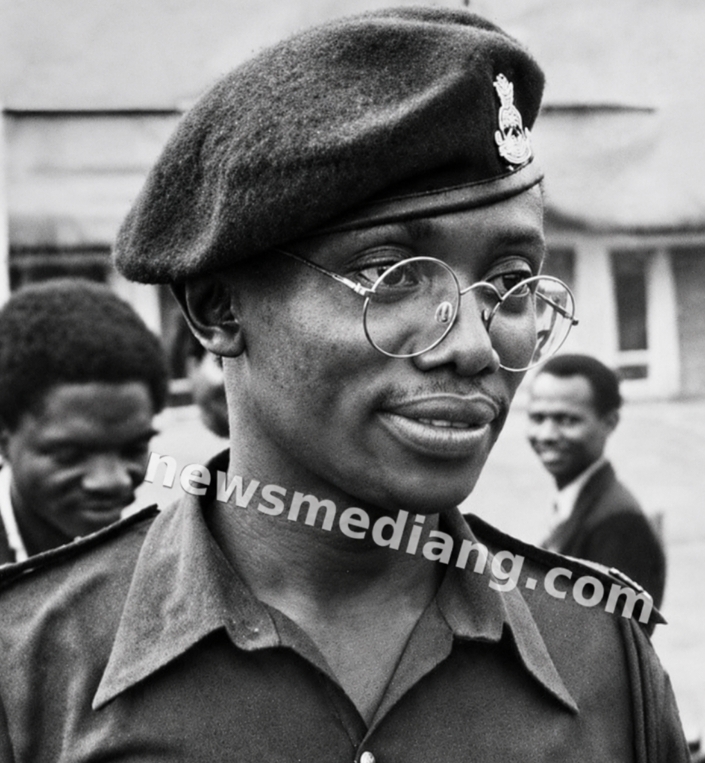
In 1986, Alozie Ogugbuaja was reportedly one of the most prominent police public relations officers in Lagos, a rising police officer whose professional standing suggested a promising future. Barely a decade later, accounts of his life painted a disturbing picture of a man struggling with poverty after falling out with the authorities.
What went wrong? Was his downfall the consequence of misconduct, or did his willingness to speak openly about the shortcomings of Nigeria’s security institutions cost him his career?

Ogugbuaja’s story, as recounted in historical accounts, raises enduring questions about institutional accountability, freedom of expression within the security services and the price public officers sometimes pay for challenging those in authority.
The testimony that reportedly changed everything
Ogugbuaja attracted controversy in 1986 when he appeared before the Justice Mustafa Akanbi panel investigating student disturbances in the country.
During his reported testimony, he spoke candidly about the condition of the Nigeria Police Force, arguing that the institution lacked the equipment and motivation required to protect citizens effectively.
He also reportedly criticised the military in unusually blunt language, accusing some personnel of idleness, self-interest and spending their time drinking rather than addressing the country’s problems.
His remarks, particularly his characterisation of military personnel and their alleged drinking habits, reportedly caused discomfort within the establishment.
For a serving police officer to publicly question the readiness and effectiveness of the country’s security institutions was a bold move, particularly in a political environment where criticism of those in authority could carry serious consequences.
Suspension, transfer and controversy
Following the controversy, Ogugbuaja was reportedly suspended from the police and subsequently transferred to Calabar.
Accounts of the episode also refer to an allegation involving an improper relationship with a female National Youth Service Corps member posted to his office. However, the circumstances surrounding the allegation, its formal status and its role in the disciplinary action require independent documentary verification.
His supporters reportedly viewed the disciplinary action as an attempt to silence an officer who had spoken candidly about the problems confronting the police and military.
Whether his testimony was the decisive factor in his treatment remains a historical question that would benefit from contemporary newspaper reports, official police records and documents from the Akanbi panel.
The call for a police union
The controversy did not end there.
In 1987, Ogugbuaja reportedly wrote a memorandum advocating the establishment of a Nigeria Police Union, an idea that challenged the traditional restrictions on collective organisation within the police.
The proposal raised a fundamental question: should police officers have a formal platform through which they could collectively raise concerns about welfare, working conditions and institutional reform?
According to accounts of his life, Ogugbuaja lost his job in 1988.
The sequence of events has contributed to the perception that his outspoken criticism and reform-minded views damaged his standing within the force. Nevertheless, establishing the precise reasons for his dismissal would require access to the relevant official records.
From prominence to hardship
By 1996, accounts of Ogugbuaja’s life described a dramatic reversal of fortune.
The once-prominent police spokesman was reportedly living in a modest hotel room in Lagos, provided by a friend he had helped during his years in the force. He was also said to have depended on assistance from former colleagues.
For someone who had once occupied an influential position within the police establishment, the reported circumstances represented a painful fall from prominence.
Yet the most striking part of the story was not simply his reported poverty. It was his continued insistence that he had spoken the truth.
Ogugbuaja reportedly questioned whether the problems he had identified years earlier had genuinely been resolved, particularly the inadequate equipment and poor welfare conditions he believed undermined police effectiveness.
His questions remain relevant to broader discussions about police funding, personnel welfare, accountability and the relationship between institutional loyalty and the public interest.
Where is Alozie Ogugbuaja today?
Ogugbuaja’s later whereabouts remain unclear in the account available for this feature.
Aba was reportedly his last known location, where he was said to have engaged in small-scale business activities. His present circumstances, however, have not been independently established.
His story deserves more than a nostalgic retelling. It calls for a careful examination of the historical record to determine what happened to a police officer who reportedly challenged the system from within.
The questions Nigeria must confront
The story of Alozie Ogugbuaja, if corroborated by contemporary records, offers an opportunity to reflect on the treatment of public officers who raise uncomfortable questions about institutional performance.
Can a security institution improve if its personnel cannot speak honestly about its weaknesses? How should authorities distinguish legitimate criticism and calls for reform from genuine misconduct? And what protections should exist for officers who raise concerns in the public interest?
These questions remain important for Nigeria’s security institutions today.
The central issue is not whether every allegation surrounding Ogugbuaja’s career should be accepted without scrutiny. It is whether the available historical evidence can establish what happened, why he left the force and whether his public criticism played a role in his fate.
Until those questions are answered with reliable documentation, his story should be treated as a significant but incompletely verified account of a police officer whose reported rise and fall continues to provoke debate.
NewsMediang will continue to examine stories that illuminate Nigeria’s institutions, public accountability and the human consequences of speaking truth to power.