Breaking: NCDC Approves ₦100,000 Weekly Payment for Ebola Contacts in Isolation
The emergency support is intended to cover feeding, accommodation and family maintenance as health authorities intensify efforts to contain the outbreak in Abuja.
The Nigeria Centre for Disease Control and Prevention (NCDC) has approved a weekly payment of ₦100,000 per person to support individuals placed in isolation or quarantine following the reported Ebola outbreak in the Federal Capital Territory (FCT).

The Director-General of the NCDC, Dr Jide Idris, disclosed this during a press briefing on Sunday, explaining that the financial intervention was introduced after some individuals identified as contacts raised concerns about the cost of feeding, accommodation and maintaining their families while undergoing public health monitoring.

According to Idris, the emergency payment is designed to ease the financial burden on affected individuals and encourage compliance with the health authorities’ monitoring and containment arrangements.
“We are paying for their accommodation; we are paying for their feeding. Some of them are asking for a stipend to maintain their families,” the NCDC chief said.

He added that the agency had approved ₦100,000 per person weekly to help cover their basic needs during the monitoring period.
“We are providing ₦100,000 per person per week just to maintain their comfort and feeding, because they were complaining,” Idris said.
NCDC Describes Payment as Emergency Measure
Idris explained that the financial support was not part of the agency’s original response plan but became necessary because of the circumstances surrounding the outbreak.
He said the arrangement would be reviewed as the public health response progressed, depending on the needs of those affected and the requirements of the containment effort.
“This was not planned for, but it is an emergency. We will continue to review it as we go along,” he stated.
The intervention highlights the logistical and financial challenges associated with contact tracing, quarantine and other measures deployed during infectious disease outbreaks.
Public health authorities often rely on the cooperation of individuals identified as contacts to monitor symptoms, follow medical instructions and comply with prescribed isolation arrangements where necessary.
Providing support for essential needs can help reduce the economic hardship associated with such measures.
NCDC Urges States to Prepare for Emergencies
The NCDC Director-General also stressed that emergency response funding should not be treated as the sole responsibility of the FCT administration.
He urged state governments across the country to make adequate financial and logistical provisions to respond to similar public health emergencies within their jurisdictions.
“This is not the responsibility of the FCT alone. What we have to do for the FCT, we have to do for any other state, just in case,” Idris said.
He added that state governments must be prepared to provide the resources, materials and operational support required for contact tracing, isolation and other disease-control activities.
The comments underscore the importance of coordination between federal and state authorities in responding to infectious disease threats, particularly where rapid intervention is required to prevent further transmission.
Ebola Response in Abuja
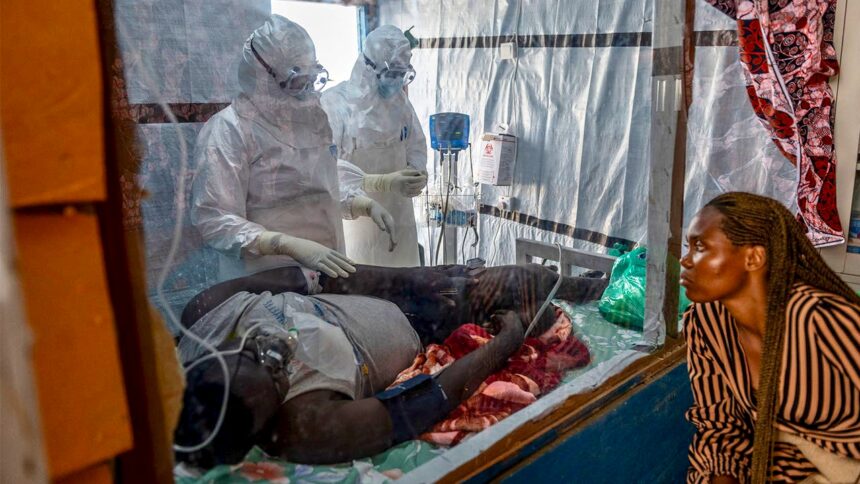
The reported payment comes amid intensified efforts by health authorities to contain the Ebola outbreak following the confirmation of an imported case in Abuja on October 20.
The response involves monitoring people identified as contacts and implementing public health measures aimed at limiting the risk of further transmission.
Ebola is a serious viral disease that can spread through direct contact with the blood or other bodily fluids of an infected person who is symptomatic, or with contaminated materials. It is not ordinarily transmitted through casual contact or simply by sharing the same airspace.
Health authorities continue to emphasise the importance of prompt reporting of symptoms, appropriate medical assessment and compliance with public health guidance.
NewsMediang.com will continue to monitor developments surrounding the Ebola response, including further announcements from the NCDC and other relevant health authorities.