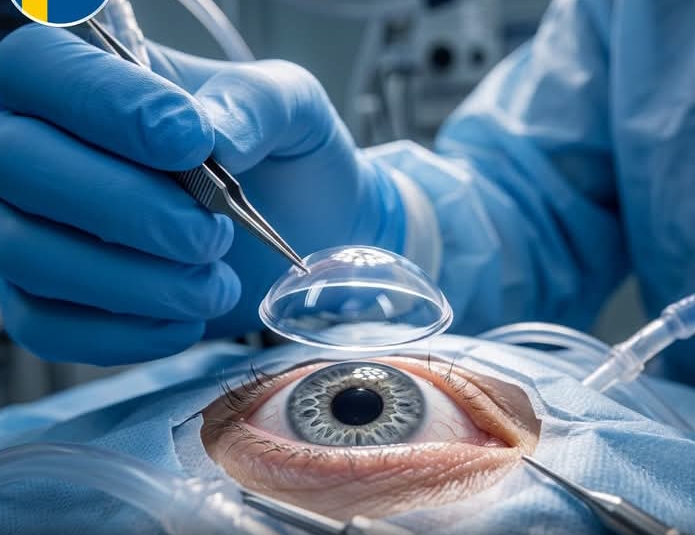
Bioengineered Cornea Restores Sight in 20 Blind Patients, Offers Hope for Millions
Researchers at Linköping University in Sweden have demonstrated a promising alternative to traditional corneal transplantation after a bioengineered corneal implant helped restore vision in 20 patients with advanced keratoconus.
The findings, published in Nature Biotechnology, could help address the global shortage of donated human corneas, which leaves millions of people with limited access to sight-restoring treatment.

The research team, led by Professor Mehrdad Rafat, developed a transparent, cell-free implant made from purified Type I collagen derived from pig skin. The material was engineered to mimic the properties of the human cornea while providing the strength and durability required for implantation.

According to the study, approximately 12.7 million people worldwide need a corneal transplant, but only one donated cornea is available for every 70 people requiring one.
The bioengineered implant offers a potential alternative because it does not require human donor tissue and can be stored for up to two years, making it easier to distribute to regions with limited eye-banking facilities.

Vision Restored in Clinical Study
The implant was tested in a pilot study involving 20 patients in India and Iran who had advanced keratoconus, a condition that causes the cornea to thin and become distorted, affecting vision.
Researchers reported improvements in corneal structure and visual acuity during 24 months of follow-up. Fourteen participants who were legally blind before the procedure were no longer classified as blind in the treated eye at the end of the study.
Three participants in India achieved 20/20 vision following treatment.
The procedure involved placing the implant inside the existing corneal tissue without removing the patient’s cornea or using surgical stitches. The researchers reported no adverse events during the two-year follow-up period.
The findings suggest that the technique could offer a simpler alternative to conventional corneal transplantation, particularly in countries where donated tissue is scarce.
Potential Impact on Eye Care
The researchers said the technology could improve access to treatment in low- and middle-income countries, where shortages of donor corneas and limited eye-banking infrastructure remain significant challenges.
Unlike conventional transplantation, which relies on donated human tissue, the bioengineered implant can be manufactured and stored for extended periods, potentially making treatment more accessible.
However, the study was a pilot feasibility investigation involving a relatively small group of patients. Larger clinical studies and the necessary regulatory approvals are needed before the technology can be widely adopted in healthcare.
The findings nevertheless represent a significant development in biomaterials research and offer hope for people affected by corneal disease and vision loss.
NewsMediang.com reports that continued research into bioengineered corneal implants could help expand treatment options for patients who cannot readily access donor corneas.
Source: Nature Biotechnology; Linköping University, Sweden.