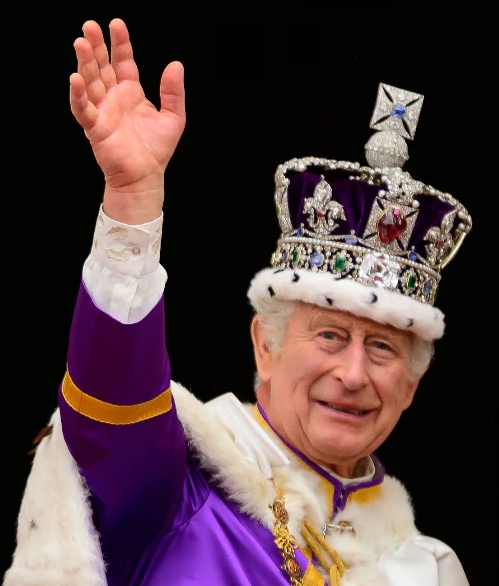

Buckingham Palace says Commonwealth nations are free to decide whether King Charles III should remain their head of state

Newsmediang.com
The possibility of more Commonwealth countries becoming republics has gained fresh attention after Buckingham Palace declared that it would not oppose any nation seeking to remove King Charles III as its head of state.

The position comes after the King’s nine-day Caribbean tour, which was dominated by renewed discussions about Britain’s colonial history, slavery reparations and the future of constitutional ties between Britain and former colonies.
According to reports, a senior royal aide said the Royal Family was prepared to accept any decision by Commonwealth countries to establish a different constitutional arrangement.
The aide reportedly stressed that the monarchy exists to serve people for as long as they want it, adding that countries should be free to determine their political and constitutional futures.
The statement represents a significant acknowledgement of the growing republican debate across parts of the Commonwealth, particularly in the Caribbean, where several countries are reconsidering their historical relationship with the British Crown.
Barbados Sets Example for Other Commonwealth Nations
One of the most prominent examples of a Commonwealth country ending its constitutional relationship with the British monarchy is Barbados.
In November 2021, Barbados officially became a republic, replacing Queen Elizabeth II with a locally appointed president as its head of state.
The transition took place during a ceremony attended by then-Prince Charles, who represented the British monarchy.
However, Barbados did not leave the Commonwealth after becoming a republic, demonstrating that countries can retain membership of the international organisation without recognising the British monarch as their head of state.
The development has become an important reference point for other Commonwealth nations considering similar constitutional changes.
Jamaica and Antigua and Barbuda Renew Republican Debate
Jamaica is among the countries where discussions about replacing the British monarch with a president have continued.
The country’s republican debate is closely connected to wider demands for historical accountability, including calls for Britain to acknowledge its role in the transatlantic slave trade and address its lasting consequences.
During the recent Caribbean tour, slavery reparations also featured prominently in discussions involving King Charles and Caribbean political leaders.
Antigua and Barbuda has equally witnessed renewed calls for constitutional change.
Prime Minister Gaston Browne has publicly expressed support for his country becoming a republic, although any transition would require the necessary constitutional and public support.
The country has already taken steps to remove references to the monarch from its oath of allegiance, with the constitutional amendment taking effect in January 2026.
However, Antigua and Barbuda has not formally become a republic.
14 Commonwealth Countries Still Recognise King Charles
King Charles III is currently head of state in 14 Commonwealth countries outside the United Kingdom.
They are Australia, Canada, New Zealand, Jamaica, The Bahamas, Antigua and Barbuda, Belize, Grenada, Papua New Guinea, Solomon Islands, Tuvalu, Saint Lucia, Saint Vincent and the Grenadines, and Saint Kitts and Nevis.
These countries are known as Commonwealth realms because they recognise the British monarch as their constitutional head of state.
Although the monarch’s responsibilities are largely ceremonial and exercised according to each country’s constitution, the position remains an important part of their constitutional arrangements.
Some countries, including Australia, Canada and New Zealand, have also experienced discussions about their future relationship with the monarchy.
However, the level of public support and political commitment to republican changes differs from country to country.
Commonwealth Membership Does Not Require Allegiance to the British Crown
The renewed debate also highlights an important distinction between the Commonwealth and the British monarchy.
The Commonwealth is a voluntary association of 56 independent countries, many of which are republics with their own presidents and constitutional arrangements.
Countries such as Nigeria, India, South Africa and Ghana are members of the Commonwealth without recognising King Charles as their head of state.
Nigeria became a republic on October 1, 1963, replacing the British monarch with a ceremonial president as its head of state.
Similarly, India became a republic in 1950 but retained its membership of the Commonwealth.
Consequently, countries that decide to remove King Charles as their head of state can still maintain their membership of the Commonwealth.
What the Buckingham Palace Statement Means
The Palace’s position suggests that the British monarchy is prepared to accept constitutional changes initiated by individual Commonwealth nations rather than attempting to prevent them.
It also comes at a time when Britain’s historical relationship with Caribbean countries is receiving renewed scrutiny.
During the Caribbean tour, King Charles acknowledged the suffering associated with slavery, describing the transatlantic slave trade as a source of profound personal sorrow.
However, he did not issue a formal apology or promise financial reparations, which remain subjects of debate between Britain and several Caribbean governments.
For countries considering republican status, the debate extends beyond the personality of King Charles. It involves questions of national identity, constitutional independence, colonial history and the future relationship between former British colonies and the United Kingdom.
With Barbados already having made the transition and republican discussions continuing in Jamaica and Antigua and Barbuda, the future of the monarchy in the Commonwealth remains an important constitutional issue.
For now, Buckingham Palace has made its position clear: individual countries are free to decide whether they want King Charles III to remain their head of state.
**NewsMediang.com reports that the debate could reshape the constitutional relationship between Britain and several Commonwealth nations, even as the 56-member organisation continues to bring together republics and constitutional monarchies.