The ACCUSER BECOMES THE ACCUSED: The Story of Michael Oziegbe, UBA and EFCC

The Economic and Financial Crimes Commission (EFCC) has secured the final forfeiture of $163,592 traced to a domiciliary account operated by Akpasi Michael Oziegbe, following investigations into an alleged international fraud scheme involving a United States-based law firm.

What began as a petition against United Bank for Africa (UBA) over the restriction of a domiciliary account has ended with a Federal High Court order for the final forfeiture of $163,592 allegedly obtained through impersonation and fraudulent representation.

Oziegbe had petitioned the EFCC over alleged misconduct by some UBA officials after the bank placed a lien on funds deposited into his account, describing the bank’s action as improper.
However, investigations by the anti-graft agency reportedly uncovered a different account of how the money entered Nigeria, linking the transaction to an alleged international fraud scheme involving a US-based law firm and an American company.
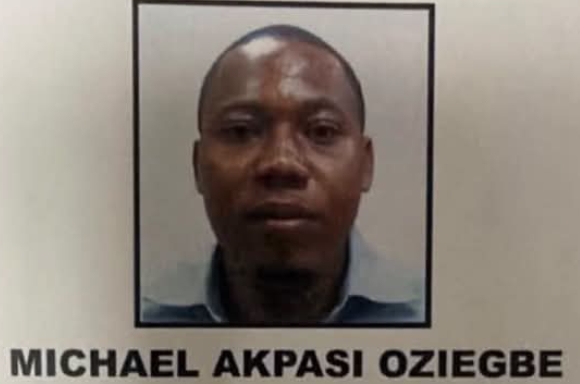
The development has now resulted in the forfeiture of the disputed funds, while Oziegbe has also been declared wanted by the EFCC in connection with the alleged fraud.
How the $163,592 Entered Oziegbe’s UBA Account
According to the EFCC, the disputed money originated from an alleged impersonation scheme involving Applied Industrial Technologies, a United States-based company.
Investigators established that Oziegbe allegedly impersonated one Edward Campbell, a former employee of the company who had sustained an accident while on duty.
The EFCC said the impersonator approached the US law firm of Steven J. Mandel & Co. on June 27, 2022, claiming to be Campbell and seeking legal representation to enforce a settlement agreement allegedly reached with his former employer.
He reportedly told the law firm that Applied Industrial Technologies had failed to honour an agreed settlement arising from the workplace accident.
Following the request, the law firm was informed that a cheque of $165,157 had been issued by the company in Campbell’s name.
The individual subsequently instructed the lawyers to deduct their legal fees and transfer the remaining balance into the bank account details he provided.
Acting on the instructions, the law firm transferred $163,592 on July 20, 2022.
The funds were subsequently credited to the domiciliary account of Micoz Bluelink Enterprise, a business operated by Oziegbe, with UBA.
How the Fraud Was Discovered
The transaction reportedly unravelled the following day.
On July 21, 2022, JP Morgan Chase Bank notified the law firm that the cheque issued by Applied Industrial Technologies was altered and fictitious.
The law firm subsequently contacted the American company and discovered that the purported settlement transaction was fraudulent.
The incident was reported to the United States Secret Service and the Federal Bureau of Investigation (FBI).
Information subsequently obtained by the EFCC from the FBI provided details of the alleged impersonation and the circumstances surrounding the transfer of the money.
Why UBA Restricted the Account
UBA had reportedly flagged the $163,592 inflow as suspicious and commenced a reconfirmation process through its correspondent bank, Citibank.
The bank subsequently received communication confirming the fraudulent nature of the transaction, alongside a refund request from JP Morgan Chase Bank on grounds of unjust enrichment.
UBA consequently placed a lien on the funds to prevent their withdrawal.
The restriction triggered Oziegbe’s petition against the bank, accusing some of its officials of misconduct.
In May 2024, the EFCC’s Extractive Industry Fraud Section (EIFS) commenced investigations following a petition submitted by GAIA & Montgomery Legal on behalf of Oziegbe.
The petition alleged conspiracy, forgery and obtaining money under false pretences against some UBA officials.
However, the EFCC said its investigation established that the disputed funds originated from the alleged fraudulent transaction involving the American law firm.
The Commission also said Oziegbe failed to provide relevant documents to substantiate his claim that the money represented payment for materials supplied to a company in the United States.
EFCC Secures Freezing and Forfeiture Orders
As investigations progressed, the EFCC obtained an order freezing the account on September 9, 2024, in Suit No. FHC/ABJ/CS/1297/2024.
The order was intended to prevent the dissipation of the funds while investigations continued.
On August 15, 2025, the Commission secured an interim forfeiture order directing the forfeiture of the $163,592 and inviting interested parties to show cause why the funds should not be finally forfeited to the law firm of Steven J. Mandel & Co. through the Federal Government of Nigeria.
The EFCC subsequently approached the Federal High Court for a final forfeiture order.
Court Orders Final Forfeiture of $163,592
On Friday, November 6, 2026, Justice M. S. Liman of the Federal High Court, Abuja, granted the EFCC’s application for the final forfeiture of the disputed $163,592.
The EFCC legal team was led by prosecution counsel, Ekele Iheanacho, SAN.
In granting the non-conviction-based forfeiture order, the court held that Oziegbe failed to establish legitimate ownership of the funds.
Justice Liman also held that he had illegally procured the services of the American law firm to obtain a settlement payment from a company whose employment relationship with him had not been established.
The court’s decision effectively cleared the way for the final forfeiture of the money to the law firm through the Federal Government of Nigeria.
From Petitioner to Subject of EFCC Investigation
The Oziegbe case highlights how a petition initially directed against a financial institution can take a different turn when investigators examine the underlying transaction.
UBA’s decision to restrict the funds, which prompted allegations of misconduct against its officials, became part of a wider investigation into the origin of the money.
According to the EFCC, information supplied by the FBI and other supporting documents helped establish the alleged connection between the funds and the impersonation scheme.
The Commission had also declared Oziegbe wanted in connection with the alleged fraud.
The final forfeiture order represents a significant development in the recovery of funds allegedly obtained through international financial fraud.
It also underscores the importance of cooperation between Nigerian financial institutions, international banks and law enforcement agencies in tracking suspicious cross-border transactions.
For Oziegbe, the case that began with a petition against UBA has culminated in the loss of the disputed $163,592 and an ongoing law enforcement interest in his whereabouts.
NewsMediang.com reports that the forfeiture was secured through a non-conviction-based proceeding. The forfeiture order should not be confused with a criminal conviction against Oziegbe.