Solar Power Becomes Lifeline for Businesses Battling Nigeria’s Electricity Crisis

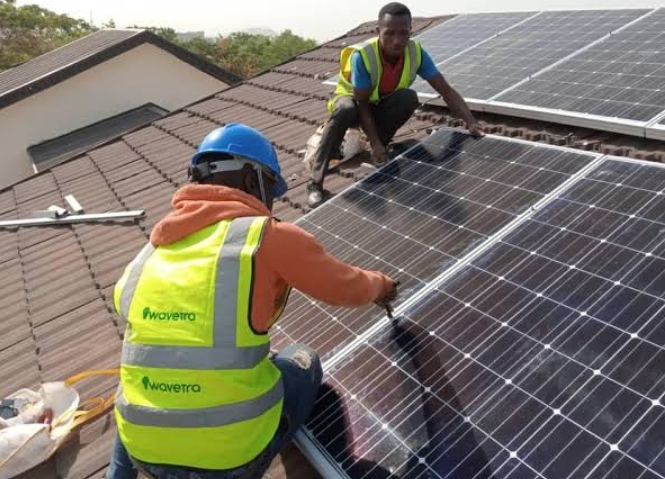
For Kelvin Okechukwu, the rising cost of electricity in Nigeria had become a major financial burden, threatening the profitability of his business as diesel purchases alone gulped as much as ₦10 million monthly at his hotel.

However, the introduction of solar energy has begun to ease the pressure, significantly reducing his dependence on diesel-powered generators and cutting operating costs.
Okechukwu, Chief Executive Officer of Panama Hotel and Suites and Chairman of Nedu Logistics Solution, disclosed that his hotel’s monthly diesel expenditure had dropped from about ₦10 million to between ₦6 million and ₦7 million following the adoption of solar energy.

The transition has translated into monthly savings of almost ₦3 million, providing some relief from the increasing cost of running businesses in Nigeria.
His experience highlights how businesses are increasingly exploring alternative energy sources to cope with the country’s unreliable electricity supply and rising energy costs.
For hotels, manufacturing companies, shopping centres and other businesses that require a steady electricity supply, energy expenses remain a significant component of operational costs.
Many businesses have traditionally depended on diesel-powered generators to maintain operations during prolonged power outages. However, fluctuations in diesel prices and the high cost of generator maintenance have made this arrangement increasingly expensive.
Solar energy is gradually emerging as a viable alternative, allowing businesses to reduce their dependence on conventional power sources while maintaining electricity supply for essential operations.
Although the installation of solar systems requires substantial initial investment, the potential for long-term savings is encouraging more business owners to consider the technology.
Okechukwu’s experience demonstrates the economic benefits that alternative energy could deliver to Nigerian businesses, particularly those operating in sectors where uninterrupted electricity is essential.
Solar Adoption and Nigeria’s Energy Challenge
Nigeria’s electricity challenges have continued to place pressure on households and businesses, with inadequate power supply forcing many consumers to seek alternative sources of electricity.
The growing adoption of solar energy reflects a broader shift in the country’s energy landscape as consumers look beyond the national grid for more reliable and potentially cost-effective solutions.
For small and medium-sized enterprises, reducing energy expenditure could free up funds for expansion, staff welfare, equipment upgrades and other business activities.
However, the high cost of solar panels, batteries, inverters and installation remains a major obstacle for many businesses and households.
Access to affordable financing, quality equipment and reliable technical support will therefore be important in expanding solar adoption across the country.
A Potential Turning Point for Nigerian Businesses
The savings recorded by Panama Hotel and Suites illustrate how investments in renewable energy can help businesses manage rising operational expenses.
While solar energy may not completely eliminate the need for generators in every business, combining solar installations with other power sources could reduce fuel consumption and improve energy security.
As electricity costs continue to challenge Nigerian businesses, the experience of Okechukwu provides another example of how alternative energy solutions are becoming increasingly important to business sustainability.
For many Nigerian entrepreneurs, solar power is no longer simply an environmental choice; it is increasingly becoming a business decision driven by the need to control costs, maintain operations and remain competitive.