

Inside Sowore’s Arrest: Police Justify arrest of Activist, say he will be charged within 24 hours
The arrest of Omoyele Sowore, fiery activist, publisher, and convener of the #RevolutionNow movement, once again thrust Nigeria’s uneasy relationship with dissent into the spotlight on Thursday.
Sowore, a former presidential candidate and relentless critic of government excesses, was picked up by police officers outside the Federal High Court in Abuja — a place that has, over the years, become a recurring theatre for the nation’s democratic contradictions.
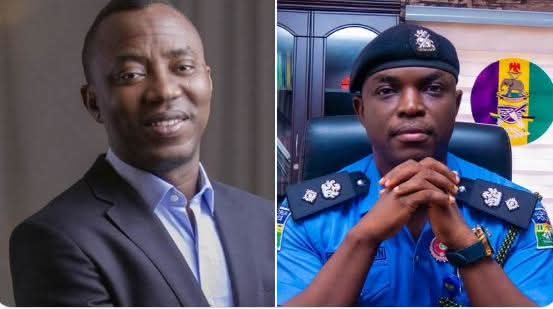
According to the police, Sowore’s arrest was not arbitrary but rooted in what they described as “a clear violation” of a court order. The Force Public Relations Officer, CSP Benjamin Hundeyin, explained that Sowore was the key figure behind the recent #FreeNnamdiKanuNow protest held in the capital earlier in the week, an action the police say defied judicial restrictions.
> “He was arrested in contravention of a court order,” Hundeyin told journalists. “If we charge those who followed him but spare the person who led them into the restricted area, that would not be justice. Sowore led the protest, and so, in the spirit of fairness, he was also arrested.”
Hundeyin disclosed that 14 persons have so far been arrested over the protest, which called for the release of Nnamdi Kanu, the detained leader of the Indigenous People of Biafra (IPOB).
A Familiar Pattern
For many Nigerians, Thursday’s arrest felt familiar. Sowore’s activism — marked by bold street demonstrations and defiant rhetoric — has long drawn the ire of authorities. From his controversial #RevolutionNow protests in 2019, which led to months of detention, to his continued calls for accountability and reform, Sowore has remained one of the government’s most vocal adversaries.
Analysts say the latest move by the police underscores the state’s recurring tendency to criminalize protest and blur the line between public order and political expression.
“This is not just about Sowore,” said a civil society observer in Abuja. “It’s about the shrinking space for civic engagement. Every time a protest emerges — whether about insecurity, governance, or human rights — it is quickly framed as a threat rather than a call for dialogue.”
The Kanu Connection
The #FreeNnamdiKanuNow campaign that led to Sowore’s arrest is itself deeply emotive. Nnamdi Kanu’s continued detention has divided public opinion and rekindled questions about justice, due process, and federal handling of secessionist movements.
Sowore’s decision to align publicly with the movement added a new political dimension — uniting two controversial but influential figures in Nigeria’s activist space.
Hundeyin, however, maintained that the police acted strictly within the law and had no political motive. He insisted Sowore would not be detained indefinitely and would be arraigned “immediately,” possibly within 24 hours.
A Test for Nigeria’s Democracy
Sowore’s arrest comes at a time of heightened tension over free speech and public demonstration in Nigeria. Rights groups have repeatedly accused law enforcement agencies of using excessive force to disperse protesters, while government officials insist they are merely upholding the law.
For Sowore, this latest confrontation may be yet another chapter in his long-running battle with the state — a contest that continues to test the resilience of Nigeria’s democratic institutions.
As he awaits arraignment, one question lingers: Is Sowore’s arrest about enforcing the law or silencing dissent?