From Extraction to Transformation: BUA Chairman Rabiu Charts Industrial Path for Africa at Mining Indaba 2026


BUA Chairman Abdul Samad Rabiu Calls for Shift from Resource Extraction to Industrial Value Addition at Mining Indaba 2026

Founder and Executive Chairman of BUA Group, Abdul Samad Rabiu, has called for a fundamental shift in Africa’s development model, urging governments, development finance institutions (DFIs), and private sector leaders to prioritise large-scale industrial processing and value addition over the continued export of raw materials.
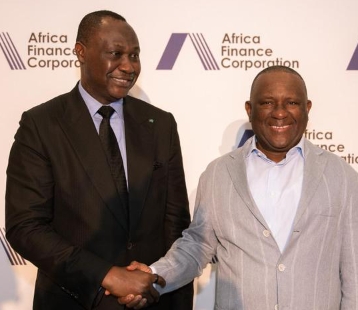
Rabiu made the call while speaking as Special Guest of Honour at an Africa Finance Corporation (AFC) forum held on the sidelines of Mining Indaba 2026 in Cape Town. The event convened African policymakers, financiers, industry leaders, and investors to examine pathways for accelerating mining-led industrialisation and real sector growth across the continent.
Commending AFC for its role in mobilising long-term capital for strategic industries, Rabiu said strong development finance institutions are critical to reshaping Africa’s economic trajectory. He noted that AFC’s recent S&P Global rating with a positive outlook reflects growing confidence in African-led financial institutions capable of supporting transformative projects.
Drawing from BUA Group’s own journey, Rabiu recounted the company’s decision over sixteen years ago to transition from cement importation to domestic production in Nigeria — a move he described as both capital intensive and high risk at the time.
“Nigeria was importing cement despite being richly endowed with limestone,” he said. “We were spending more time chasing foreign exchange than selling cement. The real issue was not whether the resources existed, but whether we had the conviction to stop importing and start producing locally.”
Today, BUA mines and processes approximately 40,000 tonnes of limestone daily, producing about one million tonnes of cement each month. According to Rabiu, that strategic shift has helped position Nigeria as a net exporter of cement, saving billions of dollars annually in foreign exchange and strengthening local industrial capacity.
He emphasised that such transformation would not have been possible without patient, long-term financing, particularly from institutions like AFC, which has provided more than $400 million in support for BUA’s cement and industrial operations.
Rabiu added that a significant portion of the financing has already been repaid, demonstrating that properly structured industrial projects in Africa can be both developmental and commercially viable.
Expanding the conversation to the broader continental landscape, Rabiu described what he termed a structural paradox: Africa remains one of the world’s most resource-rich regions, yet continues to export the bulk of its minerals and agricultural commodities in raw or minimally processed form.
He cited examples including gold, cobalt, copper, iron ore, diamonds, and cocoa — commodities in which Africa plays a dominant supply role globally — but from which it captures only a fraction of the downstream value.
“Africa does not lack resources,” Rabiu said. “What it lacks is processing capacity, industrial scale, and disciplined execution.”
He noted that the same pattern is evident in agriculture. Despite holding a majority share of the world’s arable land, African countries collectively spend billions of dollars annually importing food that could be produced and processed locally.
Rabiu called for coordinated and deliberate action to address these structural gaps. He urged DFIs to scale up long-term financing targeted specifically at beneficiation and industrial value chains, while encouraging governments to implement policies that incentivise local processing and strengthen infrastructure — particularly power, transport, and industrial zones.
“Industrialisation does not happen by accident,” he said. “Countries that industrialised did so by design, not by chance. Africa must do the same.”
He concluded by stressing that Africa’s economic transformation will depend on aligning private enterprise with patient capital and supportive policy frameworks — shifting the continent decisively from extraction to transformation, and from untapped potential to shared prosperity.