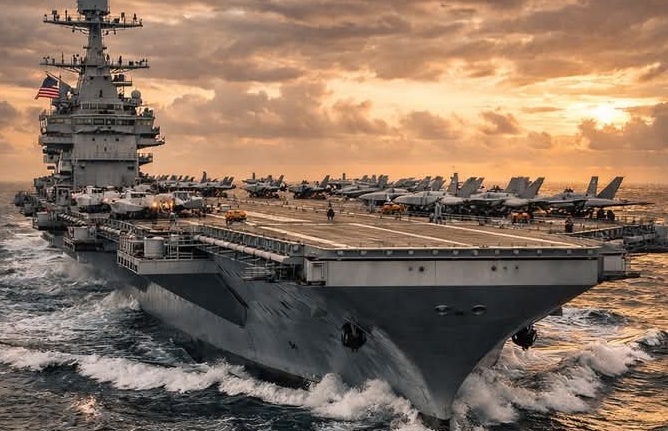
IRAN: Trump Activates Military Mobilization Plan, Carrier Strike Group Heads to Gulf

Reports that the United States is deploying the aircraft carrier to the Middle East would represent a significant show of force — but it does not automatically mean war.

The Gerald R. Ford is the newest and most advanced U.S. aircraft carrier. It can carry more than 75 aircraft, including F/A-18 Super Hornets and advanced surveillance planes, and is escorted by destroyers, cruisers, and submarines. When a carrier strike group moves, it sends a strong strategic message: deterrence, readiness, and rapid response capability.
Is this the strongest possible response?
No. It’s a powerful signal, but not the “strongest possible” action the U.S. could take.

Military responses generally escalate in stages:
- Deterrence & Presence – Deploying carriers, missile defence systems, and additional troops.
- Targeted Strikes – Precision attacks on specific facilities or military assets.
- Sustained Military Campaign – Broader air or naval operations.
- Full-Scale War – Large, prolonged conflict involving ground forces.
A carrier deployment usually falls under deterrence. It gives leaders options without immediately escalating to direct conflict.
Why use a carrier?
- Flexibility: Aircraft carriers operate in international waters and can respond quickly.
- Signal of resolve: It reassures allies and warns adversaries.
- Strategic pressure without immediate combat.
Should the U.S. take more decisive action?
That depends on several factors:
- The nature of Iran’s actions.
- Risks of escalation into regional or global conflict.
- Impact on civilians and global stability.
- Diplomatic alternatives.
Military escalation in the Middle East could affect oil markets, regional allies, and global security. Leaders typically weigh deterrence against the risk of triggering a wider war.