From Soldiers to Drones: Russia Faces Daily Casualties as Ukraine Turns to Drone Operations


Ukraine’s military is increasingly relying on drones and robotic systems to inflict heavy losses on Russian forces, transforming the battlefield into a conflict where machines often fight in place of soldiers.
What Russian President Vladimir Putin expected to be a swift military operation lasting only days has evolved into a grinding war that has stretched beyond four years, with no clear end in sight. As the conflict drags on, Ukraine is turning to technology to offset Russia’s numerical advantages in manpower and equipment.

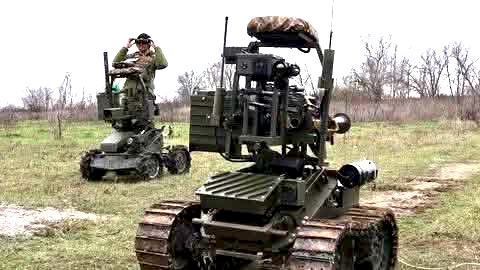
According to reports, Ukrainian forces are now conducting complex operations using explosive-laden ground robots, reconnaissance drones and remotely controlled weapons systems, allowing attacks on Russian positions without exposing soldiers to direct combat.
Commanders who once led troops through some of the fiercest battles in eastern Ukraine now coordinate operations from remote control centres, monitoring live feeds and directing unmanned systems from miles away.
A typical mission can involve several robotic vehicles advancing on Russian positions while surveillance drones provide real-time intelligence from above. Ukrainian operators guide the machines remotely, reducing the risk to frontline troops.
The shift reflects both innovation and necessity. After years of intense fighting and mounting casualties, Ukraine continues to face manpower challenges. In response, Kyiv has accelerated drone production and expanded the deployment of unmanned systems across the battlefield.
President Volodymyr Zelensky recently revealed that Ukrainian forces had, for the first time, captured a Russian position using only drones and robotic systems, without soldiers participating directly in the assault. He also disclosed that Ukrainian unmanned systems had carried out approximately 22,000 missions since the beginning of the year.
The growing effectiveness of these machines has reportedly earned them a chilling nickname among Russian troops: “silent death.” Their quiet movement often leaves little warning before an attack, with some soldiers reportedly detecting them only when they are already within striking distance.
For veterans of earlier stages of the war, the transformation has been remarkable.
“I couldn’t even imagine such a thing back then,” said a Ukrainian deputy commander identified as Bar, who previously fought in the Donbas region. “If this equipment had existed at the time, more of my comrades would have survived.”
He noted that modern warfare is increasingly defined by technological superiority rather than traditional battlefield skills.
“Back then, war was more about personal training, discipline and combat ability,” he said. “Now technology decides everything. There is no going back.”
Ukrainian officials say they are aiming to inflict approximately 35,000 Russian casualties each month, a target they claim has been consistently achieved this year. The strategy is designed to increase pressure on Moscow by forcing the Kremlin to draw more heavily from Russia’s urban population and middle class to replenish its ranks.
Meanwhile, Britain’s Government Communications Headquarters (GCHQ) recently estimated Russia’s military death toll at around 500,000 since the start of the invasion.
Beyond offensive operations, unmanned systems are now performing a wide range of battlefield functions, including evacuating wounded soldiers, delivering supplies to frontline positions and conducting reconnaissance missions.
What began as a limited use of drones early in the conflict has evolved into a defining feature of modern warfare. As Europe’s largest war in decades enters another year, the battlefield increasingly belongs not only to soldiers but to machines.