₦7 trillion Monument to Failure, Corruption, Four Presidents, Nigeria Still in Darkness

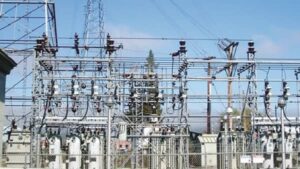
Despite spending more than ₦7 trillion on Nigeria’s power sector since its privatisation in 2013, the country remains far from achieving a stable and reliable electricity supply, raising renewed questions about governance, policy consistency and accountability in one of its most critical sectors.

In the first month of 2026 alone, Nigeria suffered two major national grid collapses, plunging major cities into darkness and once again exposing the fragility of a power system that has absorbed trillions of naira under successive administrations.

At different points in the last two decades, electricity generation has fallen as low as 1,800 megawatts, while transmission and distribution infrastructure continue to struggle with obsolete equipment, vandalism, liquidity crises and poor maintenance.
Although Nigeria’s electricity problems predate 1999, the return to democratic governance raised hopes that reforms and private investment would finally fix a sector long associated with inefficiency and corruption.
Privatisation: High Hopes, Limited Results
The most ambitious reform came with the Electric Power Sector Reform Act (EPSRA) of 2005, which dismantled the defunct National Electric Power Authority (NEPA) and created the Power Holding Company of Nigeria (PHCN).
PHCN was further unbundled into 18 successor companies — six Generation Companies (GenCos), one Transmission Company of Nigeria (TCN) and 11 Distribution Companies (DisCos).
In 2013, under President Goodluck Jonathan, PHCN was fully dissolved and its assets handed over to private investors in what was billed as a turning point for the sector.
More than a decade later, critics say the problems that plagued government-run electricity have merely changed form.
Trillions Spent, Power Still Elusive
Since privatisation, every administration has made power reform a core economic priority, arguing that electricity is central to industrial growth, job creation and national development.
Under President Olusegun Obasanjo, the late Chief Bola Ige, Nigeria’s first power minister in the Fourth Republic, famously promised to end power outages within six months. Instead, grid collapses worsened.
President Goodluck Jonathan later estimated that Nigeria would need $900 billion over 30 years to fix its energy sector.
President Muhammadu Buhari’s administration secured over $6 billion in loans for transmission upgrades and backed the $2.3 billion Siemens power project, which was expected to expand grid capacity to 25,000MW by 2025. To date, the project has delivered less than a quarter of that target.
President Bola Ahmed Tinubu, during his campaign, pledged to prioritise constant electricity, saying he should not be re-elected if he failed to deliver.
Yet, Nigeria continues to experience frequent blackouts, grid instability and rising electricity costs.
Interventions and Bailouts
Several financial interventions have been deployed with limited success:
₦701 billion Payment Assurance Facility by the Central Bank of Nigeria, including ₦213 billion disbursed
Repeated federal subsidies to keep tariffs below cost
Ongoing $500 million World Bank-backed Distribution Sector Recovery Programme (DISREP) aimed at metering and network upgrades
Despite these efforts, GenCos now claim over ₦4 trillion — and possibly up to ₦6 trillion — in unpaid debts, largely tied to subsidies and power sold but not paid for.
Power Ministers and Broken Promises
Successive power ministers across four administrations made bold pledges, many of which failed to materialise:
Dr Segun Agagu (2000–2002) promised long-term reforms but struggled with weak implementation.
Dr Olu Agunloye (2002–2003) championed large hydro projects like Mambilla; years later, he was charged over alleged irregularities in a $6bn contract. His trial is ongoing.
Senator Liyel Imoke (2003–2007) oversaw the National Integrated Power Projects (NIPP), which became plagued by delays and cost overruns.
Rilwan Lanre Babalola (2007–2010) promised near 24-hour power by 2009 — a target that was never met.
Prof Barth Nnaji (2011–2012) led privatisation efforts but resigned amid controversies.
Prof Chinedu Nebo (2013–2015) inherited a fragile post-privatisation sector marked by tariff disputes and liquidity problems.
Babatunde Fashola (2015–2019) focused on transmission upgrades but grid failures persisted.
Saleh Mamman (2019–2021) later faced EFCC charges over alleged diversion of ₦33.8 billion.
Abubakar Aliyu (2021–2023) pledged stability but made limited progress.
Adebayo Adelabu (2023– ), the current minister, has promised tariff reform, higher generation and improved grid reliability, though his tenure remains under scrutiny.
Why the Sector Keeps Failing
Energy experts say the root problems are structural.
According to Kunle Olubiyo, President of the Nigeria Consumer Protection Network, the power sector was never fully privatised.
“Government still owns 40 per cent of DisCos and 100 per cent of transmission. That alone guarantees inefficiency and endless subsidies,” he said.
Olubiyo argues that corruption, weak automation and lack of accountability have made debt claims unverifiable and inflated.
“Even if you invest $1 trillion, you will still get the same results unless the government exists completely,” he added.
Similarly, Bode Fadipe, CEO of Sage Consulting & Communications, blamed policy inconsistency and political interference.
“If we cannot get metering right, how do we expect the entire system to work? Some investors are simply milking the sector,” he said.
Fadipe also noted that electricity theft, vandalism of infrastructure and insecurity have worsened supply reliability.
Tariffs, Subsidies and a Growing Debt Trap
While the Nigerian Electricity Regulatory Commission (NERC) sets electricity tariffs, prices have historically been kept below cost, forcing the government to pay the difference as subsidies.
However, inflation and foreign exchange reforms introduced in 2023 pushed subsidy costs above ₦2 trillion, prompting tariff increases for Band A customers.
Experts warn that unless tariffs fully reflect costs or subsidies are transparently funded, debts will continue to pile up.
Old Problems, New Owners
Although privatisation increased grid capacity from about 2,000MW in the early 2000s to roughly 5,000MW, analysts say the gains are marginal relative to population growth and industrial demand.
Grid collapses, load shedding, weak investment and slow expansion remain common — just as they were before privatisation.
At least five DisCos have reportedly been taken over by lenders due to loan defaults, underscoring the financial fragility of the sector.
Still in the Dark
After four presidents, multiple reforms, dozens of ministers and trillions of naira, Nigeria’s electricity sector remains a symbol of wasted opportunity.
Analysts agree on one point: without decisive political will, transparency and structural overhaul, Nigeria may continue spending trillions — while homes and industries remain in darkness.
Daily trust