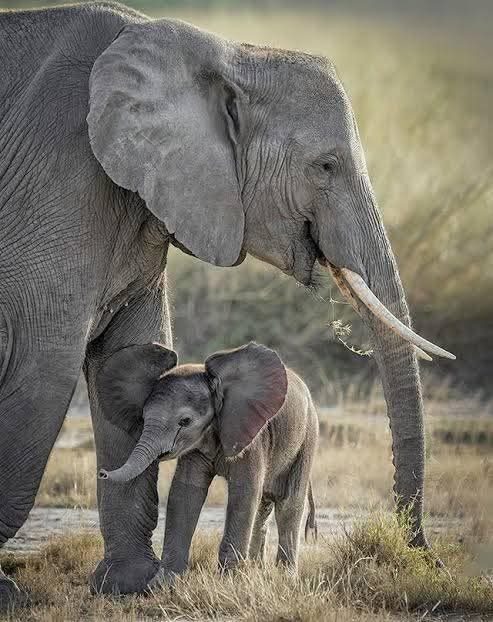
Why You Should Never Be Cruel to Elephants: Inside the World of the Gentle Giants


Elephants are often described as animals that “never forget.” While the popular saying may sound like folklore, science shows there is truth behind their extraordinary memory and emotional intelligence.

Across Africa and Asia, elephants live in tightly bonded family groups led by matriarchs — older females whose memory of water sources, migration routes, and past dangers can determine the survival of the herd. Their ability to remember locations and social relationships for years underscores why they are regarded as some of the most intelligent land animals.
One of the most remarkable biological features of elephants is their lengthy pregnancy. The African elephant, including species such as the African bush elephant, carries a calf for about 22 months — the longest gestation period among land mammals. This extended pregnancy allows for advanced brain development before birth, preparing the calf for complex social life.
Twin births are rare, occurring in roughly one per cent of cases, and survival rates are low. Raising even a single calf demands enormous energy, as mothers invest heavily in milk production and protection. Over a lifetime, a female elephant typically gives birth to about four to five calves, depending on lifespan and environmental conditions.
Despite their massive size, elephants sleep surprisingly little. Studies show they average between two and four hours of sleep daily — among the shortest sleep cycles recorded in mammals. They often doze while standing, lying down only when they feel secure enough to enter deeper sleep.
Elephants are also near-constant feeders, spending up to 16–20 hours a day consuming grasses, leaves, bark and fruit to sustain their large bodies. Contrary to popular claims, there is no strong scientific evidence that pregnant elephants deliberately starve themselves before giving birth. However, feeding patterns may shift naturally as part of late-stage pregnancy.
At birth, elephant calves face another biological challenge. Their digestive systems are not yet equipped to process plant material effectively. To acquire the necessary gut bacteria, calves consume their mother’s dung — a natural process that introduces essential microorganisms for digestion.
While stories circulate about elephants avenging mistreatment decades later, scientists caution that such claims are difficult to verify. What is documented, however, is their capacity to associate threats with specific environments or human activity, which can shape defensive behaviour.
Conservationists continue to stress that understanding elephants’ intelligence and emotional complexity is vital to their protection. As habitat loss and poaching persist in parts of Africa and Asia, safeguarding these animals requires not only policy enforcement but also public awareness.
Elephants may not literally “hold grudges” for half a century, but their memory, social loyalty and biological uniqueness remain undeniable. And that alone is reason enough to treat them with respect.