CAN Not Dead: Nigerian Supreme Council for Ecclesiastical Affairs Rebuts Secession Claims, Defends Christian Association of Nigeria


The Nigerian Supreme Council for Ecclesiastical Affairs (NSCEA) has issued a strong rebuttal to claims that the Christian Association of Nigeria (CAN) is facing collapse following reports that Northern Christians have dumped the national umbrella body.

In a detailed statement signed by Bishop Professor Funmilayo Adesanya-Davies, Secretary of the Elders’ Council of NSCEA, the council described recent reports suggesting that CAN’s “coffin has been nailed” as sensational, misleading, and unnecessarily divisive.
“There Is No Coffin”
According to the council, CAN remains the legally recognized and constitutionally structured umbrella body for Christians across Nigeria, operating through its established blocs and state chapters nationwide.
“The assertion that CAN is dead or facing extinction is unfounded and exaggerated,” the statement said, stressing that Nigeria’s Christian community, though diverse, remains united under the CAN framework.
The council clarified that the registration of any regional association does not invalidate CAN’s constitutional authority or national relevance.
Northern CAN “Not a Secession”
Addressing reports about the alleged emergence of a Northern Christian Association (NCA), NSCEA maintained that zonal or regional structures within CAN do not amount to secession.
CAN, it explained, functions through structures across Nigeria’s six geopolitical zones, including the North. Even if any association is administratively registered with the Corporate Affairs Commission (CAC), such registration does not automatically translate to a constitutional breakaway.
“Registration is a legal process — not a spiritual divorce,” the statement noted, adding that there has been no formal dissolution of Northern CAN from the national body.
Defense of Oluremi Tinubu
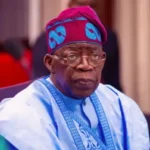
The council also defended the First Lady, Oluremi Tinubu, over interpretations of her recent interview with Christian Broadcasting Network (CBN), which some critics claimed downplayed the persecution of Christians in Northern Nigeria.
NSCEA insisted that the First Lady did not deny the suffering of Christians but rather addressed broader national security challenges affecting Nigerians across religious and ethnic lines.
“It is unjust to distort her comments into a denial of persecution,” the statement said, describing her as a long-standing Christian leader with decades of visible commitment to the Church.
CAN Lagos Within Its Rights
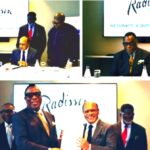
On the controversy surrounding CAN Lagos honoring the First Lady, the council said the move was within its rights and should not be misconstrued as endorsement of insecurity.
“Engagement is not complicity,” the statement emphasized, arguing that the Church must maintain communication channels with those in authority while retaining its prophetic responsibility.
Aid Diversion Allegations “Unproven”
NSCEA also rejected allegations that foreign aid meant for persecuted Northern Christians had been diverted to Southern church projects, stating that such serious claims require verifiable proof.
Without documented evidence, the council warned, such narratives risk damaging the reputation of the Nigerian Church locally and internationally.
It advised that any concerns about accountability should be handled through proper investigative and institutional mechanisms rather than speculative media reports.
Rejecting the North–South Divide
The council described attempts to frame Nigerian Christianity as divided between a “suffering Northern Cross Christianity” and a “prosperity Southern Entertainment Christianity” as artificial and harmful.
According to the statement, sacrificial, mission-driven churches exist in the South actively supporting Northern communities, just as vibrant evangelical congregations thrive in the North.
“The Body of Christ transcends geography,” it declared.
Persecution and Complexity
While acknowledging that Christians in Plateau, Kaduna, Benue, Borno, and other affected states have endured real and painful suffering, NSCEA stressed that Nigeria’s insecurity is multi-dimensional.
It listed terrorism, banditry, ethnic conflicts, and farmer–herder clashes as part of a complex crisis affecting both Christians and Muslims.
Reducing these issues to a simplistic narrative of “Southern silence versus Northern suffering,” the council said, distorts reality and fuels further division.
Call for Unity and Reform
At what it described as a critical moment for the Church in Nigeria, NSCEA urged Christians to choose unity over sensationalism and reform over rupture.
It outlined a path forward focused on strengthening transparency and accountability within Church structures, expanding humanitarian support to affected communities, maintaining constructive engagement with government, and avoiding rhetoric that deepens regional suspicion.
“The claim that CAN is finished is false. The assertion that Northern Christians have abandoned CAN is exaggerated and unfounded,” the statement concluded.
Reaffirming confidence in the national Christian body, the council declared that the Church in Nigeria remains united and resilient.
“Long live CAN,” the statement read, adding that the Body of Christ in Nigeria “stands together.”