Breaking: Israel Signals Readiness to Strike Iran with 200 Fighter Jets After Talks Collapse
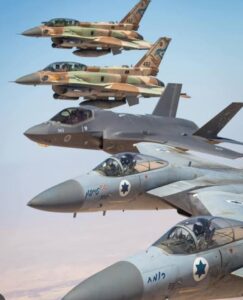
Fresh fears of a wider Middle East conflict surged on Sunday after reports indicated that Israel has positioned significant air assets for potential operations, following the collapse of high-stakes negotiations involving Iran.
Security sources and regional analysts say the Israeli military has maintained a heightened state of readiness, with capabilities that have in past operations included the deployment of up to 200 fighter jets in coordinated strikes.

However, there is no confirmed evidence that such a force is currently mobilised and awaiting immediate orders, despite viral claims suggesting otherwise.
Still, the signal is unmistakable: tensions are climbing—and fast.

“Israel is clearly communicating deterrence,” said a Middle East security analyst based in Jerusalem. “Whether or not jets are in the air, the message is that military options remain firmly on the table.”
Diplomatic Breakdown Fuels Uncertainty
The escalation comes on the heels of a failed round of indirect talks aimed at curbing Iran’s nuclear ambitions and easing regional hostilities. Negotiations, which reportedly stretched over several hours, ended without agreement, deepening mistrust between both sides and their allies.

Officials aligned with Western
Negotiators accused Tehran of refusing key conditions, particularly around nuclear transparency and weapons limitations. Iranian representatives, in turn, criticised what they described as “unrealistic demands.”
A senior official familiar with the discussions said, “The gap remains wide. Both sides are entrenched, and the diplomatic track is under severe strain.”
Military Posturing and Strategic Calculations
Israel has long maintained that it will act unilaterally if necessary to prevent Iran from acquiring nuclear weapons—a position it has reinforced through previous covert and overt operations.
Military analysts note that Israel’s air force remains one of the most advanced in the region, capable of long-range precision strikes. Past operations—while rarely acknowledged in detail—have demonstrated the country’s ability to coordinate complex aerial missions across vast distances.
“This is not just about capability; it’s about credibility,” said a defence expert in Tel Aviv. “Israel wants Iran—and the world—to believe that it will follow through if pushed.”
Regional and Global Implications
Any direct military confrontation between Israel and Iran risks triggering a broader regional conflict, potentially drawing in proxy groups across the Middle East, as well as global powers with strategic interests in the region.
Energy markets are also on edge, with concerns that instability could disrupt critical shipping routes, including the Strait of Hormuz, a vital artery for global oil supplies.
The United Nations has called for restraint, warning that further escalation could have “catastrophic consequences” beyond the immediate region.
A Volatile Moment
Despite the rising rhetoric and military signalling, experts caution against drawing immediate conclusions about imminent conflict.
“There’s a difference between preparation and execution,” one analyst noted. “Right now, we are in a phase of pressure and positioning—but that can shift very quickly.”
For now, the situation remains fluid, with diplomacy weakened but not entirely abandoned. What happens next may depend on whether backchannel negotiations can be revived—or whether military calculations take centre stage.
As tensions simmer, one thing is clear: the stakes have rarely been higher.