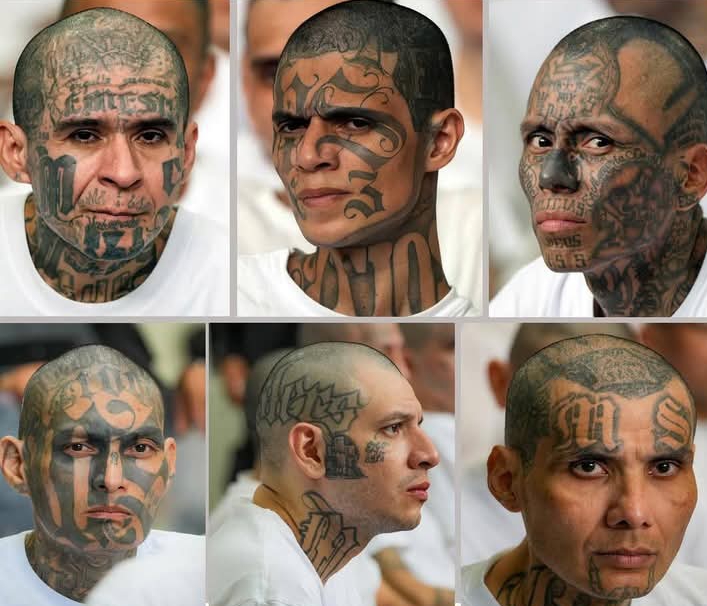
El Salvador Holds Mass Trial Of 486 Alleged Gang Leaders For 47,000 Crimes Including Murders, Rapes


El Salvador has opened one of the largest criminal trials in modern legal history, placing 486 alleged leaders and members of the notorious MS-13 gang on trial simultaneously over a staggering 47,000 crimes, including murders, rapes, extortion, and arms trafficking.

The mass proceedings, which began in the capital San Salvador, form a central pillar of President Nayib Bukele’s aggressive anti-gang campaign launched under a sweeping state of emergency in 2022.
Scale of Allegations
Prosecutors allege that the accused were part of the command structure of the MS-13 (Mara Salvatrucha) network, responsible for orchestrating crimes across the country between 2012 and 2022.
The charges include:
Homicide and femicide
Rape and enforced disappearances
Extortion and organized crime operations
Illegal arms trafficking
Some reports estimate that tens of thousands of killings—up to 29,000—are tied to the case, underscoring the scale of violence attributed to the group.
If convicted, many of the defendants could face sentences stretching up to 245 years in prison.
Inside the Mass Trial
Unlike conventional criminal proceedings, the trial is being conducted as a single, consolidated case, meaning hundreds of defendants are tried together rather than individually.
Many of the accused are not physically present in court. Instead, they are linked via video from high-security facilities, including the country’s controversial mega-prison, where inmates have been seen watching proceedings on large screens while shackled.
Authorities say the structure of the trial reflects the hierarchical nature of the gang, targeting both top leaders and regional operatives in one sweeping prosecution.
Bukele’s War on Gangs
The trial is part of El Salvador’s broader “war on gangs,” launched after a surge in killings in 2022.
Under the emergency regime:
More than 91,000 suspected gang members have been arrested
Constitutional rights, including aspects of due process, have been temporarily suspended
Mass trials have been legally authorized to speed up prosecutions
The government credits the crackdown with dramatically reducing homicide rates, transforming a country once known for extreme violence into one of the safer nations in the region.
Human Rights Concerns
Despite the security gains, the mass trial has sparked intense international criticism.
Human rights organizations argue that:
Defendants may lack proper legal representation
Collective trials undermine individual assessment of guilt
There is a heightened risk of wrongful convictions
Reports also indicate thousands of complaints of arbitrary detention and deaths in custody, raising alarm among global watchdogs.
Critics say trying hundreds at once could erode the presumption of innocence, while the government insists the suspects are part of a well-documented criminal network.
What Comes Next
The trial is expected to last several months, with prosecutors presenting forensic evidence, intelligence reports, and witness testimonies to secure convictions.
For El Salvador, the outcome could define the long-term legacy of Bukele’s anti-gang strategy—a policy praised for restoring security but increasingly scrutinized for its impact on civil liberties.
BOTTOM LINE
El Salvador’s mass trial is not just a legal case—it is a global flashpoint in the debate between security and human rights.
While the government argues it is dismantling one of the world’s most violent criminal networks, critics warn that justice delivered at scale may come at the cost of fairness.