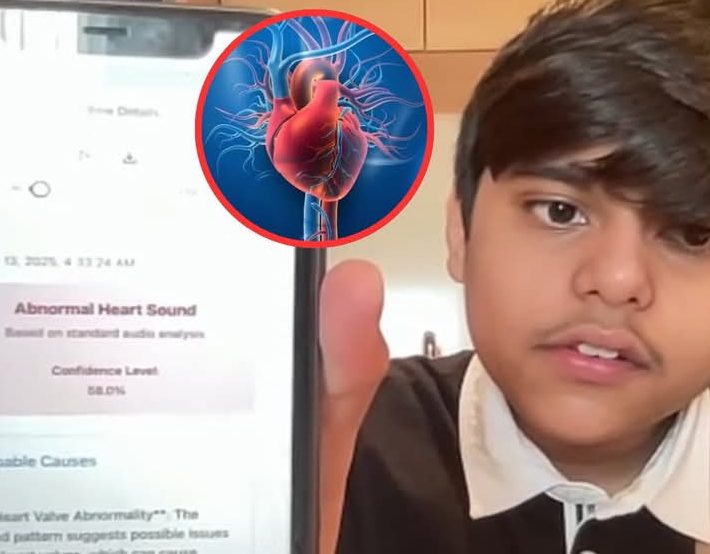
From Classroom to Cardiology: 14-year-old Unveils 7-Second Heart Failure Detection App

A 14-year-old student from Frisco, Texas, is drawing global attention after developing an artificial intelligence-powered smartphone application designed to detect signs of heart failure in as little as seven seconds.

The young innovator’s app uses advanced algorithms rooted in Artificial Intelligence to analyze user data captured via a smartphone, delivering near-instant results. According to preliminary claims, the tool achieves an accuracy rate exceeding 96 percent—raising hopes about its potential role in transforming early screening within Cardiology.
If validated, the technology could represent a significant leap in the fight against cardiovascular disease, one of the leading causes of death worldwide. Experts say rapid, low-cost screening tools are especially valuable in underserved and remote communities, where access to specialized diagnostic equipment remains limited.

Unlike traditional diagnostic approaches—which typically involve clinical assessments, imaging such as echocardiograms, and laboratory tests—the app aims to provide a fast, non-invasive preliminary evaluation using widely available mobile devices.
However, medical professionals caution that such innovations must undergo rigorous clinical validation before being adopted in healthcare settings. High accuracy rates reported in early-stage development often require extensive real-world testing across diverse populations to confirm reliability and consistency.
In addition, regulatory clearance from authorities such as the U.S. Food and Drug Administration would be essential before the app could be deployed as a certified diagnostic or screening tool.
Despite these hurdles, the development underscores the growing role of young innovators in pushing the boundaries of medical technology. It also highlights how emerging tools powered by AI could reshape early detection and preventive care in the years ahead.
For now, the app stands as a promising prototype—one that, with further testing and validation, could contribute meaningfully to global health outcomes.