Iran has now released further details about the overnight confrontation with US forces in the Strait of Hormuz and the Makran Sea, and the situation is rapidly escalating beyond a simple naval standoff.

According to Mehr News Agency, US forces struck an Iranian civilian cargo vessel near Minab during overnight operations. The vessel reportedly burst into flames after the attack, leaving at least 10 sailors injured while 5 others were initially reported missing. Iranian authorities later confirmed that one body had been recovered, while search and rescue teams continue looking for the remaining missing crew members.

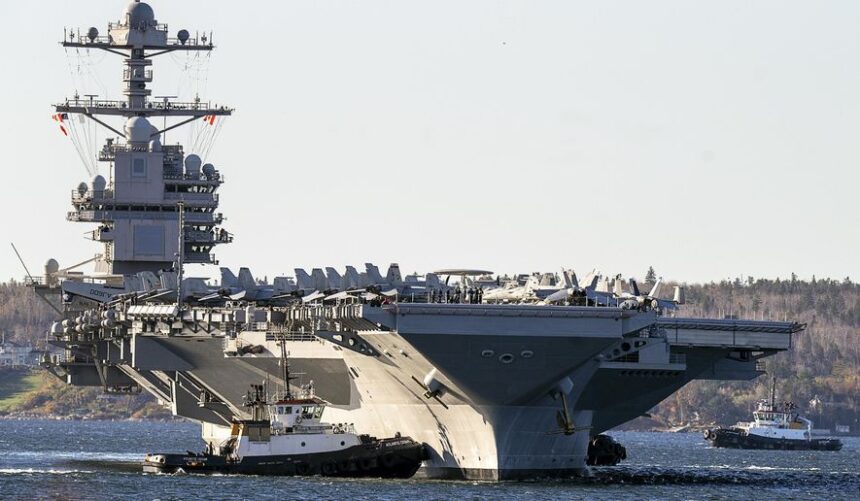
Washington continues describing its operations as “defensive,” but across the region the perception is shifting toward something much larger — a direct American military blockade aimed at crushing Iran’s ability to export oil and move commercial shipping through the Gulf.
CENTCOM further admitted that more than 70 commercial oil tankers are currently being prevented from entering or leaving Iranian ports. Together, those ships reportedly carry the capacity for over 166 million barrels of oil worth more than $13 billion.

This is no longer economic pressure from sanctions paperwork in Washington.
This is a live maritime chokehold unfolding in one of the most strategic waterways on earth.
The confrontation intensified further after Fox News Pentagon correspondent Jennifer Griffin reported that US warplanes struck several “empty” tankers allegedly attempting to break the blockade and return to Iranian waters. American officials described them as massive VLCC crude carriers trying to bypass US naval restrictions.
At the same time, the Persian Gulf itself is beginning to resemble an active war zone.
Tasnim News Agency reported explosions around Sirik Island along with exchanges of fire near the Strait of Hormuz involving hostile targets. Reports also indicate direct clashes between Iranian and US naval forces lasting nearly two hours, with interceptions, gunfire, and active firefights echoing throughout the strait.
Then came another dangerous development.
Footage circulating online appears to show smoke rising near Dubai Airport following what some reports claim were retaliatory strikes targeting US military-linked assets in the UAE. Iran has not officially confirmed the operation, while the UAE has accused Tehran of missile and drone attacks. The full details remain unclear, but the entire Gulf region is now sitting on the edge of broader regional escalation.
And yet, while warships exchange fire in Hormuz, Washington is still publicly talking about diplomacy.
Marco Rubio stated that the US is awaiting Tehran’s response to a new diplomatic proposal aimed at ending the conflict, while simultaneously warning that any force targeting US assets “is gonna get blown up.” Rubio also declared that Washington will not negotiate over Hezbollah, insisting Lebanon should be governed solely by the Lebanese government, even as Israeli strikes continue hitting southern Lebanon and Beirut’s southern suburbs.
The contradiction is becoming impossible to ignore:
Negotiations in public.
Blockades, airstrikes, and naval firefights in reality.
The Strait of Hormuz is no longer merely a pressure point. It is turning into the center of a direct regional military confrontation.