How Mossad Hunted the World’s Most Wanted Terrorist: The Carlos the Jackal Story


The sharp crack of gunfire shattered the calm inside the headquarters of the Organization of Petroleum Exporting Countries (OPEC) in Vienna, Austria, on December 21, 1975.

Oil ministers from some of the world’s most influential nations had gathered for a high-level meeting when heavily armed militants stormed the building, turning a routine diplomatic event into one of the most dramatic hostage crises of the 20th century.
Panic erupted.
Delegates ducked for cover. Secretaries abandoned their desks. Security personnel scrambled to respond but quickly found themselves overwhelmed by attackers who appeared to know every corridor and entry point inside the complex.
At the center of the operation stood a confident, well-dressed Venezuelan carrying a submachine gun.
He moved calmly through the chaos, speaking effortlessly in French, English and Arabic as terrified hostages watched.
To the militants accompanying him, he was a commander.
To intelligence agencies monitoring the unfolding crisis, he was an emerging threat whose name would soon become synonymous with international terrorism.
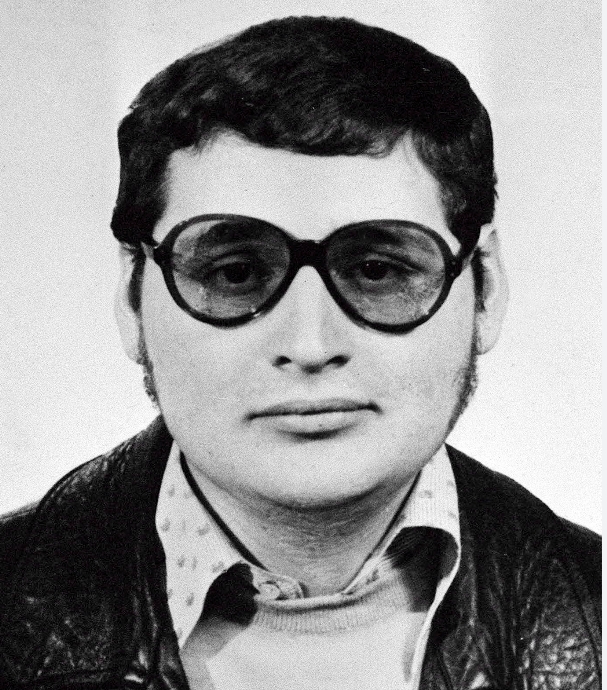
That man was Illich Ramírez Sánchez, better known to the world as Carlos the Jackal.
The operation was far more than a hostage-taking mission. It was a carefully choreographed act of political theatre designed to capture global attention.
Carlos personally identified key government officials among the hostages, separating them according to nationality while declaring that the attack had been carried out in the name of revolution.
As Austrian authorities struggled to negotiate with the gunmen, Carlos demanded safe passage, transportation to the airport and a fully fuelled aircraft.
The spectacle instantly transformed him from a relatively obscure militant operative into one of the most recognizable faces in global terrorism.
Far away in intelligence headquarters across the world, analysts urgently opened files and began asking a critical question:
Who exactly was Carlos the Jackal?
A Childhood Shaped by Revolution
Long before he became the world’s most wanted terrorist, Carlos was born into privilege.
Born on October 12, 1949, in Caracas, Venezuela, Illich Ramírez Sánchez grew up in a politically charged household where communist ideology was treated almost as a family inheritance.
His father, José Altagracia Ramírez Navas, was a wealthy lawyer and a committed Marxist who deeply admired the Soviet Union.
His devotion to revolutionary politics was so intense that he named his three sons Illich, Lenin and Vladimir after Soviet revolutionary leader Vladimir Ilyich Lenin.
Inside the family home, portraits of communist leaders decorated the walls while shelves overflowed with Marxist literature and Soviet publications.
Dinner-table conversations often revolved around class struggle, anti-imperialism and revolutionary change.
Young Illich absorbed these ideas from an early age.
Intelligent, charismatic and fiercely ambitious, he quickly developed a reputation for confidence and sharp political arguments.
Yet alongside his ideological convictions was a powerful desire for recognition and admiration.
Friends and relatives would later describe him as someone who constantly sought attention and validation.
That personality trait would eventually become one of the defining characteristics of his life.
Moscow: The Making of a Radical
In 1966, Carlos’s father arranged for him to continue his education in the Soviet Union at Patrice Lumumba University in Moscow.
The institution was specifically established to educate students from Africa, Asia, Latin America and the Middle East while promoting Soviet political ideals.
Many students who passed through its halls later became political activists, intelligence assets or leaders of revolutionary movements.
For the young Venezuelan, Moscow seemed like the perfect place to pursue his revolutionary ambitions.
He studied politics and engineering, learned Russian and immersed himself in an environment filled with international activists and aspiring revolutionaries.
But reality proved more complicated.
Although intellectually gifted, Carlos struggled with discipline.
He enjoyed nightlife, expensive clothing, relationships and the excitement of social life far more than the rigid routines expected by Soviet authorities.
University officials increasingly viewed him as arrogant, unpredictable and difficult to control.
By 1970, his academic performance and behavioural problems had exhausted the patience of administrators.
He was expelled from the university.
The setback was humiliating, but rather than abandon his revolutionary ambitions, Carlos sought new opportunities elsewhere.
The Middle East would provide exactly that.
Entering the World of Armed Struggle
Following his departure from Moscow, Carlos travelled to the Middle East, where Palestinian militant groups had become magnets for radicals from around the world.
The region offered something Moscow could not: a real battlefield.
In Lebanon and Jordan, armed factions operated training camps where recruits learned guerrilla warfare, explosives handling, surveillance techniques and covert operations.
Carlos joined the Popular Front for the Liberation of Palestine (PFLP), a Marxist organization that viewed international attacks as powerful tools for advancing political causes.
It was there that Illich Ramírez Sánchez gradually disappeared behind a new identity.
Carlos was born.
The name was simple, memorable and adaptable across multiple languages.
Under this alias, he received advanced training in weapons, bomb-making, intelligence gathering and clandestine operations.
His instructors quickly recognized his abilities.
He was fearless, multilingual and highly intelligent.
However, they also noticed familiar weaknesses.
Carlos appeared more attracted to the glamour of revolutionary violence than to the political causes he claimed to support.
He enjoyed luxury hotels, attractive companions, international travel and the prestige that came with operating in secret.
Over time, he evolved from a committed militant into something far more dangerous: a freelance terrorist willing to work for various organizations, intelligence services and state sponsors.
By the early 1970s, security agencies across Europe had begun noticing his activities.
At first, he appeared only as a name buried within intelligence reports connected to failed attacks and suspected militant operations.
But with every new incident, the picture became clearer.
Carlos was emerging as one of the most ambitious and unpredictable terrorists of his generation.