Segun Okeowo: The Student Leader Who Defeated Nigeria’s Military Government in Court


By NewsMediaNG

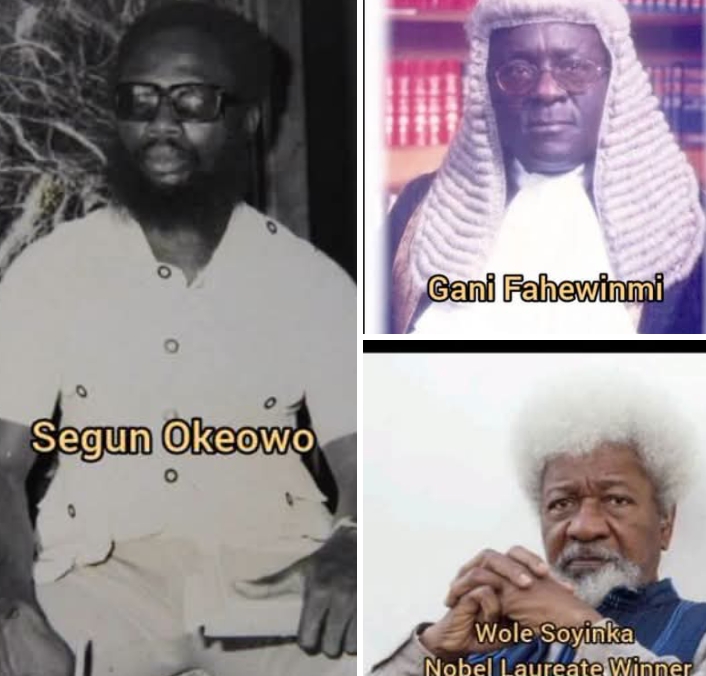
History often remembers those who dared to confront injustice despite overwhelming odds. Among such figures is Segun Okeowo, the former President of the National Union of Nigerian Students (NUNS), whose courage during the 1978 “Ali Must Go” protests earned him a lasting place in Nigeria’s democratic and educational history.
At a time when military decrees carried the force of law and dissent was often met with repression, Okeowo emerged as the face of a nationwide student movement demanding affordable education and respect for students’ welfare.
The crisis began when the military government of General Olusegun Obasanjo approved increases in students’ feeding and accommodation charges under the then Federal Commissioner for Education, Colonel Ahmadu Ali. The decision sparked widespread outrage across Nigerian campuses, culminating in what became known as the “Ali Must Go” protests.
The demonstrations quickly spread across the country, drawing thousands of students into the streets. Security forces responded with force, leaving several students dead and many others injured. The events remain one of the darkest chapters in the history of student activism in Nigeria.
As one of the principal organisers of the protests, Okeowo became a primary target of the military government. He and several other student leaders were expelled from their institutions in what many regarded as an attempt to silence opposition and discourage future activism.
Rather than accept his fate, Okeowo chose an extraordinary path. He challenged his expulsion in court, with renowned human rights lawyer, , leading his legal team. The case argued that the government’s action violated his fundamental right to education and represented an abuse of executive power.
The legal battle was far from easy. During the proceedings, both Okeowo and Fawehinmi were arrested and detained by the military authorities. Their detention only strengthened public interest in the case, which had become a symbol of the broader struggle for civil liberties under military rule.
In a landmark judgment, the court ruled in Okeowo’s favour, affirming that the expulsion was unlawful. The decision became one of Nigeria’s most significant legal victories for students’ rights and remains a reference point in discussions about academic freedom and the limits of governmental authority.
Victory in court, however, did not immediately restore normalcy to Okeowo’s life. Despite the judgment, many universities reportedly refused to admit him, fearing retaliation from the military government.
Hope eventually came from the University of Ife, where Nobel laureate and other academics defied political pressure by offering him admission. The decision allowed Okeowo to continue his education, and he later graduated with a Second Class Honours degree in Literature in English.
His life after university reflected the same commitment to public service that had defined his student years. In 1983, he was appointed a Commissioner in the Ogun State Electoral Commission. He subsequently served as principal of several secondary schools in Ogun State, contributing to the development of education at the grassroots level.
In 1986, the Federal Government appointed him to a panel of inquiry established to investigate student unrest at Ahmadu Bello University, recognising his experience in student affairs and educational administration.
Okeowo also remained active in politics and governance. In 2003, he served as Director of Research and Publicity for Otunba Gbenga Daniel’s governorship campaign in Ogun State. Following Daniel’s election, he was appointed Chairman of the Ogun State Teaching Service Commission, where he served until his retirement in 2011.
Segun Okeowo died in 2014 at the age of 73, but his legacy endures. More than four decades after the “Ali Must Go” protests, his name remains synonymous with courage, principled leadership and the defence of students’ rights.
His story is not merely about a legal victory. It is the story of a young Nigerian who stood against military intimidation, defended the right to education and proved that even in the darkest moments, justice can prevail through courage, perseverance and the rule of law.
For generations of students, activists and defenders of democracy, Segun Okeowo’s life remains a powerful reminder that lasting change often begins with the courage of one individual willing to stand for what is right.