

Despite improved public awareness, experts warn weak policies, poor enforcement and inadequate support systems continue to leave thousands of Nigerians with autism excluded from education, employment and public life
NewsMediaNG
Sixteen years after sustained autism advocacy took root in Nigeria, experts say the country’s biggest challenge is no longer getting people to recognise autism—it is getting society to truly include those living with it.

While awareness campaigns have steadily changed public perception over the years, healthcare professionals, educators, parents and disability rights advocates argue that practical inclusion has failed to keep pace, leaving thousands of children and adults on the autism spectrum shut out of classrooms, workplaces and community life.
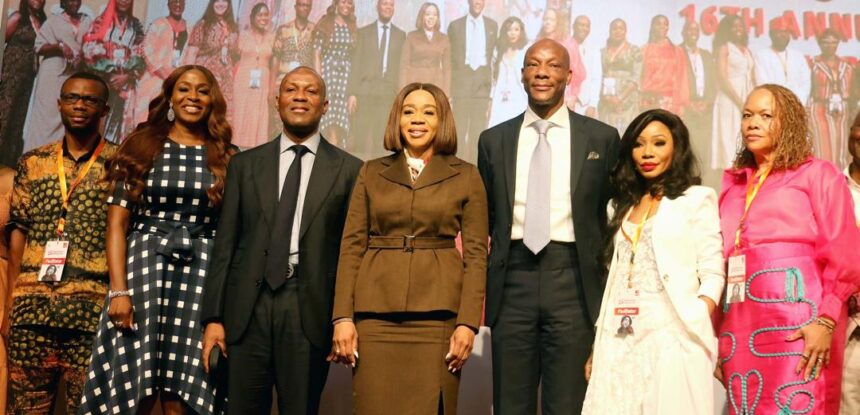
The concerns dominated discussions at the 16th Annual GTCO Autism Conference in Lagos, where stakeholders warned that without stronger government commitment, better policies and effective implementation of existing disability laws, awareness alone would not improve the lives of persons living with Autism Spectrum Disorder (ASD).
The conference, themed “Acceptance in Action: From Family to Classroom to Workplace to Public Spaces,” brought together healthcare professionals, behavioural specialists, policymakers, parents, caregivers, educators and advocates to examine how Nigeria can move beyond conversations about autism towards building an inclusive society.
For many participants, the event represented both a celebration of progress and a reminder of how much remains to be done.
A Growing Population, A Limited Response
Although autism awareness has increased considerably over the last decade, experts say the true scale of autism in Nigeria remains difficult to determine because of inadequate research and widespread underdiagnosis.
Studies conducted in Nigeria estimate autism prevalence among children at between 0.8 and 1.2 per cent, broadly reflecting the global average of around one per cent. Other research, however, has produced estimates ranging from below one per cent to nearly three per cent depending on methodology and diagnostic criteria.
Using conservative projections based on Nigeria’s population, experts estimate that well over 600,000 Nigerian children are living with autism, while the actual number could be significantly higher because many children remain undiagnosed or are diagnosed very late.
Researchers say the shortage of reliable national data has become a major obstacle to effective policymaking.
Without comprehensive prevalence studies, governments struggle to allocate resources, expand specialist services or design educational policies that adequately address the needs of autistic children and adults.
The result, advocates say, is a system where many families shoulder enormous emotional, financial and psychological burdens with little institutional support.
The Policy Gap
Nigeria already possesses a legal framework intended to protect persons living with disabilities.
In 2018, President Muhammadu Buhari signed the Discrimination Against Persons with Disabilities (Prohibition) Act into law after nearly a decade of advocacy by disability rights organisations.
Among other provisions, the Act mandates public institutions to reserve at least five per cent of employment opportunities for persons living with disabilities while prohibiting discrimination in education, employment, transportation and access to public facilities.
Yet eight years later, advocates say implementation remains largely inconsistent.
Many states are yet to establish fully functional disability commissions capable of enforcing compliance, while the employment quota contained in the law remains largely unimplemented.
For many autistic adults, access to decent jobs continues to depend more on personal goodwill than legal protection.
That disconnect between legislation and implementation formed the backdrop to many of the conversations at this year’s conference.
Agbaje: Awareness Was Only the Beginning
Opening the conference, the Group Chief Executive Officer of GTCO Plc, Segun Agbaje, reflected on the organisation’s sixteen-year commitment to autism advocacy.
According to him, the first objective was to break the silence surrounding autism and encourage families to seek help instead of hiding affected children because of fear or stigma.
“Our journey over the last 16 years was to create awareness because too many families lived in denial. I think we have largely achieved that,” Agbaje said.
“The next challenge is learning how to live with people on the spectrum, educating ourselves and making the journey easier for families.”
He described autism advocacy as “a journey without a destination,” explaining that every generation must continue improving opportunities for autistic individuals.
Agbaje urged governments, schools, employers and communities to embrace inclusion as a shared responsibility rather than leaving the burden solely on parents and caregivers.
He also assured participants that GTCO would continue supporting autism advocacy beyond his tenure, describing inclusion as a long-term commitment rather than a corporate project.
Azazi: Acceptance Begins at Home
Founder of Cradle Lounge Special Needs Initiatives, Solape Azazi, delivered one of the conference’s most emotional presentations.
Speaking both as an advocate and the mother of a 12-year-old autistic son, she argued that true inclusion starts inside the family before extending into schools, workplaces and society.
She challenged parents to replace fear with understanding and urged educators to recognise that inclusion means much more than simply admitting autistic children into classrooms.
“Acceptance is a behaviour. It is choosing connection over correction,” she said.
“If your child doesn’t find acceptance at home, how can the child know what acceptance looks like outside?”
Azazi observed that many Nigerian families continue to experience rejection, isolation, caregiver burnout and severe emotional stress because autism remains poorly understood.
She stressed that children on the spectrum possess enormous potential when provided with appropriate educational support.
According to her, inclusive education requires trained teachers, flexible classroom practices, collaboration between parents and schools, and learning environments that accommodate different communication styles and sensory needs.
Experts Call for Earlier Diagnosis
Behaviour Analyst Dr. Eziafakaku Nwokolo emphasised that early diagnosis remains one of the most effective ways of improving long-term developmental outcomes.
She noted that evidence-based behavioural interventions introduced during early childhood significantly enhance communication, learning and social development.
However, she warned that specialist services remain unavailable or unaffordable for many Nigerian families, especially outside major cities.
Nwokolo called for stronger collaboration among healthcare providers, schools, families and government institutions to expand access to developmental assessments and intervention services nationwide.
She also advocated integrating autism screening into primary healthcare so children can be identified much earlier.
Inclusion Must Continue into Adulthood
International Behaviour Analyst Osezusi Bolodeoku urged stakeholders not to limit autism conversations to childhood.
According to him, many autistic adults face significant barriers to employment because workplaces remain unprepared to accommodate neurodiversity.
He encouraged employers to adopt reasonable workplace adjustments while urging government agencies to make public spaces more accessible and sensory-friendly.
“Inclusion should become part of everyday community life rather than occasional advocacy campaigns,” he said.
Abdul Rasaq: Disability Rights Must Become Reality
Disability rights advocate Afeez Abdul Rasaq challenged widespread misconceptions surrounding autism and disability.
He urged governments to move beyond policy statements by implementing programmes that guarantee equal access to education, employment and public services.
He also called on employers to deliberately recruit persons living with disabilities, insisting that diversity strengthens institutions rather than weakening them.
“We all have disabilities. The only difference is the severity,” Abdul Rasaq said.
His remarks drew attention to the broader disability rights movement, where advocates continue to demand stronger enforcement of existing laws and greater accountability from public institutions.
Bridging the Data Gap
Beyond awareness campaigns and policy discussions, experts agreed that Nigeria urgently requires better autism data.
Researchers argue that more nationwide studies are needed to determine prevalence, identify service gaps and guide government investment.
Without reliable statistics, planning for schools, healthcare services, employment programmes and social protection remains largely speculative.
Advocates also recommended integrating autism screening into routine primary healthcare, expanding specialist training for teachers and healthcare workers, strengthening disability commissions and enforcing laws that guarantee inclusive education and equal employment opportunities.
From Awareness to Action
As the conference drew to a close, one message resonated across every session.
Nigeria has spent sixteen years building awareness.
The next sixteen years, participants argued, must be dedicated to building inclusion.
For thousands of families living with autism, success will no longer be measured by the number of conferences held or awareness campaigns organised, but by whether autistic children can attend neighbourhood schools without discrimination, whether autistic adults can secure meaningful employment, and whether public institutions genuinely become accessible to everyone.
As part of its commitment, GTCO announced free one-on-one consultations with developmental and medical specialists from July 29 to August 1 at the Adeyemi Bero Auditorium, Alausa, Ikeja, where families will receive support from behavioural analysts, speech therapists, occupational therapists, developmental psychiatrists, psychologists and parent counsellors.
For many advocates, however, the consultations represent only one step.
The larger task, they insist, is ensuring that autism acceptance is no longer confined to annual conferences but becomes embedded in Nigeria’s schools, workplaces, healthcare system and public life.
Only then, they say, will the country’s sixteen-year journey of autism advocacy have achieved its ultimate goal.