Stop Bringing Cows, Rams to Judges, Retiring Supreme Court Justice Saulawa Tells Politicians
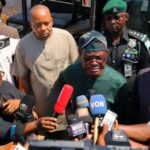
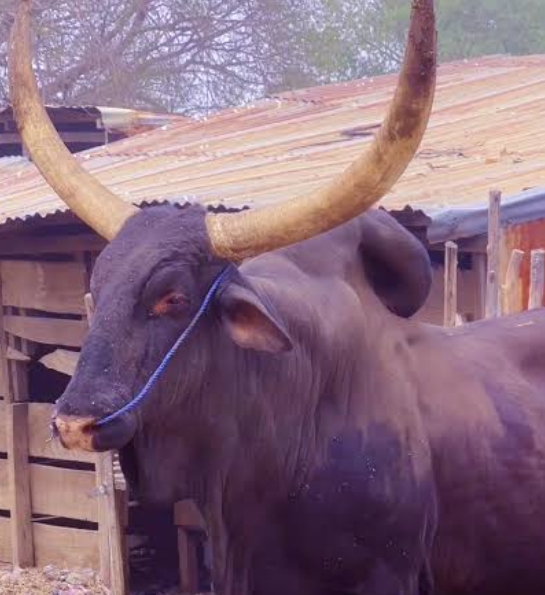
Retiring Justice of the Supreme Court, Ibrahim Saulawa, has called on politicians to stop sending cows, rams and other gifts to judicial officers, describing the practice as demeaning and an attempt to influence judges.

Justice Saulawa, who retired from the apex court upon attaining the mandatory retirement age of 70, made the call during a valedictory court session held in his honour on Tuesday.

The jurist said he had previously raised concerns over the practice with the Chief Justice of Nigeria (CJN), Justice Kudirat Kekere-Ekun, urging the judiciary to take decisive steps to address it.
“Why should a politician send a ram, cow or other items to a Supreme Court Justice? It is unheard of in other countries.
“I am calling on the CJN to do something about this. I once raised the issue. It is demeaning and equally frustrating.”
Justice Saulawa, who bowed out after a 44-year career in the legal profession, urged judges across the country to remain committed to integrity, honesty and morality in the discharge of their duties.

‘I Rejected Brand-New Peugeot’
The retiring Justice also recounted an incident in which an influential individual attempted to influence him before judgment was delivered in a case.
According to him, the individual, whom he later convicted, had earlier offered him a brand-new Peugeot vehicle, but he rejected the gift.
“Prior to the case, the Alhaji had donated to me a brand new Peugeot motor vehicle, which I flatly rejected.”
Saulawa said the individual subsequently sought the intervention of prominent traditional and community leaders, including Emir Alhaji Muhammadu Kabir Usman and District Head Alhaji Balan Goggo, in an effort to persuade him to accept what he described as a “Greek gift”.
He said the pressure yielded no result.
“He went to the extent of seeking the intervention of some prominent personalities… with a view to influencing me to accept the ‘Greek gift,’ but to no avail.”
The retiring Justice also disclosed that he deliberately turned down several invitations to social gatherings while in service as part of efforts to protect his judicial independence.
“But some of my learned friends are always there, even if they didn’t need to be there,” he said.
Saulawa Recalls June 12 Crisis
Justice Saulawa also reflected on the political and judicial crisis surrounding the annulment of the June 12, 1993 presidential election.
He recalled that he was serving as Chief Registrar of the Court of Appeal at the time and took steps to address what he described as conflicting court orders surrounding the election.
According to him, the crisis involved interim orders issued by the FCT High Court restraining the then National Electoral Commission (NEC), headed by Professor Humphrey Nwosu, from conducting the presidential election and announcing its results.
He said some state High Courts subsequently issued conflicting orders directing that the results be announced.
Justice Saulawa alleged that the conflicting orders were part of efforts by the military to create legal confusion and said the judiciary at the time resisted attempts to manipulate the courts.
He recalled that, acting on the directive of the then President of the Court of Appeal, Justice M. Akanbi, he travelled from Lagos to Kaduna to take control of the appellate court’s registry.
“Appeals were filed at the Court of Appeal, Kaduna Division, by the NEC. As the Chief Registrar of the Court of Appeal, and the only spokesperson thereof, I flew from Lagos to Kaduna and took effective control of the Registry and supervised the registering of the appeals and the issuing of the appropriate court processes to the respective parties to the appeals.”
He said he also issued a press statement concerning the appeals before returning to Lagos to brief Justice Akanbi.
According to Saulawa, Justice Akanbi subsequently convened an emergency meeting of the presiding justices to address the crisis.
The retiring jurist accused the military authorities of engaging in what he described as “forum shopping” in the courts.
He said the judiciary deserved “a gold medal” for resisting attempts to manipulate the judicial process during the period.
“We actually did all we could do to frustrate the military,” he said.
Poor Attendance at Valedictory Session
The valedictory session was also marked by a relatively low turnout of lawyers compared with similar ceremonies held for retiring Supreme Court justices in the past.
Only six Senior Advocates of Nigeria (SANs) and 13 other lawyers were reported to have attended the ceremony.
A representative of the Body of Senior Advocates of Nigeria (BoSAN), Mr Damien Dodo, SAN, expressed embarrassment over the poor attendance.
Dodo attributed the situation to what he described as miscommunication, stressing that it should not be interpreted as a reflection of Justice Saulawa’s standing in the legal profession.
He described the retiring Justice as a jurist who served the country “with granite integrity.”
CJN Commends Saulawa
In her address, Chief Justice of Nigeria, Justice Kudirat Kekere-Ekun, commended Justice Saulawa’s contribution to the judiciary and described his life as one defined by service.
The CJN also recalled his time as Presiding Justice of the Port Harcourt Division of the Court of Appeal, highlighting what she described as a particular episode that reflected the values they shared.
Justice Saulawa’s retirement marks the end of a 44-year journey in the legal profession, during which he served in various capacities before reaching the apex court.
His valedictory message centred on judicial integrity, independence and the need for judicial officers to resist attempts—whether through gifts, personal connections or other inducements—to compromise the administration of justice.