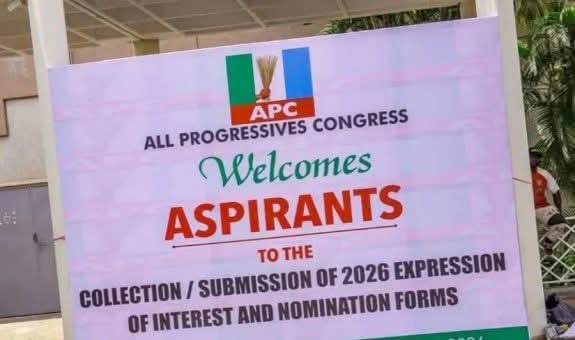

Fresh cracks have emerged within Nigeria’s ruling party, the All Progressives Congress, as petitions, protests, resignations and threats of legal action trail the ongoing screening of aspirants ahead of the 2027 general elections.

The growing tension follows the disqualification of more than 150 aspirants across several states, with aggrieved party members accusing screening panels of manipulation, imposition of candidates and undermining internal democracy.
Investigations indicate that aspirants and stakeholders in states including Taraba State, Kano State, Jigawa State, Benue State, Kogi State, Kaduna State, Ebonyi State, Rivers State and Plateau State are mobilising petitions and considering legal challenges against outcomes of the exercise.

The screening process forms part of the APC’s strategy to streamline the number of contestants before its primary elections. However, the process has triggered intense controversy in many states, with fears that unresolved grievances may worsen internal divisions ahead of the polls.
Taraba backlash over endorsements
In Taraba North Senatorial District, outrage followed the endorsement of incumbent lawmakers reportedly backed by party stakeholders after the screening exercise.
Youth groups and political stakeholders openly rejected the endorsement of Senator Shuaibu Isa Lau, accusing him of poor performance.
Stakeholder Paul Penuel described the senator’s tenure as a “complete failure,” while another constituent, Dickson Kwinde, warned against what he termed a repeat of “costly political mistakes.”
The Coalition of Concerned Youths and Voice of the Proletariat in Karim Lamido also rejected the endorsement, insisting the senator had failed to justify another mandate.
Party insiders disclosed that several aggrieved aspirants had begun preparing petitions alleging irregularities, political interference and attempts to impose consensus candidates.
Kano crisis over Shekarau endorsement
In Kano, at least 20 aspirants seeking Senate and legislative tickets were screened out despite prior consensus negotiations.
Among those affected were former Head of Service Usman Bala, former lawmaker Sha’aban Sharada and businessman A.A. Zaura.
The controversy centered on moves to back former governor Ibrahim Shekarau after six aspirants reportedly stepped down following reconciliation efforts.
However, a pressure group, Coalition for Better Kano, criticized the arrangement, arguing that loyalty and consistency within the party should not be sacrificed for political convenience.
Efforts to ease tensions reportedly suffered setbacks after some stakeholders boycotted reconciliation meetings.
Defections hit Jigawa, Ebonyi
The fallout has already resulted in resignations and defections.
Former Speaker of the Jigawa State House of Assembly, Isah Idris, resigned from APC after his disqualification and subsequently defected to the Peoples Democratic Party.
Similarly, in Ebonyi, Senate aspirant Christian Nwali resigned from the APC after losing out in a consensus arrangement linked to allies of David Umahi.
Political observers warn such exits could deepen factional divisions and weaken party structures before the primaries.
Rivers records highest disqualification figure.
The most dramatic figures emerged from Rivers State, where the APC House of Assembly Screening Appeal Committee confirmed that 65 aspirants were disqualified while only 33 were cleared.
Committee chairman Abdul Mahmud said the panel had received numerous petitions from aggrieved aspirants.
He noted that many complained they only learned of their disqualification through social media rather than official communication.
According to him:
“When you clear and don’t clear aspirants, the people have telephone numbers. They should be able to send them text messages or WhatsApp messages.”
Mahmud said the panel had begun reviewing appeals and urged aspirants not to attempt contacting him privately.
Anxiety grows in Plateau, Imo, Gombe
In Plateau, concerns intensified after reports that some aspirants had already been verbally informed of disqualification before official publication of results.
The state APC chairman, Rufus Bature, confirmed the screening had concluded but said the final list was still pending.
Meanwhile, officials in Imo and Gombe urged aspirants to await official publication of screening outcomes.
Analysts warn of larger implications
Political analysts say the wave of complaints surrounding consensus arrangements and screening exercises reflects a broader struggle within the APC over balancing party control with internal democracy.
They warn that unresolved grievances, mass disqualifications and accusations of candidate imposition could trigger defections, anti-party activities and fresh factional crises ahead of the 2027 elections.
With reconciliation efforts ongoing in several states, party leaders now face mounting pressure to contain the fallout before the primary elections escalate into a larger political crisis.