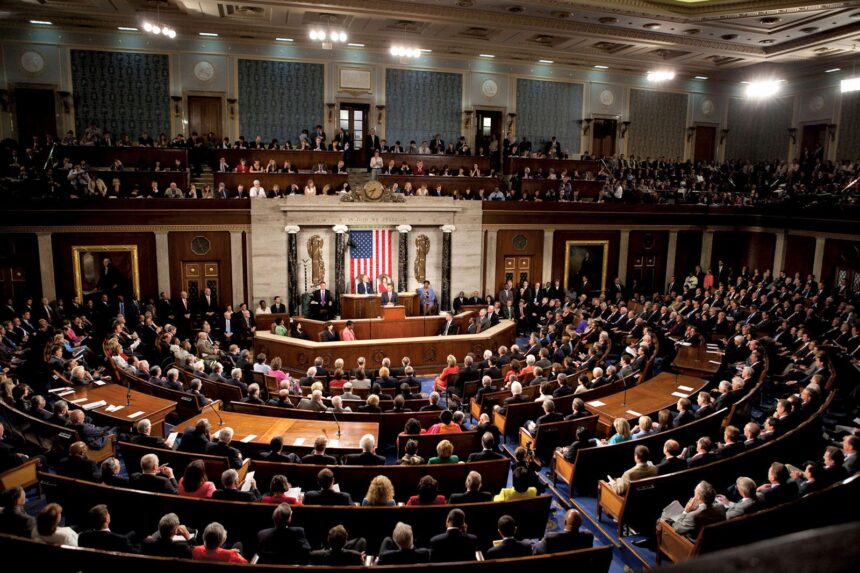
BREAKING: US House Votes 220–204 to End Iran War, Orders Withdrawal of American Forces
The United States House of Representatives has passed a resolution seeking to end American participation in hostilities with Iran, delivering a fresh challenge to President Donald Trump’s military policy in the Middle East.
The resolution was approved by 220 votes to 204, with all Democrats who voted joined by seven Republicans in supporting the measure.

The vote calls for the removal of U.S. armed forces from hostilities with Iran and represents another attempt by lawmakers to invoke Congress’ constitutional authority over decisions involving military action.

The development comes amid continuing hostilities involving the United States and Iran and growing congressional scrutiny over the scope, cost and duration of the American military campaign.
Supporters of the resolution argue that continued military involvement requires congressional authorization, while opponents have maintained that the president must retain the ability to respond to threats to American personnel and national security.

The House action, however, does not automatically end the war or immediately compel the withdrawal of U.S. forces.
For the resolution to have the force of law, it would have to clear the Senate and overcome any presidential opposition. The measure therefore faces further political and legislative hurdles before it could directly affect U.S. military operations.
The vote nevertheless highlights divisions within Congress over the administration’s handling of the Iran conflict, particularly as lawmakers confront the financial and strategic consequences of prolonged military engagement.
According to estimates cited in recent reporting, the U.S. military campaign had already cost tens of billions of dollars, with additional spending expected if the conflict continues.
The latest House vote also underscores the broader constitutional debate in Washington over the balance of power between the president and Congress when American troops are deployed in hostilities overseas.
While the White House has opposed congressional efforts to restrict the president’s authority over the Iran operation, lawmakers backing the resolution insist that Congress must have a decisive role in authorising prolonged military action.
The 220–204 vote therefore represents more than a numerical congressional tally: it is the latest indication of a widening political dispute in Washington over how, and under whose authority, the United States should continue its military involvement in the Iran conflict.
NewsMediaNG will continue to monitor developments from Washington as the resolution moves through the next stage of the legislative process.