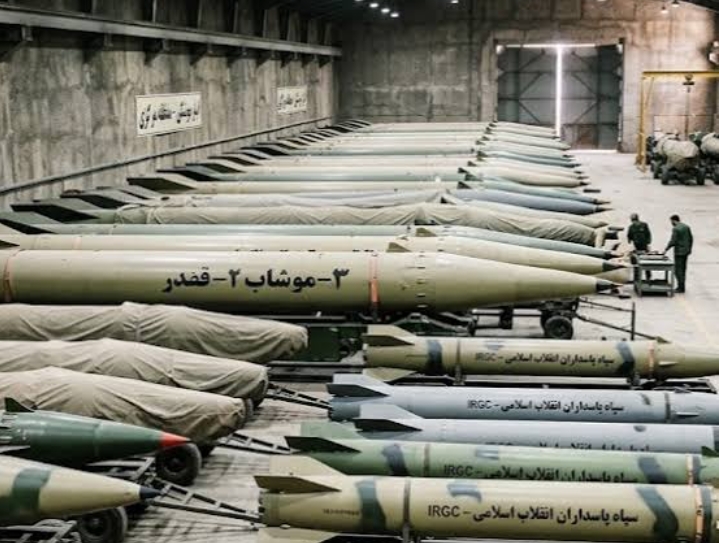
Built for War, Destroyed by Israel: Israel Crushes Hezbollah Underground Stronghold Loaded With Iranian-Made Weapons

Israel has announced the destruction of a massive underground Hezbollah military complex in southern Lebanon, reportedly stretching more than two kilometres and containing an extensive stockpile of weapons and military infrastructure.

The Israeli military said the facility was part of Hezbollah’s long-term preparations for a major conflict with Israel and had been developed over several years with Iranian backing.
According to the Israeli account, the underground network contained rockets, missiles, unmanned aerial vehicles (UAVs), anti-tank weapons, mines and command-and-control facilities, highlighting the scale of Hezbollah’s preparations beneath southern Lebanon.

The complex was reportedly designed to enable Hezbollah fighters to store weapons, operate from protected positions and coordinate attacks while remaining shielded from conventional military strikes.
Israeli officials described the operation as a major blow to Hezbollah’s military infrastructure, claiming that the destruction had significantly disrupted the group’s ability to launch and coordinate attacks from the area.
The development underscores the extent of the underground military infrastructure that Hezbollah has built across southern Lebanon over the years.
Israel has repeatedly accused Iran of supplying Hezbollah with weapons, funding and military expertise as part of Tehran’s broader regional strategy of supporting armed groups opposed to Israel.
The latest Israeli operation therefore represents not only the destruction of a single weapons facility but also a significant strike against what Israel regards as a key component of Hezbollah’s long-term war preparations.
Hezbollah, which has fought several major conflicts with Israel, maintains a substantial military presence in Lebanon despite international efforts to limit armed activity in the country.
The destruction of the underground complex comes amid continuing tensions along the Israel-Lebanon front and renewed concerns over the possibility of another large-scale confrontation between Israel and Hezbollah.
For Israel, the operation demonstrates the importance of intelligence and precision strikes in locating and neutralising underground military networks.
For Hezbollah and its Iranian backers, however, the destruction highlights the vulnerability of even deeply concealed infrastructure when exposed to Israeli intelligence and military capabilities.
Built over decades. Stockpiled with weapons. Backed by Iran. Destroyed by Israel.
The operation could further reshape the military balance along Israel’s northern frontier and intensify the wider confrontation involving Israel, Hezbollah and Iran.