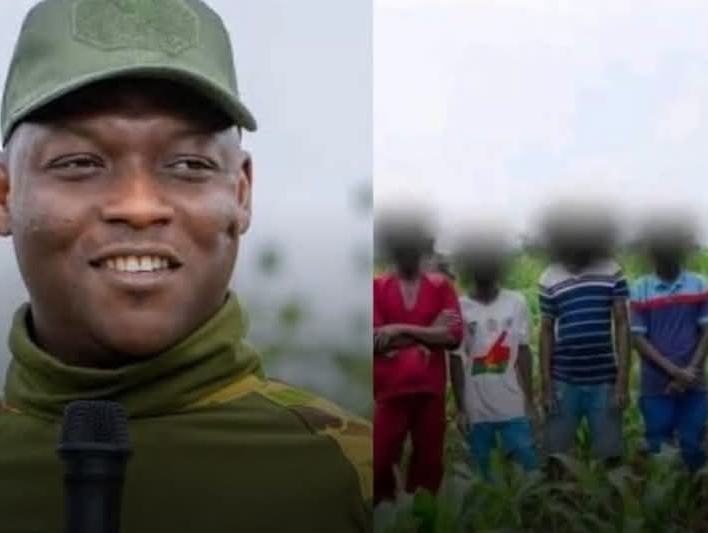
Burkina Faso is turning prisoners into farmers as Inmates cultivate 130 hectares of maize, rice, sorghum, soybeans, cowpeas

Newsmediang.com

Burkina Faso is introducing a prison reform model that combines punishment, agricultural production and skills development, as inmates are increasingly deployed to farms to contribute to the country’s food production and rehabilitation efforts.

The West African country is expanding its use of community service and agricultural programmes as alternatives to conventional imprisonment, with a renewed focus on rehabilitation, reducing prison congestion and improving food security.
On October 14, 2026, Burkina Faso’s parliament adopted a revised law governing Travaux d’Intérêt Général (TIG), or community service, introducing changes designed to expand the use of non-custodial sentences and improve the reintegration of convicted persons into society.
The revised legislation allows courts to impose community service for certain minor offences where victims have been compensated, and the offenders are not considered a danger to society. It also provides opportunities for some prisoners serving longer sentences to have their sentences converted to community service after completing at least one-third of their terms, subject to applicable conditions.
The reform was unanimously adopted by 71 lawmakers who participated in the vote, according to Burkina Faso’s Legislative Assembly.
Baporo: Where prisoners cultivate food crops
At the centre of the country’s agricultural prison initiative is the Baporo Agricultural Penitentiary Centre, established under the leadership of former President Thomas Sankara.
The facility has become an example of how agricultural production can be integrated into the correctional system.
Inmates at the centre cultivate crops including maize, rice, sorghum, soybeans, cowpeas and sesame, combining food production with practical agricultural training.
The facility cultivated approximately 130 hectares in 2025, producing an estimated 240 to 300 tonnes of agricultural produce, according to reports from Burkina Faso’s authorities and local media.
For 2026, the centre has set an ambitious production target of 782.5 tonnes across more than 300 hectares.
The agricultural programme also exposes inmates to practical skills in farming, irrigation, soil improvement and post-harvest management, potentially improving their employment and self-reliance prospects after completing their sentences.
Prison reform linked to food security
Burkina Faso’s approach goes beyond using agricultural labour as a prison activity. The government is positioning correctional facilities as contributors to national food production.
Under the expanded community service programme, eligible offenders can undertake productive activities rather than automatically serving conventional prison sentences.
The revised framework also makes it possible for some inmates already serving prison terms to benefit from sentence conversion, subject to eligibility requirements.
According to reports published following the October 14 parliamentary decision, nearly 4,000 people had benefited from the community service programme since November 2024, while approximately 3,000 were participating in the scheme at the time of the reports.
The policy is intended to reduce pressure on correctional facilities while ensuring that offenders undertake activities that contribute to society.
Ibrahim Traoré’s vision for agricultural prisons
Burkina Faso’s President, Captain Ibrahim Traoré, has repeatedly spoken about the need to humanise the country’s prison system and transform correctional facilities into centres of productive activities.
During a government-reported visit to Baporo, the country’s leadership highlighted plans to improve accommodation and living conditions for inmates while expanding agricultural production.
A new 500-bed facility, reportedly costing approximately 500 million CFA francs, was also constructed at the centre to improve detention conditions.
The broader policy reflects an attempt to connect criminal justice reform with agricultural development, vocational training and food security.
A model raising questions about rehabilitation
Burkina Faso’s experiment raises an important question for other African countries struggling with prison congestion, unemployment and food insecurity: can correctional facilities become centres of skills acquisition and productive economic activity?
The model also highlights the importance of ensuring that prison labour respects human dignity, appropriate working conditions and the rights of inmates.
For Nigeria and other African countries, the developments offer an opportunity to examine how agricultural training, properly regulated community service and rehabilitation programmes could complement existing correctional systems.
Rather than viewing imprisonment solely as a means of punishment, Burkina Faso is seeking to incorporate productive skills and social reintegration into its correctional policy.
The ultimate test will be whether the initiative delivers sustainable rehabilitation, reduces repeat offending and contributes meaningfully to food production.
NewsMediang.com reports that Burkina Faso’s evolving prison reform places agriculture, vocational development and rehabilitation at the centre of an alternative approach to criminal justice.