Darkness by Design: A Country of over 200 Million, Powered by Generators and 4,000MW is a National Failure


By Dino Melaye
For over a century—since electricity generation began in 1896—Nigeria has had ample time to establish a stable power system. Yet here we are in 2026, with the national grid struggling to deliver around 4,000 megawatts to over 200 million people. That figure is not just embarrassing; it is a reflection of deep structural neglect.

On paper, the country has about 13,000MW of installed capacity. In reality, most of it is stranded—trapped by a transmission network that cannot carry it and a distribution system that cannot efficiently deliver or monetise it. The result is a system where scarcity is not caused by lack of resources, but by failure to manage what already exists.
At the centre of this dysfunction is a broken financial model. The power sector is burdened with trillions of naira in debt. Distribution companies fail to recover enough revenue due to poor metering, weak enforcement, and political resistance to cost-reflective tariffs. Generation companies, in turn, are not paid. Gas suppliers—owed trillions—cut supply. Power generation drops. The grid weakens. And the cycle continues.
This is not an accident. It is the predictable outcome of years of policy inconsistency and half-implemented reforms.
The creation of the Nigerian Electricity Regulatory Commission and the privatisation of the sector were meant to usher in efficiency and investment. Instead, the government continues to intervene just enough to distort the market, but not enough to fix it. The sector operates in a limbo—neither fully public nor truly private—where accountability is diluted and responsibility is endlessly shifted.
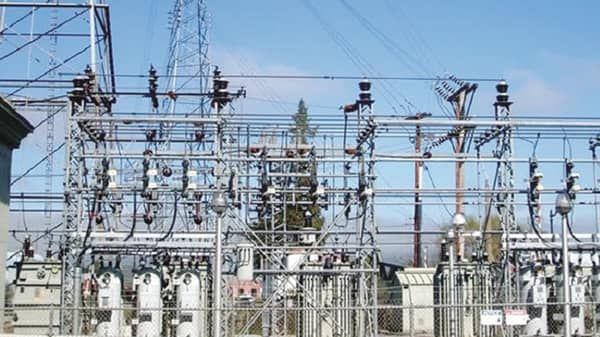
Meanwhile, infrastructure remains dangerously fragile. Transmission towers are vandalised with alarming frequency, and the grid itself lacks the resilience to handle even modest increases in supply. The fact that the system collapses repeatedly—dozens of times over the past decade—is not just a technical flaw. It is evidence of a state that has failed to protect and prioritise critical infrastructure.
Perhaps the most damning indictment is this: Nigerians have effectively built their own parallel power sector. With an estimated 22 million generators producing tens of thousands of megawatts, citizens and businesses have taken electricity into their own hands. But this is not a solution—it is a symptom of collapse. It is expensive, inefficient, and environmentally damaging. No serious economy has ever industrialised on the back of generators.
The consequences are severe. Businesses shut down. Jobs are lost. Investors look elsewhere. The economy bleeds billions of dollars annually due to unreliable power. What should be a foundation for growth has instead become a permanent constraint.
And yet, examples across Africa show that this outcome is not inevitable. Egypt rapidly expanded its power capacity through decisive execution and aligned policy. South Africa, despite its own struggles, has demonstrated that consistent reform and operational discipline can stabilise supply. These countries are not fundamentally more resource-rich than Nigeria—they have simply governed their power sectors more effectively.
Nigeria’s problem, therefore, is not complexity. It is coordination. Fuel supply, generation, transmission, and distribution operate in silos, with no unified accountability. Policies are announced but not sustained. Funds are approved but not fully deployed. Reforms are started but rarely completed.
Calling this a “power problem” understates the issue. It is a governance failure—plain and simple.
Until there is political will to enforce accountability, align incentives, and follow through on reforms, the cycle will persist. More funding, more announcements, and more installed capacity will not change the outcome. Without governance, they will simply become more waste.
Nigeria cannot continue like this. No country becomes an industrial power while running its economy on backup generators. The longer this reality is ignored, the more costly the consequences will become.
Sen. Dino Melaye